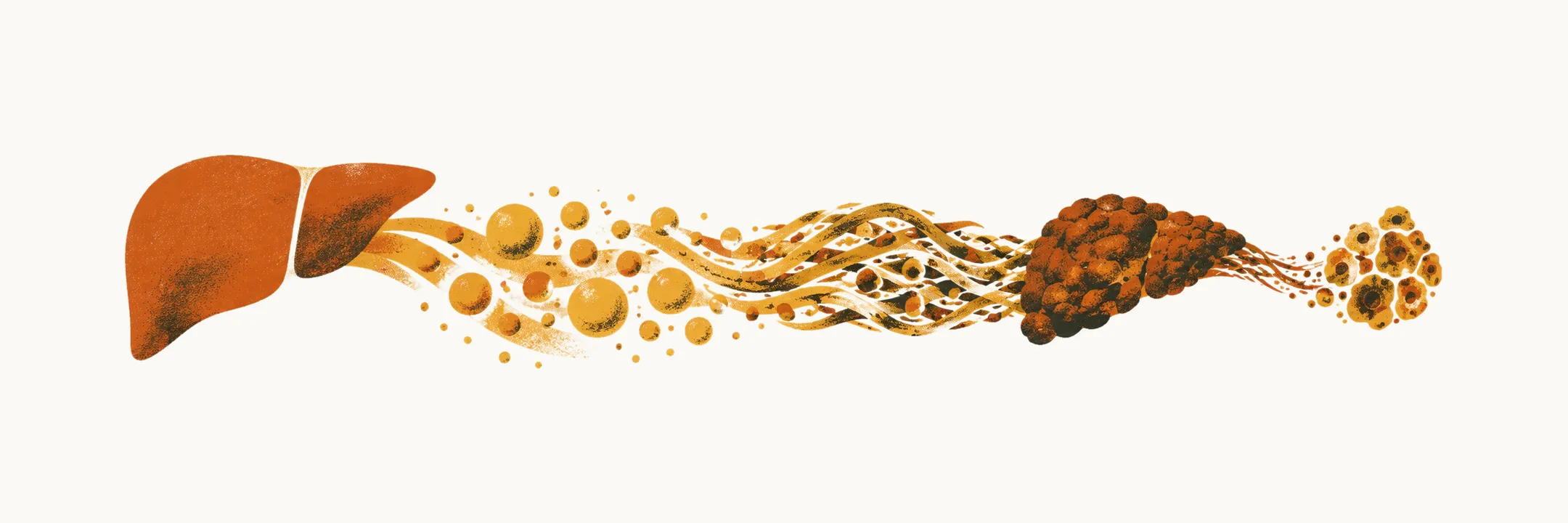
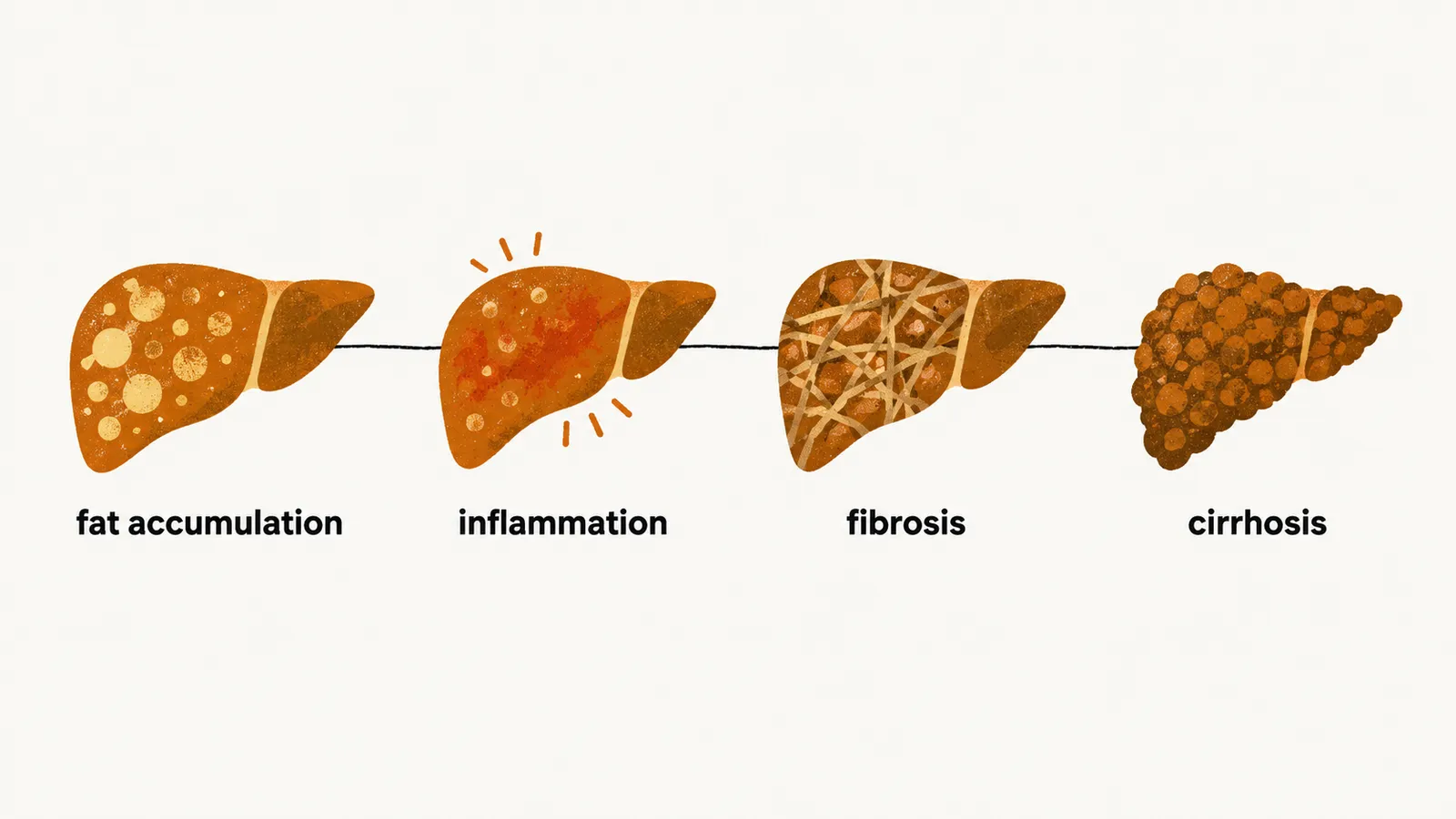
Alcohol-associated liver disease (ALD) is the spectrum of liver injury that chronic heavy drinking produces. It begins with fat accumulating in liver cells, the hepatocytes (steatosis), may progress through inflammation (steatohepatitis) and scarring (fibrosis) to cirrhosis, and in a further step can end in hepatocellular carcinoma (HCC). Two features organise the whole subject: the injury is dose-dependent, so the risk rises with the amount and pattern of drinking, and the earliest stages can improve when drinking stops.
A reader new to the subject can follow the notes below in order, from who is at risk, through how the injury arises and how it looks, to diagnosis, treatment and the acute severe syndrome of alcohol-associated hepatitis.
- Alcohol Consumption and Risk of Alcohol-Associated Liver Disease explains how much and how a person drinks, and which host factors decide who progresses.
- Pathogenesis of Alcohol-Associated Liver Disease explains how ethanol and its metabolites injure the hepatocyte and how fibrosis develops.
- Clinical Manifestations of Alcohol-Associated Liver Disease explains the often-silent course and the physical, laboratory and histological findings as the disease advances.
- Diagnosis and Treatment of Alcohol-Associated Liver Disease explains how harmful drinking is recognised, how ALD is classified and separated from its mimics, and the general management of the disease.
- Alcohol-Associated Hepatitis explains the acute severe syndrome, how its severity is scored, and when corticosteroids and early liver transplantation are used.