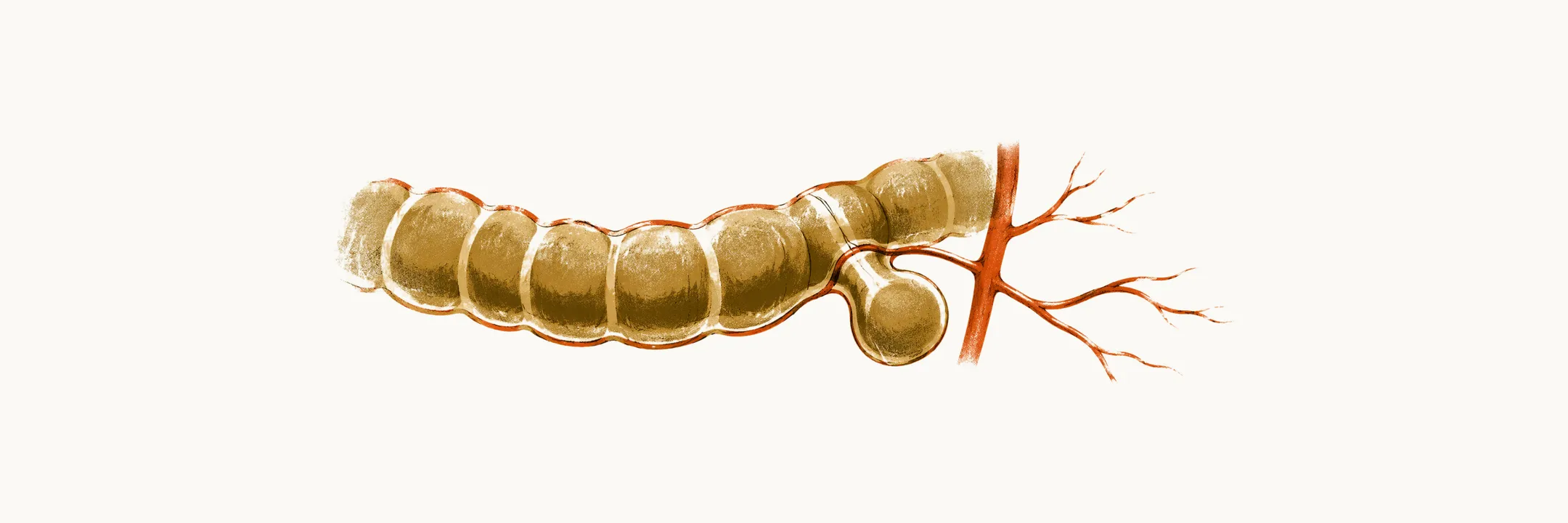
Diverticular disease of the colon begins with diverticulosis: acquired outpouchings of the colonic mucosa through the muscular wall, which most often lie in the left colon and the sigmoid, the S-shaped last segment of the colon before the rectum. Most people who have them never develop symptoms, and the outpouchings become steadily more common with age. The disease matters because a diverticulum can become inflamed — diverticulitis — or bleed, and these two complications carry almost all of its clinical weight. A single structural weakness of the colonic wall underlies both.
Where to start
The route runs from mechanism to patient, from how a diverticulum forms to how its complications are recognised and treated:
- Pathology and Pathogenesis — how and where diverticula form, and why the same weakness of the colonic wall underlies diverticulitis and diverticular bleeding.
- Clinical Manifestations — how asymptomatic diverticulosis, symptomatic uncomplicated diverticular disease and the two complications present.
- Diagnosis — why colonoscopy is avoided during an attack and how ultrasound and CT establish the diagnosis and its complications.
- Management — how uncomplicated and complicated diverticulitis and diverticular bleeding are treated, and how recurrence is prevented.