Hereditary hemochromatosis (HH) is a group of inherited disorders in which the intestine absorbs more iron than the body needs, and the surplus is deposited in different organs of the body. Pathologists first described the condition in the 1860s, and clinicians later recognised patients with iron deposits in the skin, from which the condition took the name hemochromatosis.
Study of iron metabolism and the introduction of genetic testing then showed what these disorders share: an increase in intestinal iron absorption and the deposition of iron in different organs. They are grouped together as hereditary hemochromatosis (HH), and are sometimes called primary hemochromatosis, to distinguish them from iron overload caused by disorders of erythropoiesis or by repeated blood transfusions.
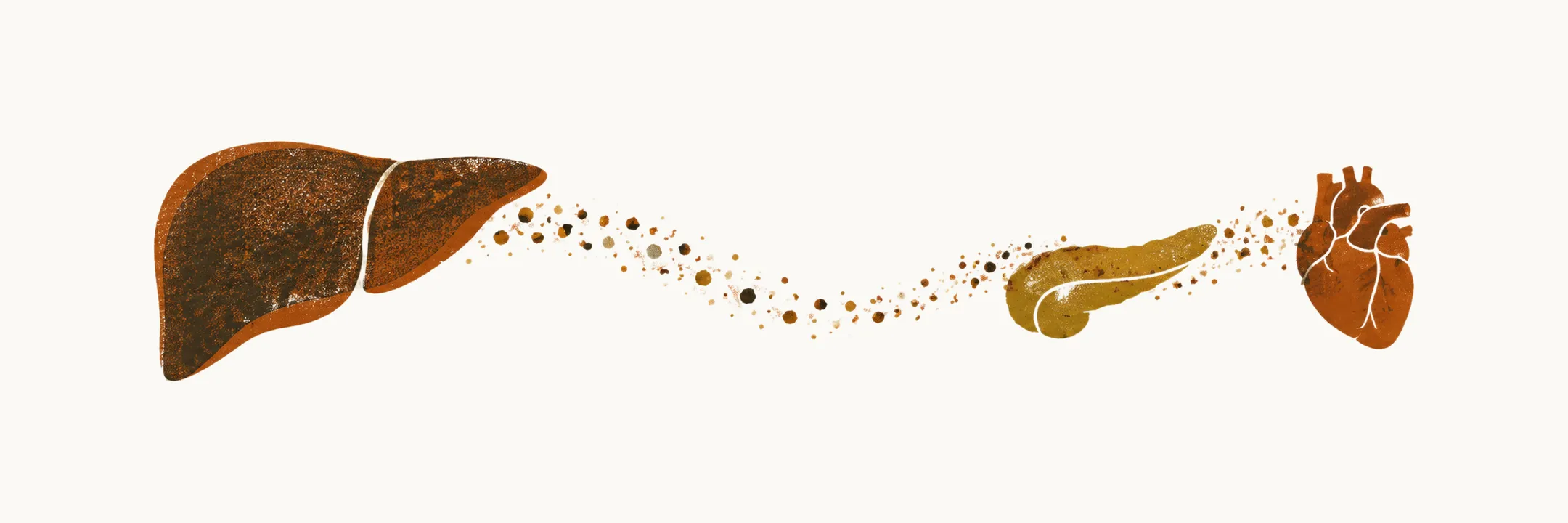
The tissue involved most often is the liver. The pancreas, the pituitary gland, the heart and the joint space can also be affected. HFE-related disease is by far the commonest form; it is recessive, meaning disease appears only when both copies of the gene are affected, and it is usually caused by homozygosity (two copies of the same variant) for the C282Y mutation.
Choose a route through the topic
The topic reads as one chain: a gene change alters how iron absorption is controlled, the excess iron damages organs, and the damage is recognised, confirmed and then limited by removing iron. The natural order begins with genetics and pathophysiology, to see why iron accumulates. Readers working from the patient’s side can go straight to diagnosis or treatment.
- Genetics of Hereditary Hemochromatosis: the common HFE-related form and the rarer mutations that cause disease.
- Pathophysiology of Hereditary Hemochromatosis: how the loss of hepcidin regulation raises intestinal iron absorption and damages tissue.
- Clinical Manifestations of Hereditary Hemochromatosis: how iron overload presents and who is affected.
- Diagnosis of Hereditary Hemochromatosis: the screening blood tests, C282Y genotyping and when a liver biopsy is needed.
- Treatment of Hereditary Hemochromatosis: how iron is removed and what phlebotomy aims to achieve.