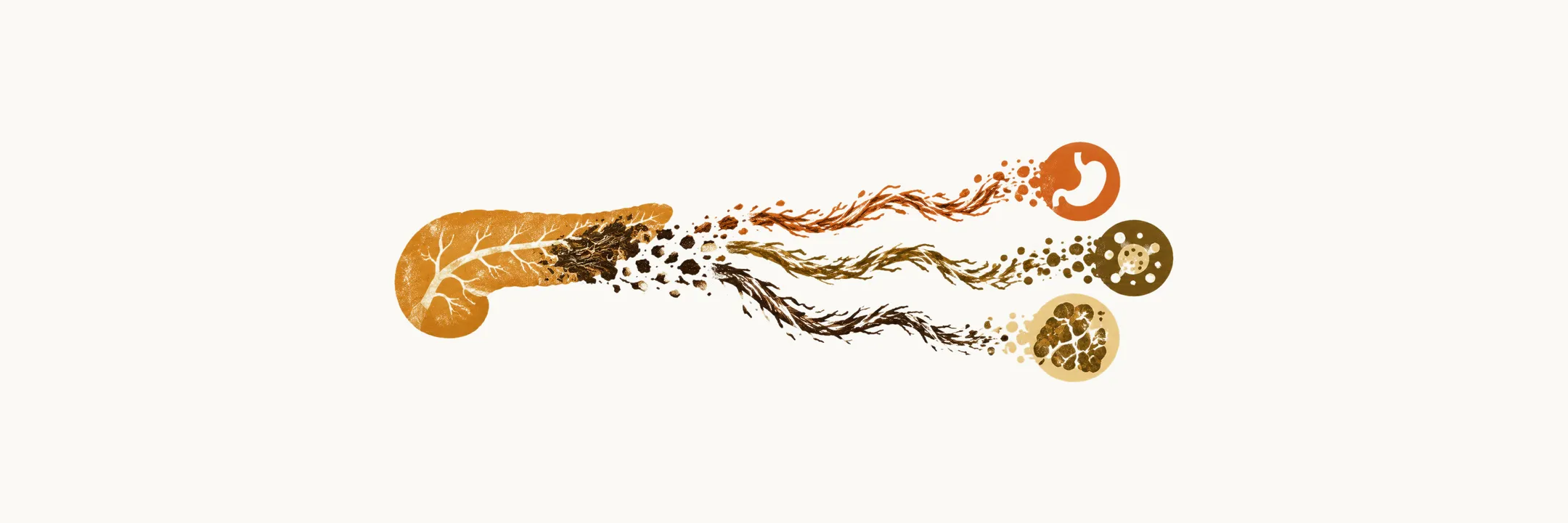
Chronic pancreatitis is a condition in which there is irreversible damage to the pancreas, as opposed to the reversible changes that can be seen in acute pancreatitis. It is defined based on the histological findings (the appearance of the tissue under the microscope) of chronic inflammation, fibrosis, and progressive atrophy of the exocrine and endocrine pancreas. The exocrine pancreas makes the digestive enzymes and the endocrine pancreas makes hormones such as insulin, so it is this loss of functioning tissue that produces the disease’s three main problems: pain, maldigestion and diabetes.
The idea that organises the topic is therefore tissue loss: why the gland is injured, how that injury becomes permanent scar, what a scarred gland does to the patient, and what can be done about it.
Where to start
A reader new to the topic can follow the disease in order: its causes and the mechanism of scarring first, then what patients experience, then a subtype that behaves differently, and finally how the disease is recognised and managed.
- Causes and Risk Factors — the main causes of chronic pancreatitis, and the gene variants behind many idiopathic cases.
- Pathophysiology — how activated pancreatic stellate cells and the necrosis-fibrosis sequence replace the parenchyma with fibrotic tissue.
- Clinical Features — the pain, steatorrhea, weight loss, diabetes and complications that the disease produces.
- Autoimmune Pancreatitis — the two recognised types, their histology and their dramatic response to steroids.
- Diagnosis — the imaging findings and the pancreas function tests, including the secretin stimulation test.
- Treatment — pain control, pancreatic enzyme replacement, diabetes management and treatment of structural complications.