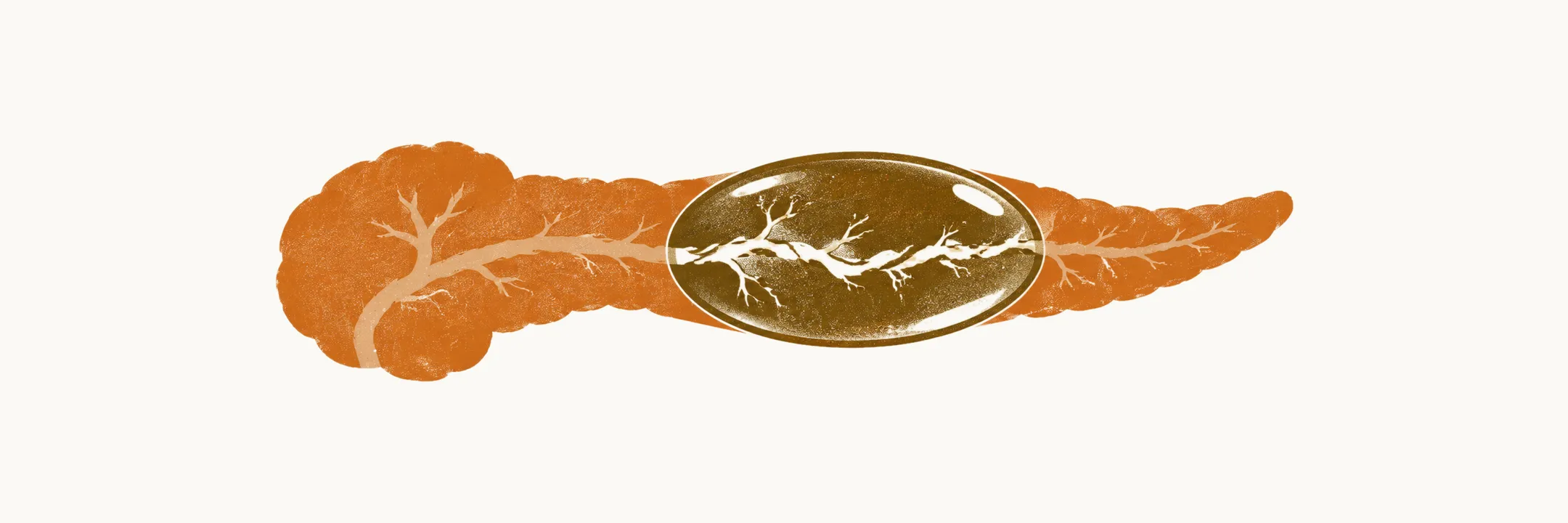
Chronic pancreatitis is diagnosed from the combination of a suggestive history, imaging of the pancreas and pancreas function tests. No single test is decisive, and early or mild disease is genuinely difficult to detect because there is no specific biomarker (a measurable substance that signals disease) that can be used for screening.
When to suspect it
The history is what starts the work-up. Chronic pancreatitis should be suspected in patients with chronic abdominal pain or a history of relapsing acute pancreatitis, in those with symptoms of exocrine pancreatic insufficiency (maldigestion because the pancreas no longer makes enough digestive enzymes), and in those with pancreatogenic diabetes (diabetes caused by loss of pancreatic tissue).
Imaging
The radiographic evaluation of a patient with suspected chronic pancreatitis is initiated with the abdominal CT, followed by MRI, endoscopic ultrasound (EUS), and finally the pancreas function test. CT is the best initial test in a patient suspected of having chronic pancreatitis, with an overall sensitivity and specificity of more than 80%. Its main findings are calcification, atrophy of the pancreas and dilation of the pancreatic duct.
Another modality is MRI or MRCP (magnetic resonance cholangiopancreatography) with an infusion of secretin, which gives a better appearance of the ducts of the pancreas. In both ERCP (endoscopic retrograde cholangiopancreatography) and MRCP, chronic pancreatitis shows a stricture of the pancreatic duct with dilated areas.
In autoimmune pancreatitis, ERCP and MRCP may show intrahepatic bile duct strictures with narrowing and dilation in different parts, a pattern that mimics primary sclerosing cholangitis; this can happen in up to 33% of cases of AIP.
The use of EUS in the diagnosis of chronic pancreatitis is still evolving, but it can be quite misleading in patients with diabetes or a smoking history, whose glands may show changes that are not due to chronic pancreatitis.
Laboratory findings
Unlike acute pancreatitis, in which serum lipase and amylase (pancreatic digestive enzymes) rise strikingly, these two biomarkers are mostly not increased in chronic pancreatitis. Low serum amylase and lipase can be specific for chronic pancreatitis, but they do not have good sensitivity. Bilirubin and alkaline phosphatase, by contrast, are commonly increased, because inflammation and obstruction in the pancreatic duct can damage the biliary tract and release biliary biomarkers.
Pancreas function tests
Imaging shows structure, but the pancreas can also be tested for what it does. Pancreatic function can be tested in different ways: hormone stimulation with CCK (cholecystokinin) or secretin, fecal elastase (the most commonly used), fecal chymotrypsin, fecal fat, serum trypsinogen, and blood glucose, which is indicative of damage to the endocrine tissue.
Although CT and MRCP show the structural changes well, the most sensitive test for chronic pancreatitis is hormone stimulation with secretin. The patient is infused with secretin, and the fluid secreted from the pancreatic duct is collected from the duodenum endoscopically or through an oroduodenal tube. The bicarbonate concentration of that fluid is the cutoff for diagnosis, and because the test measures function rather than structure, it is able to detect even the early stage of disease.