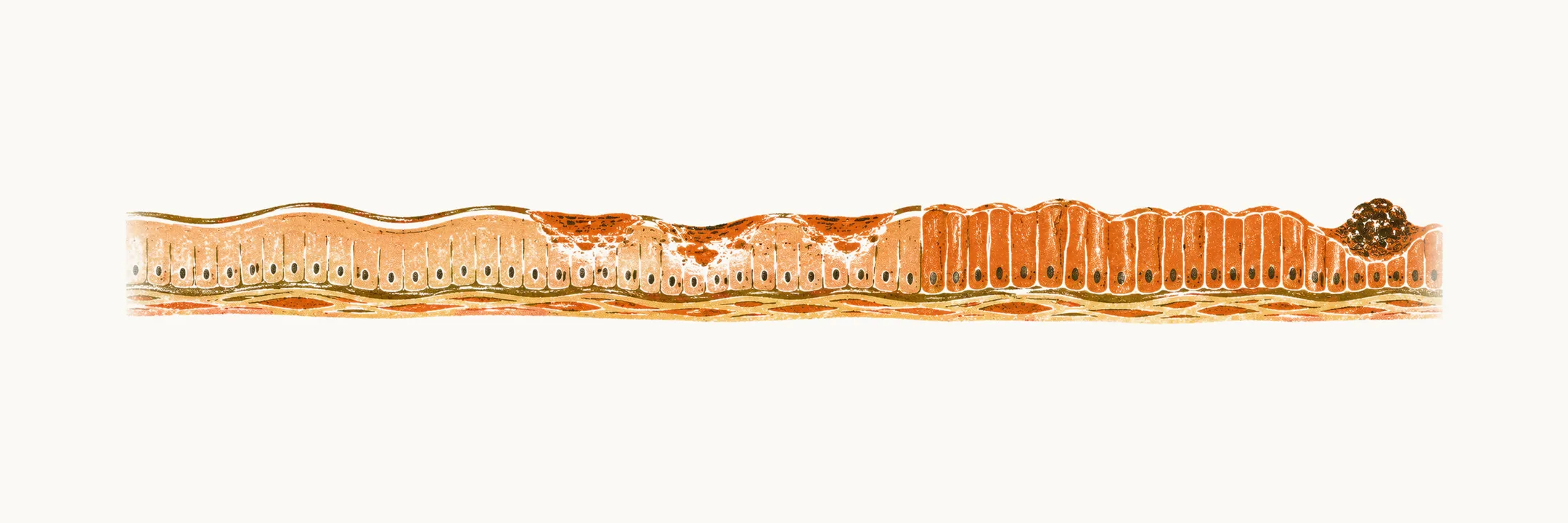
Chronic reflux can damage the esophagus, and the pattern of injury ranges from inflammation to cancer.
Scale and spectrum of injury
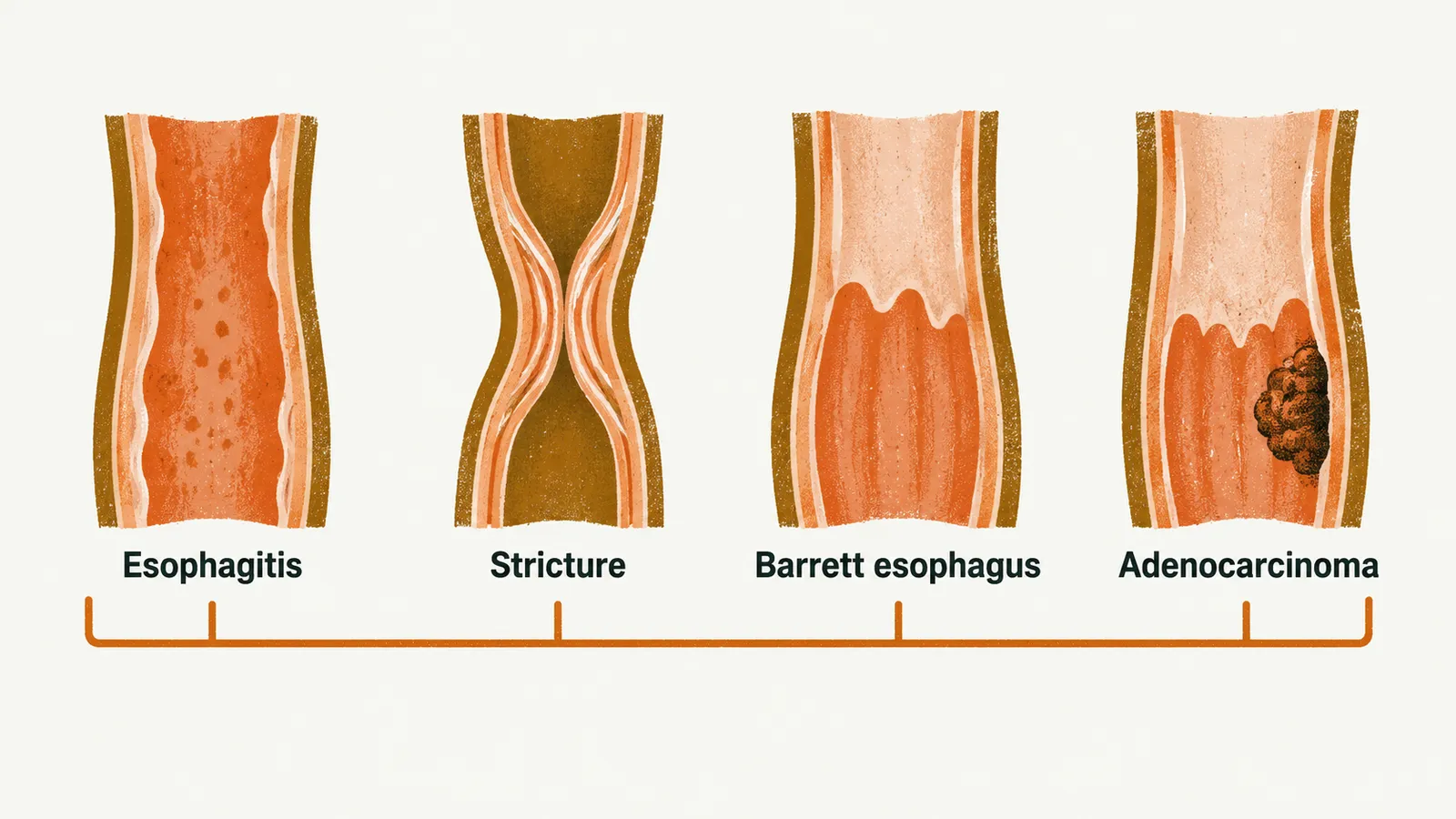
Based on the self-report of chronic heartburn, about 10-15% of adults in the United States have GERD. The damage chronic reflux can cause includes esophagitis (inflammation of the esophageal lining), stricture (a narrowing of the esophagus), Barrett esophagus and esophageal adenocarcinoma. The incidence of esophageal adenocarcinoma has risen up to 6-fold over the last 20 years, in parallel with the increase in GERD incidence.
Esophagitis and erosive damage
Esophagitis is the best-defined subset of GERD, although patients with esophagitis make up a minority of all the cases; the injury is driven by acid and pepsin acting on the esophageal mucosa. Erosive damage such as peptic ulcers and strictures has decreased significantly with the use of potent acid suppressants.
Barrett esophagus
Barrett metaplasia, by contrast with erosive damage, has increased. Metaplasia means that one type of mature tissue is replaced by another: in Barrett esophagus the normal squamous lining of the distal esophagus is replaced by columnar mucosa, which appears at endoscopy as salmon-like mucosal changes extending proximally from the gastroesophageal junction.
Barrett esophagus can progress to esophageal adenocarcinoma, with the risk of cancer progression assessed as 0.1-0.3% per year. The group most at risk of this progression is white men who are obese and in their sixth decade of life. Barrett esophagus is graded as low-grade or high-grade dysplasia. High-grade dysplasia carries a high prevalence of coexisting adenocarcinoma that can be missed, so an additional procedure and treatment, such as endoscopic mucosal ablation, is recommended.