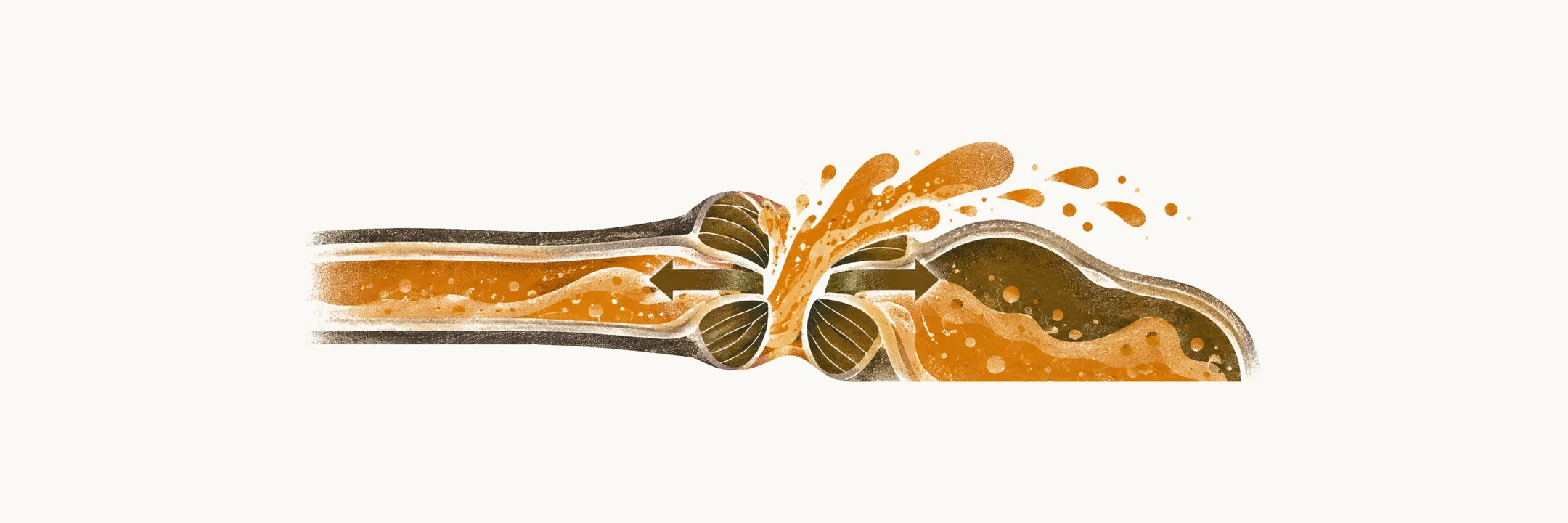
Gastroesophageal reflux disease begins with failure of the barrier that normally keeps gastric contents in the stomach. That barrier is the lower esophageal sphincter (LES), the ring of muscle at the gastroesophageal junction where the esophagus meets the stomach.
A minimal amount of gastric juice reflux is normal and physiological, and it is needed for belching. In GERD, however, the relaxation of the LES is more than enough, and repeated episodes let gastric contents damage the gastroesophageal junction.
Why the barrier fails
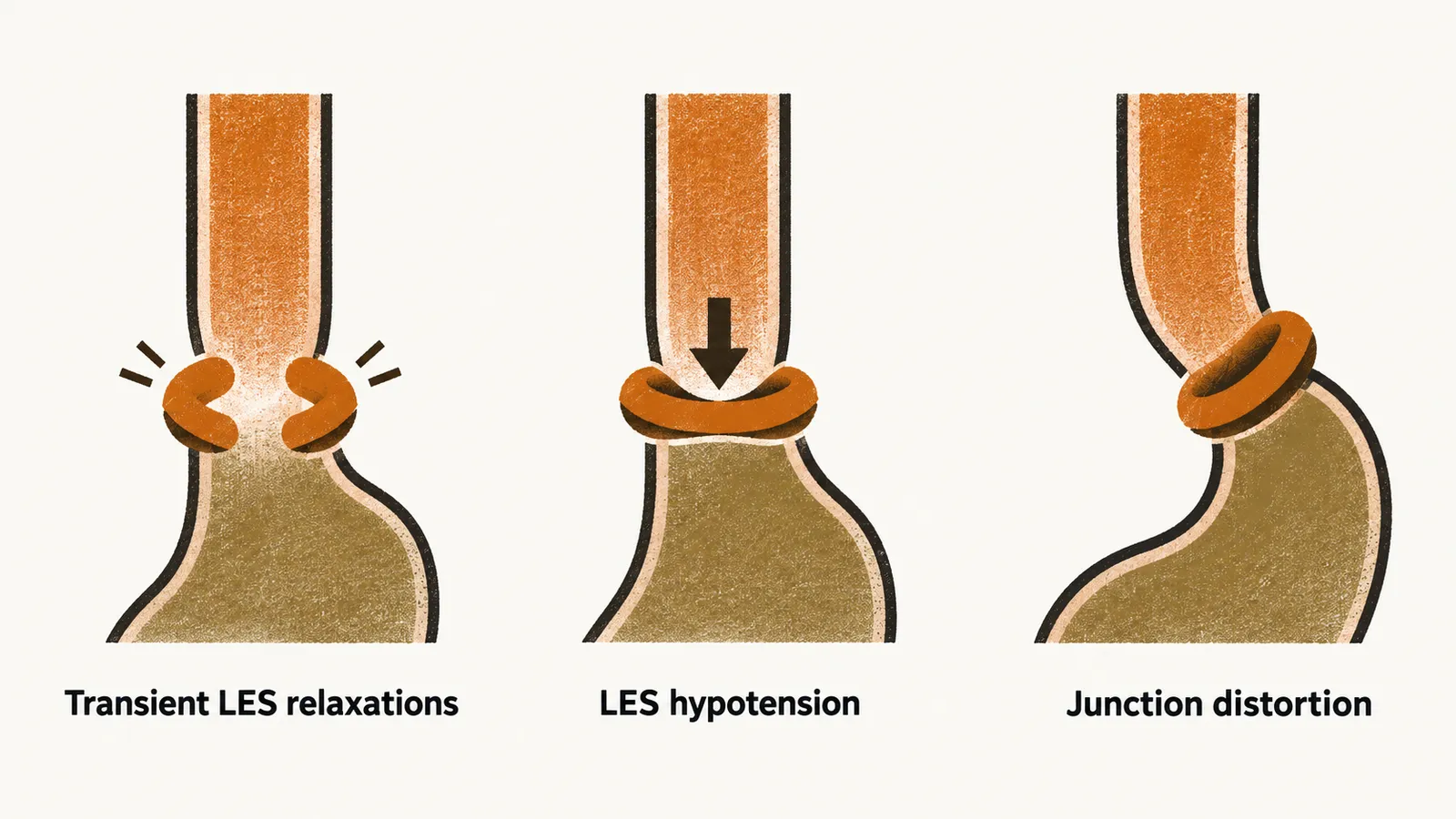
The sphincter fails through three mechanisms, which often coexist. The first, and the dominant one, is transient LES relaxations: brief, inappropriate openings of the sphincter that are not triggered by swallowing. They account for more than 90% of reflux in patients without an anatomical problem such as a hiatal hernia.
The second is LES hypotension, a resting sphincter pressure that is too low, which allows reflux without a specific relaxation. The third is distortion of the gastroesophageal junction, such as in a hiatal hernia, which pulls the sphincter out of position so it no longer closes effectively.
What raises acid exposure
Beyond the sphincter itself, several factors increase how much gastric content reaches the esophageal mucosa. Some foods lower LES pressure and so predispose to reflux: chocolate, mint and lipids (fats). The others act differently, by increasing what is available to reflux or the force pushing it upward:
- Abdominal obesity and pregnancy both raise the pressure inside the abdomen and push gastric contents upward.
- Delayed transit time of the stomach leaves contents in the stomach longer, giving them more opportunity to reflux.
- A hypersecretory state of the stomach (excess acid production) is not a dominant cause of esophagitis and GERD, except in Zollinger-Ellison syndrome, in which a gastrin-producing tumour drives acid output so high that more than 50% of cases develop esophagitis.
Clearing the refluxate
After reflux reaches the esophagus, two mechanisms normally clear the acid: peristalsis, the wave of contraction that returns the refluxate to the stomach, and saliva, whose bicarbonate raises the pH. When either is impaired, acid remains in contact with the mucosa for longer.
Acid is not the only damaging component of the refluxate. Pepsin, a protein-digesting enzyme, and pancreatic enzymes travel with it, and bile has an important effect on the pathogenesis of Barrett esophagus and esophageal adenocarcinoma, two of the lasting injuries that chronic reflux can cause.