Side effects and complications related to non-steroidal anti-inflammatory drugs (NSAIDs) are considered the most common drug-related complications in the United States.
The spectrum of gastrointestinal complications of NSAIDs ranges from nausea and dyspepsia, which affect about 50–60% of users, to the more severe ones, such as peptic ulceration, which occurs in 15–30% of users. No dose of NSAIDs is completely safe; even low-dose aspirin can cause gastrointestinal damage.
Mechanism of injury
Prostaglandins are one of the critical actors in maintaining the integrity of the mucosal barrier of the stomach, and NSAIDs act mainly by altering their activity and level there. They do so because NSAIDs inhibit cyclooxygenase (COX), the enzyme that makes prostaglandins, so the protective effects of prostaglandins — mucus and bicarbonate secretion, mucosal blood flow and epithelial repair — are lost.
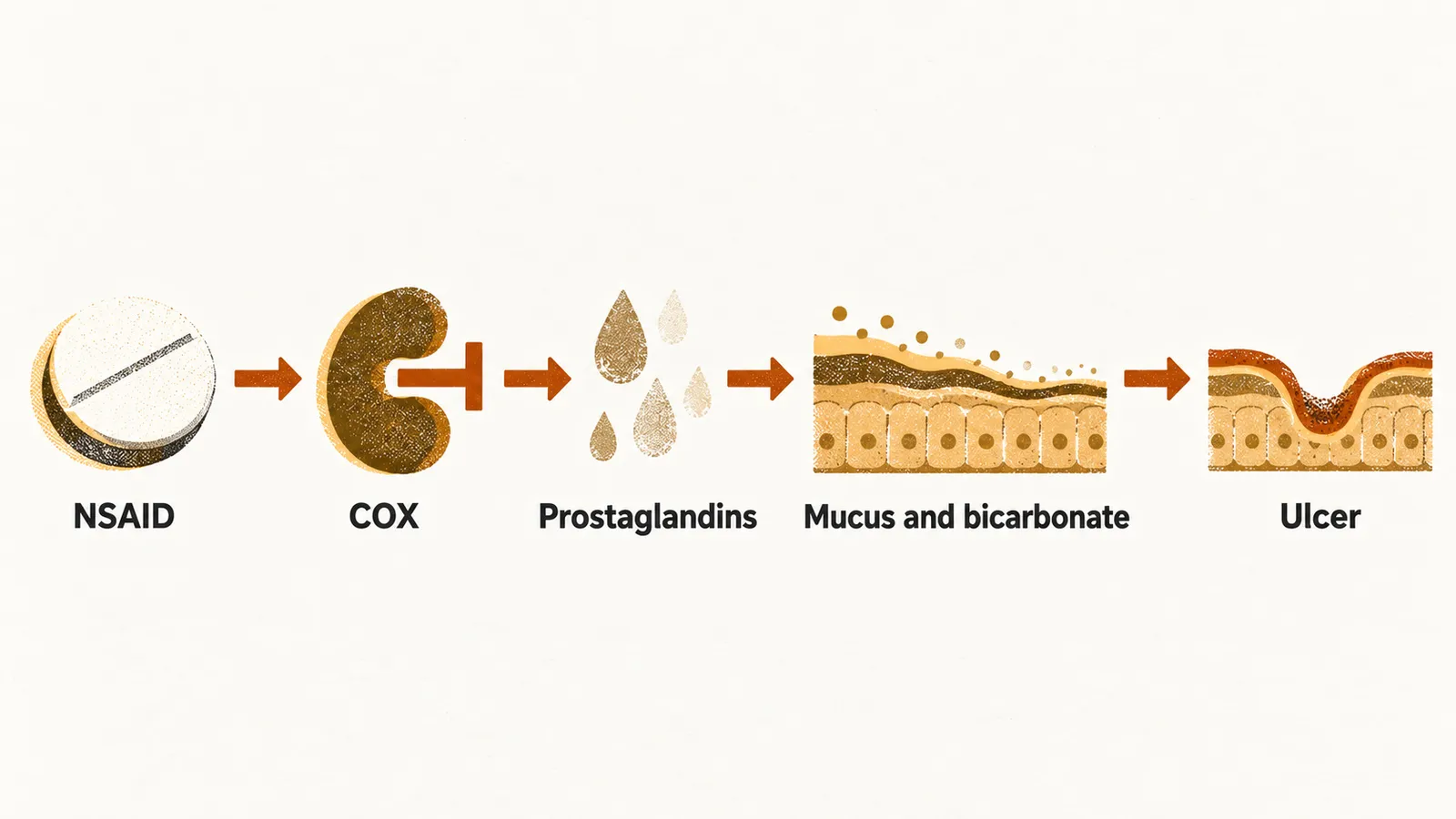
Other than this molecular pathway, the topical presence of NSAIDs can also cause damage: it increases the permeability of the epithelial barrier, permitting back-influx of acid and pepsin into the cells, and it enters the epithelial cells, where it accumulates and damages them. Even enteric-coated or buffered forms of NSAIDs, which limit direct contact with the stomach, are associated with an increased risk of ulceration.
Risk factors
The established risk factors for gastrointestinal bleeding due to peptic ulcer disease (PUD) in NSAID users are:
- advanced age;
- a history of ulcer;
- concomitant use of glucocorticoids;
- concomitant use of antiplatelet agents such as clopidogrel;
- multiple NSAIDs;
- high-dose NSAIDs;
- serious systemic disorders;
- concomitant use with selective serotonin reuptake inhibitors (SSRIs);
- alcohol and cigarette use.
Some polymorphisms of cytochrome P-450 2C9, 2C8 and 2C19, which metabolise NSAIDs, also make carriers more prone to NSAID-induced PUD.