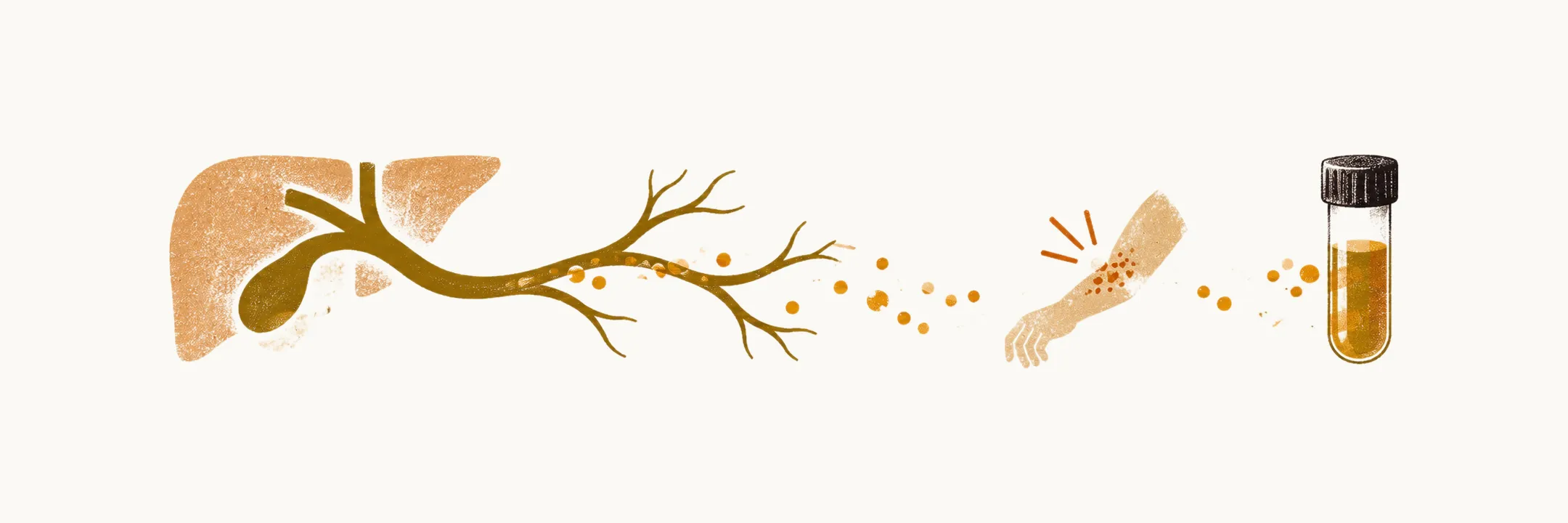
Primary biliary cholangitis (PBC), a chronic autoimmune disease of the small bile ducts of the liver, is often discovered before it causes symptoms.
Epidemiology
PBC is the most common chronic cholestatic liver disease in adults (cholestasis means impaired bile flow). It affects mainly middle-aged women; the reported female-to-male ratio is about 9:1. Incidence and prevalence vary widely between countries and regions, with reported incidence ranging from 0.7 to 49 per million population.
Clinical manifestations
About half of the patients with PBC are asymptomatic when the diagnosis is made. Because liver tests are now measured routinely, an increasing share of patients is found while still asymptomatic, and the widespread use of laboratory screening tests means more than 60% are identified in the asymptomatic phase. The most common symptoms are fatigue and pruritus (itching), the itching usually intermittent during the day and more intense in the evening and at night.
Jaundice is mostly absent at diagnosis. When it becomes persistent later in the disease it is related to a worse prognosis. Symptoms of liver failure, such as gastrointestinal bleeding and hepatic encephalopathy (brain dysfunction from liver failure), appear late in the course.
On physical examination the most common finding is hyperpigmentation of the skin; hepatomegaly and splenomegaly (enlargement of the liver and spleen) may also be found. Chronic cholestasis causes malabsorption of the fat-soluble vitamins, so vitamin K deficiency can produce bleeding disorders and vitamin D deficiency contributes to osteoporosis. The laboratory picture is a raised alkaline phosphatase (ALP, a liver test that rises in cholestasis) together with positive AMA (anti-mitochondrial antibodies, the characteristic autoantibody of PBC).
PBC is not restricted to the liver: similar cellular changes can be seen in the salivary glands and lacrimal glands, and they are probably related to the autoimmune disorders that occur alongside the disease.
Associated disorders
Those autoimmune and related conditions are the other part of the presentation. Several occur together with PBC, most commonly:
- autoimmune thyroiditis — about 45%
- Sjögren syndrome
- rheumatoid arthritis (RA)
- renal tubular acidosis
- systemic sclerosis and its variants
- celiac disease