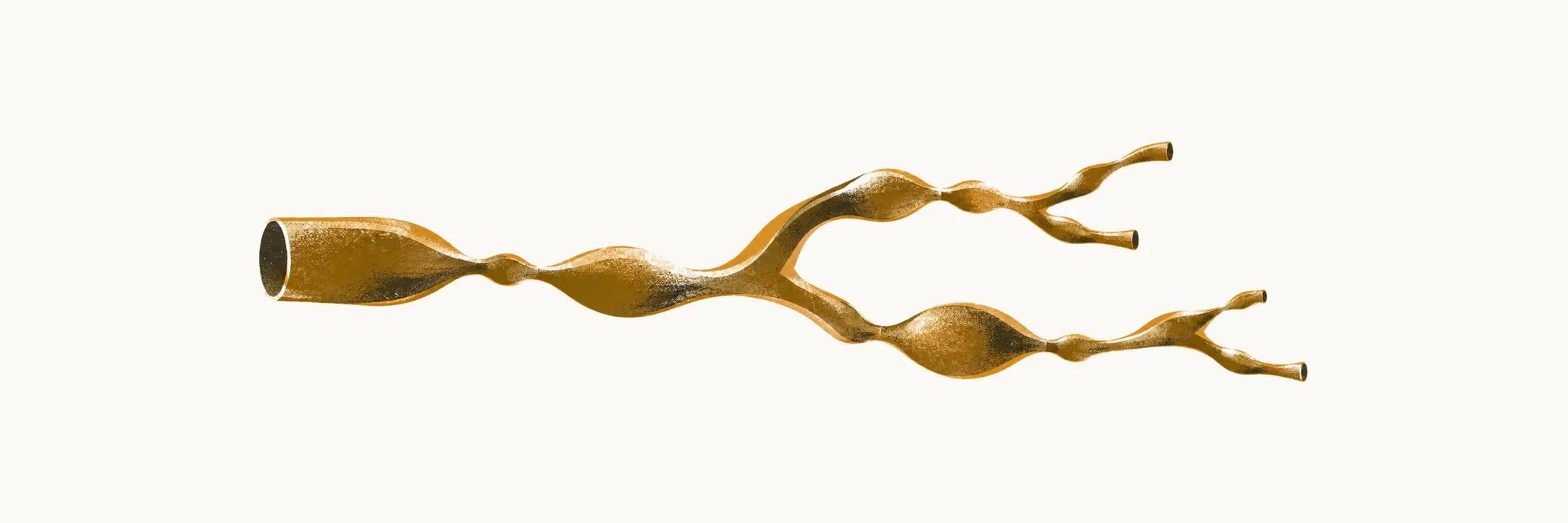
Sclerosing cholangitis is a spectrum of cholestatic disorders — diseases in which the flow of bile is impaired — characterised by patchy inflammation, fibrosis (scarring) and destruction of the intrahepatic and extrahepatic biliary tract, that is, the bile ducts inside and outside the liver. They are chronic and progressive, leading to biliary obstruction, cirrhosis, hepatic failure and the complications that follow. Secondary sclerosing cholangitis looks the same but is caused by a known disease or injury; when no such cause is found, the disease is called primary sclerosing cholangitis (PSC). The bile ducts narrow in multiple places at once, and it is this multifocal narrowing, not a single blockage, that the diagnosis is built on.
Choose a route through this family
PSC is easiest to learn in three steps: what the disease is and why it develops, how it is recognised, and what it means for the patient. A reader new to the topic can follow that order; a reader with a specific question can go to the matching note.
The first three notes cover how common PSC is, who it affects and how it behaves over time, then how it is classified and why it develops.
- Epidemiology and Natural History of Primary Sclerosing Cholangitis: how often PSC occurs, the age and sex pattern, its strong link with inflammatory bowel disease, and the usual course from silent disease to cirrhosis.
- Forms of Primary Sclerosing Cholangitis: the large-duct and small-duct forms, and what separates them.
- Pathogenesis of Primary Sclerosing Cholangitis: the genes, the immune response to gut-derived bacterial products and the altered bile composition thought to interact in the disease.
Recognition comes next: how PSC presents, what the bile ducts look like on imaging, and what a biopsy shows.
- Clinical Features and Laboratory Findings in Primary Sclerosing Cholangitis: the symptoms and the laboratory pattern that suggest PSC.
- Cholangiographic Findings in Primary Sclerosing Cholangitis: the multifocal strictures and beaded appearance that define the disease on imaging.
- Histology and Staging of Primary Sclerosing Cholangitis: the onion-skin fibrosis and the four stages used to grade it.
The last three notes combine those findings into a diagnosis and carry it through to what the disease means for the patient.
- Diagnosing Primary Sclerosing Cholangitis: how the pieces are combined, which test comes first, and how secondary causes are excluded.
- Complications of Primary Sclerosing Cholangitis: dominant strictures, recurrent cholangitis, cirrhosis and the cancers PSC predisposes to.
- Management of Primary Sclerosing Cholangitis: what treatment can and cannot do, how strictures and symptoms are handled, cancer surveillance, and when transplantation is considered.