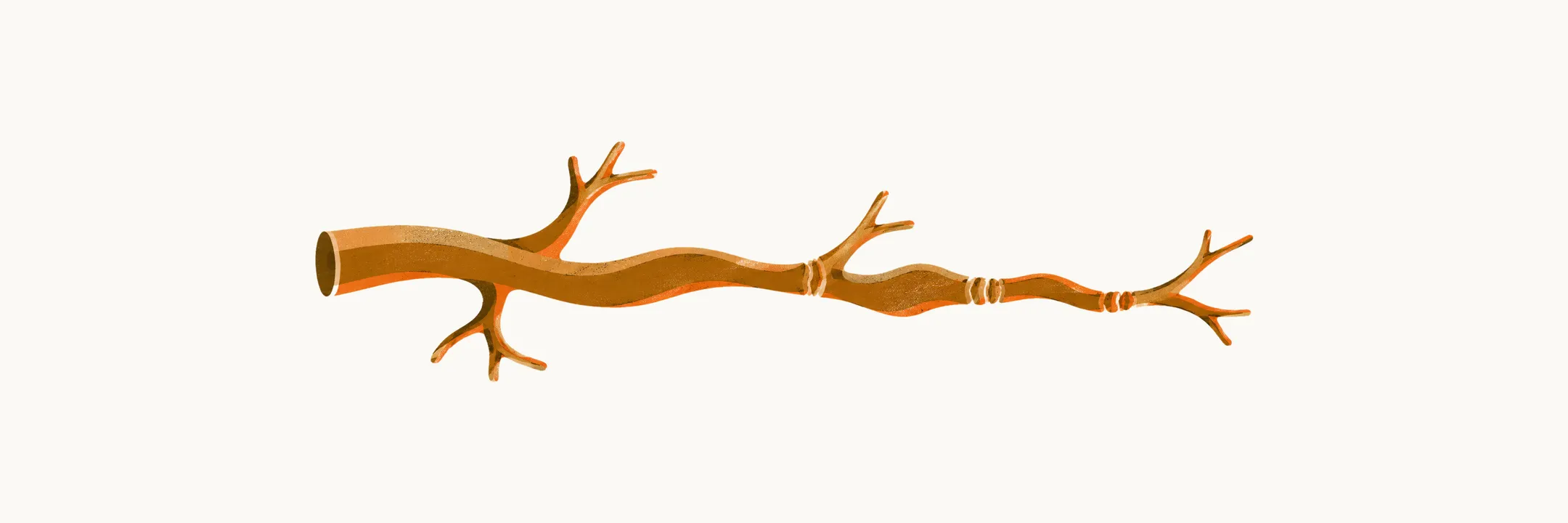
Primary sclerosing cholangitis (PSC) is a chronic disease in which the bile ducts become inflamed and scarred. It is uncommon. In North America and Northern Europe its incidence (new cases per year) is approximately 1–1.5 new cases per 100,000 population per year, and its prevalence (cases present at a given time) is about 16 cases per 100,000. Most patients are between 25 and 45 years old, and the median age at diagnosis is about 41. About two-thirds of patients with PSC are men, and women with PSC are generally diagnosed at older ages than men.
The link with inflammatory bowel disease
The strongest association PSC carries is with inflammatory bowel disease (IBD), the chronic inflammation of the gut that includes ulcerative colitis and Crohn disease. Most patients with PSC also have IBD; reported proportions are commonly between 60% and 80%. The relationship runs mainly one way: only a small minority of patients with IBD develop PSC — about 2.4–4% of those with ulcerative colitis and about 1.4% of those with Crohn disease. An IBD clinic therefore sees PSC rarely, and, taking the association from the other side, every patient diagnosed with PSC needs to be assessed for bowel disease.
Genetic and immune risk factors
PSC is not inherited in a simple pattern, but genes contribute to susceptibility. A sibling of a patient with PSC has roughly an 11-fold higher risk of the disease than the general population, and certain human leukocyte antigen (HLA) types, the inherited proteins that present antigens to the immune system, are over-represented. About a quarter of patients have another autoimmune disease as well. Together with the strong link to IBD, these observations support the idea that PSC arises when a genetically susceptible person meets an environmental or immune trigger, rather than from a single cause.
Natural history and prognosis
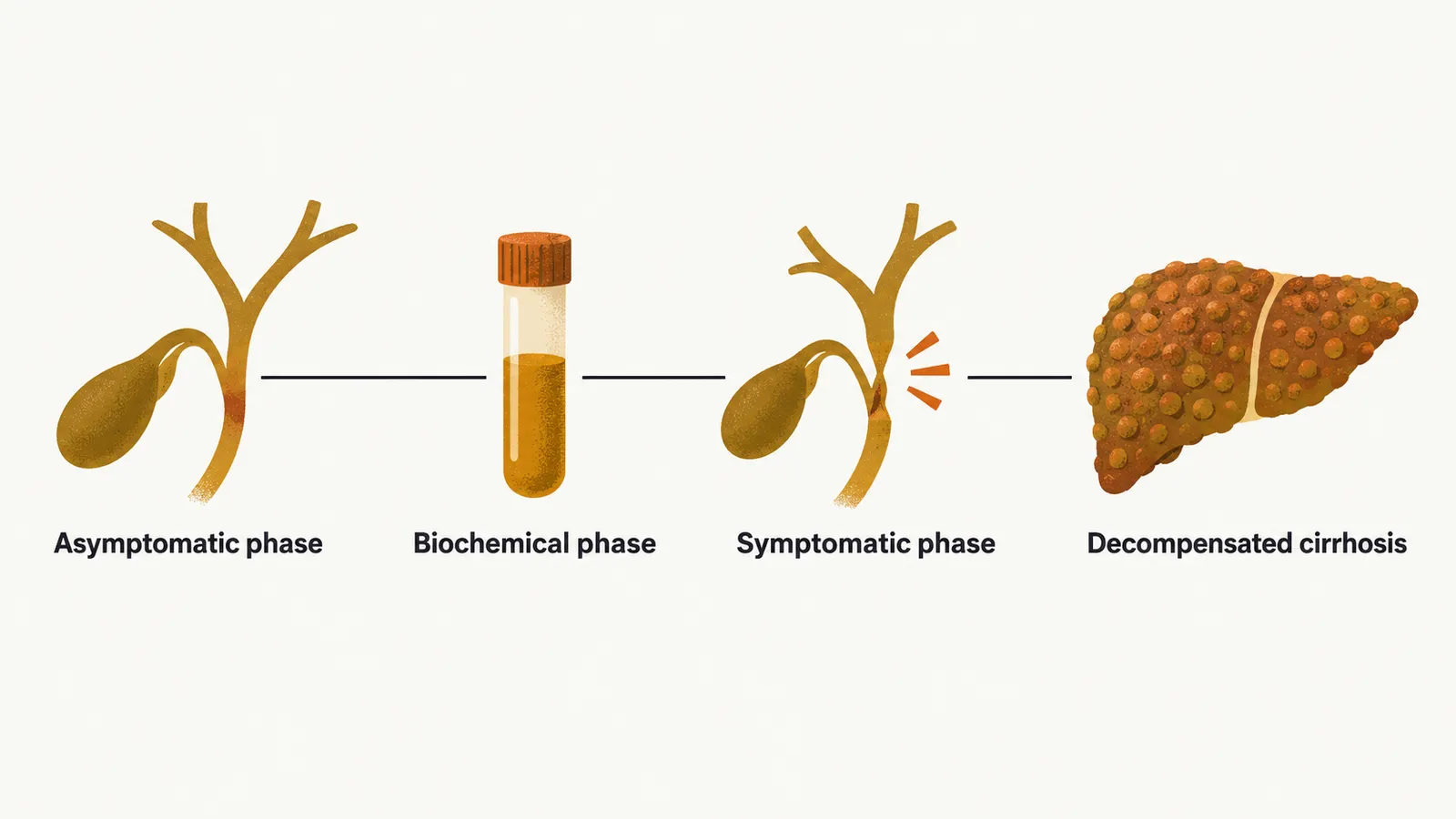
PSC is usually progressive, but the rate varies greatly from one patient to another. The course is commonly divided into phases. In an asymptomatic phase, the cholangiogram (the image of the bile ducts) shows bile-duct changes but the patient has no symptoms and the liver tests are normal. In a biochemical phase, the cholestatic liver tests become abnormal while the patient still feels well. In a symptomatic phase, fatigue, pruritus (itching), jaundice and episodes of cholangitis (infection and inflammation of the bile ducts) appear. The disease may finally reach decompensated cirrhosis, in which the scarred liver can no longer maintain its functions. The median time from diagnosis to death or liver transplantation is about 9 to 18 years, and within that wide range the pace of progression is what patients and clinicians plan around.
Because the course ranges so widely, it is natural to ask whether every patient has the same form of the disease, and how the cases can be told apart.