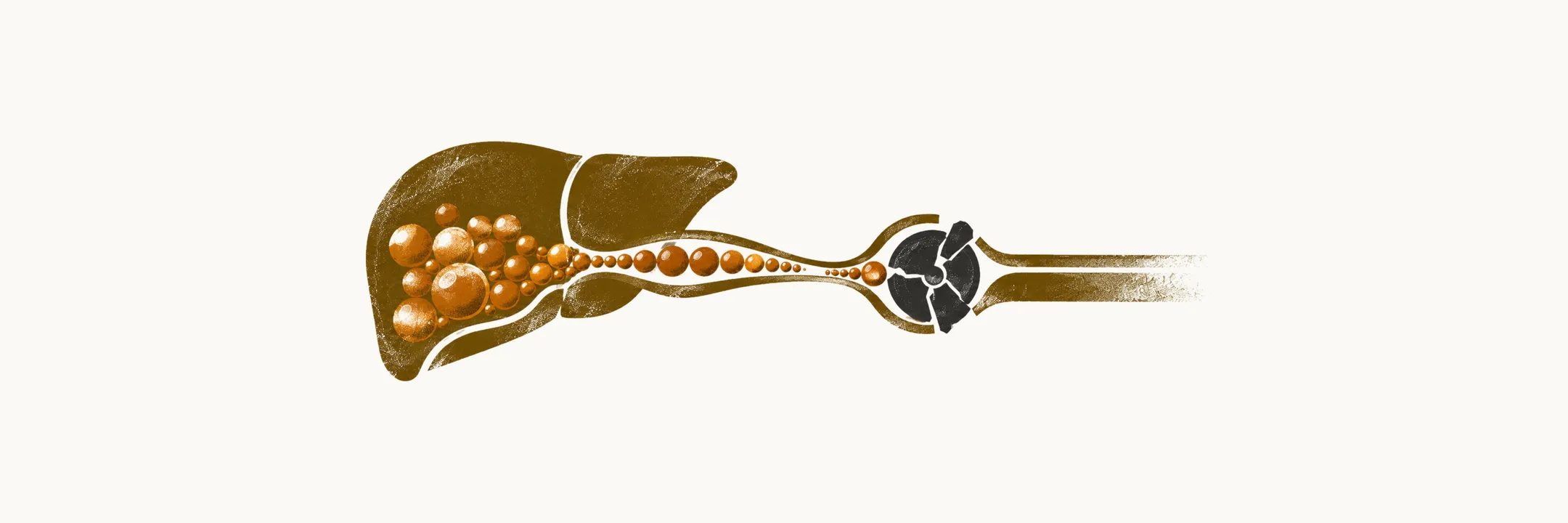
Wilson disease is an autosomal recessive disorder of copper metabolism. Copper that the liver cannot excrete into the bile accumulates first in the hepatocytes (liver cells) and later in the brain, kidney and cornea, where its toxicity produces the disease. The fault lies in ATP7B, the copper-transporting ATPase that both excretes copper into bile and loads ceruloplasmin, the main copper-carrying protein of the blood, with copper. Kinnear Wilson first described the condition in the 1910s as a familial disorder in which neurological disease accompanied cirrhosis.
Copper itself is an essential mineral, needed by several enzymes, and the diet supplies it well above daily need, so the body normally keeps the surplus moving out. Two genetic disorders disturb that balance: Menkes disease, an X-linked defect of intestinal absorption that causes generalised copper deficiency, and Wilson disease, in which copper overloads the body.
Where to start
The disease makes sense once the normal handling of copper is clear, so the sequence begins with the metal’s path from diet to cell and then with what the ATP7B fault does to it.
- Copper Physiology and Transport: how copper is absorbed, carried to the liver, handed to the enzymes that need it, and kept non-toxic by binding proteins.
- Pathophysiology of Wilson Disease: the ATP7B gene and its inheritance, the two jobs the transporter performs, and how retained copper injures the hepatocyte.
With the mechanism in hand, recognising the disease means knowing how it presents and how it is confirmed.
- Clinical Manifestations of Wilson Disease: the hepatic, neurological, psychiatric and ocular ways the disease appears, and how it mimics commoner conditions.
- Diagnosis of Wilson Disease: the biochemical tests and their pitfalls, the thresholds that support the diagnosis, genetic testing and the screening of relatives.
Once the diagnosis is made, the question is how to reverse the copper overload with drugs and surgery.
- Treatment of Wilson Disease: the chelators and zinc salts that restore a negative copper balance, liver transplantation, monitoring, and the outlook on treatment.