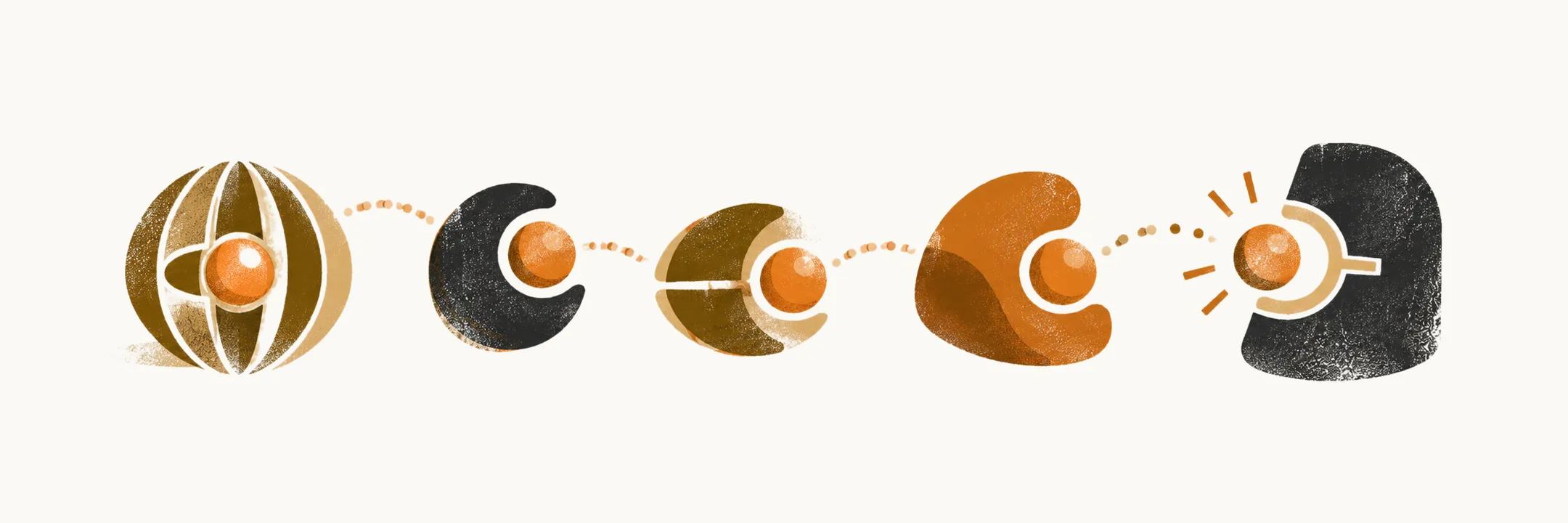
Copper is an essential trace element that the diet supplies well above daily need, yet free copper inside cells is kept very low, because unbound copper is toxic. The body therefore invests in proteins that carry copper, hand it to the enzymes that need it, and store the excess until it can be excreted.
How copper moves through the body
The copper absorbed in the intestine is transported in the blood to different organs through the loose attachment it has with albumin. Most of the absorbed copper is transported to the liver through the portal vein.
Inside the cells, copper is barely free: it is mostly attached to the enzymes that use it, or carried between different cell compartments with the help of intracellular proteins such as metallochaperones, which deliver copper to its targets without letting it react with other molecules.
In the liver, copper is attached to ceruloplasmin, the main copper-carrying protein of the blood. Ceruloplasmin circulating in the serum in adult life is about 200–400 mg/L. Ceruloplasmin is an inflammatory reactant, meaning its level rises in response to inflammation, so it increases during inflammatory conditions, infections, pregnancy and the use of exogenous estrogen.
In plasma, ceruloplasmin carries about 90% of the copper, and the remainder is bound to albumin and other proteins. The small non-ceruloplasmin-bound fraction, often called free copper, is the reactive part, and it is the fraction the kidney filters and the fraction the tests for Wilson disease follow.
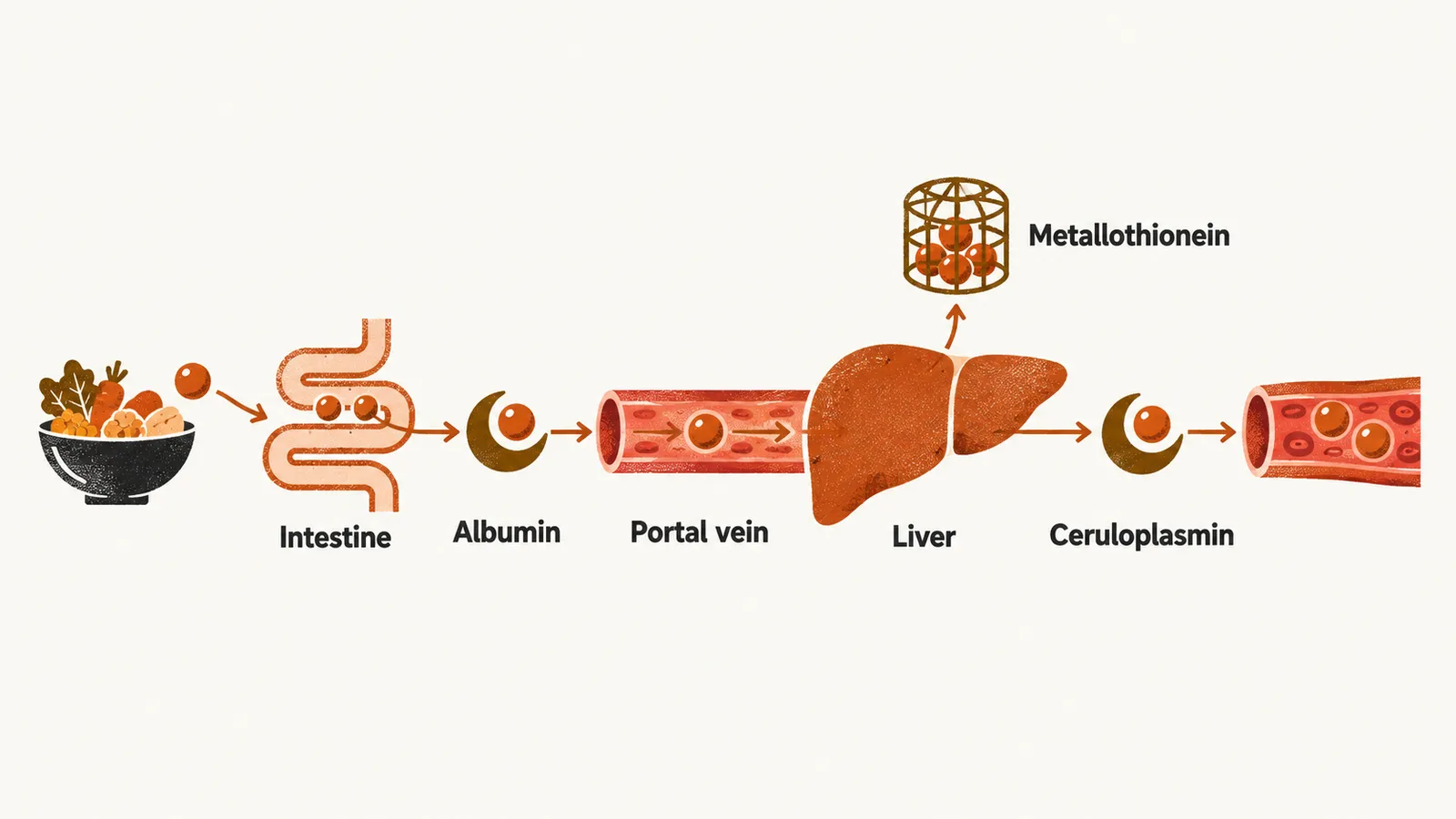
When intestinal and liver cells are overloaded with copper, metallothionein is induced; these are intracellular proteins that bind copper in a non-toxic form and hold it until the cell can deal with it.
The enzymes that need copper
The copper that the metallochaperones deliver ends up in enzymes, where it acts as a cofactor: a non-protein helper the enzyme needs in order to work. Enzymes across several systems depend on it, which is why both copper deficiency and copper overload cause disease. The main ones are:
- Lysyl oxidase, which cross-links collagen and elastin, so copper is needed for connective tissue.
- Superoxide dismutase, a free radical scavenger.
- Cytochrome oxidase, which is Complex IV of the mitochondrial electron transport chain and carries electrons to oxygen, so copper sits at the centre of energy metabolism.
- Tyrosinase, which produces pigment.
- Dopamine monooxygenase, which is needed for neurotransmission.
Because so many systems depend on copper, and because free copper is toxic, the body must both supply and excrete it, and the cell that does the excreting is the hepatocyte (the liver cell).