
Acute pancreatitis is defined by a small set of clinical, laboratory and imaging findings, and the episode is then graded by the organ failure and local complications it produces.
Diagnostic criteria
Based on the latest consensus, acute pancreatitis is defined in a patient who meets at least two of the three criteria below:
- symptoms consistent with pancreatitis;
- a rise in serum lipase or amylase of more than 3-fold above the upper limit of normal (ULN);
- radiological evidence in favour of acute pancreatitis on computed tomography (CT) or magnetic resonance imaging (MRI).
Pancreatitis is always defined as acute unless there is evidence from radiological imaging such as CT, MRI, endoscopic ultrasound (EUS) or endoscopic retrograde cholangiopancreatography (ERCP) that is indicative of a chronic process. If evidence of chronic involvement is present, any episode of acute pancreatitis is considered an exacerbation of chronic disease rather than a first isolated event.
Grades of severity
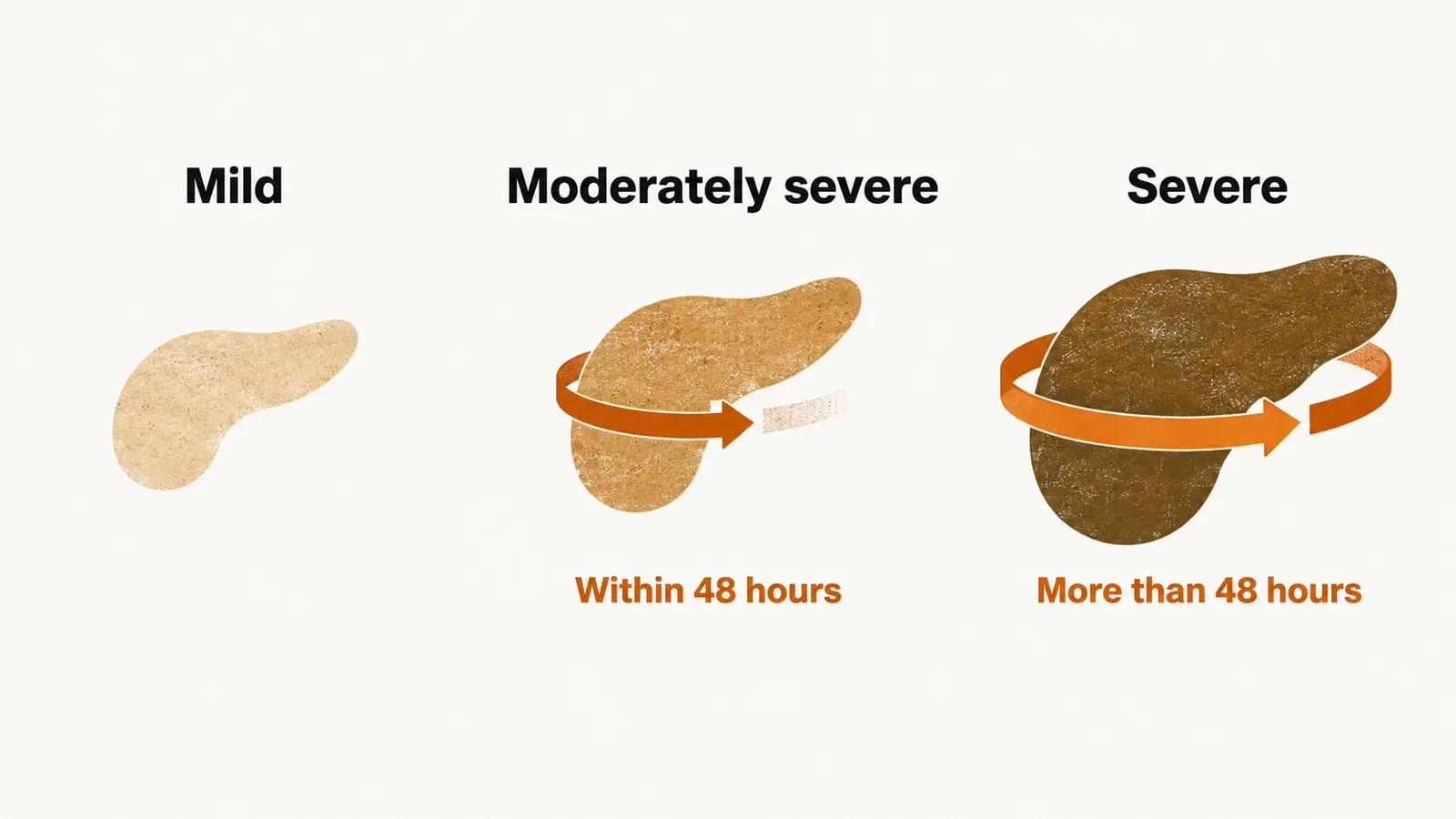
Once the diagnosis is made on the criteria above, the next step is to classify the episode into one of three subgroups that describe how sick the patient becomes:
- Mild acute pancreatitis — the most common form, which resolves within one week in most cases; there are no local or systemic complications and no organ failure.
- Moderately severe acute pancreatitis — defined as transient organ failure, local or systemic complications, or both. Transient means the organ failure resolves within 48 hours.
- Severe acute pancreatitis — the presence of organ failure for more than 48 hours is enough for the diagnosis.
The line between moderately severe and severe therefore turns on how long organ failure lasts, while the line between mild and the other two turns on whether organ failure or a local complication is present at all. The local complications that help define the moderately severe and severe grades, and the morphological terms that describe them, are covered in Complications of Acute Pancreatitis.
The first criterion is clinical, which raises the practical question of what an attack of acute pancreatitis looks like at the bedside.