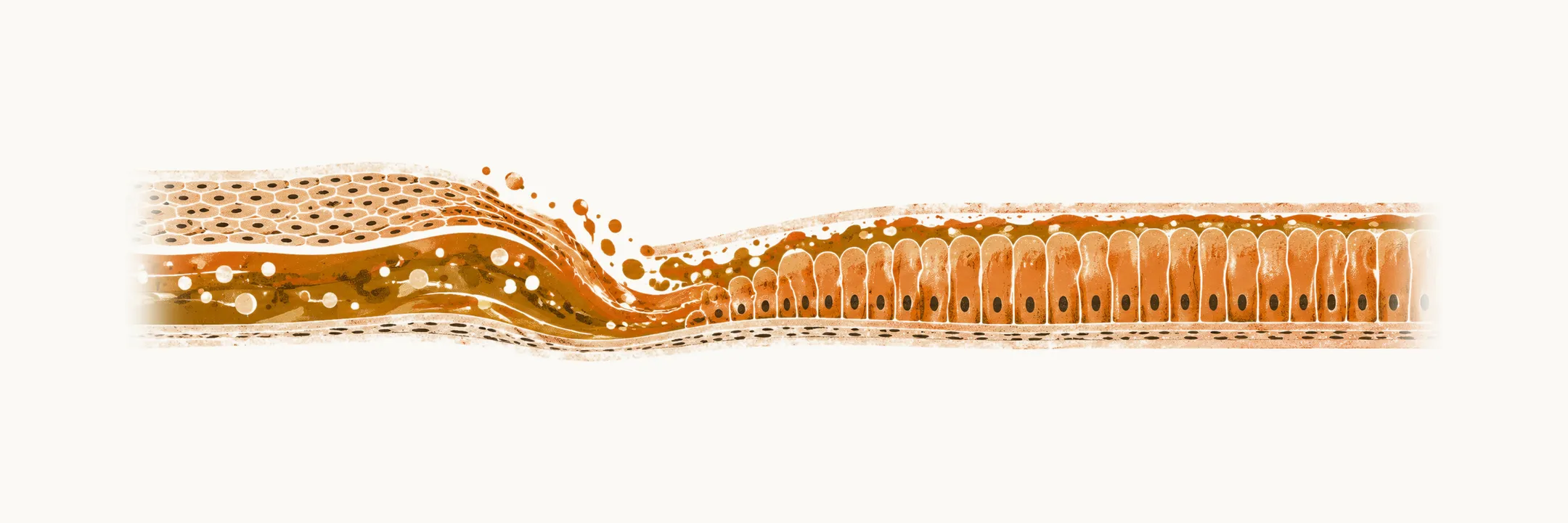
Barrett esophagus is a change in the lining of the distal esophagus: metaplasia, meaning one mature tissue type replaced by another, here normal squamous epithelium replaced by columnar epithelium of intestinal type. It begins with the injury that GERD (gastroesophageal reflux disease) does to the distal esophagus, and it matters because the same tissue can later progress to adenocarcinoma.
From reflux injury to metaplasia
Repeated exposure to refluxed acid and bile (a digestive fluid that can reflux into the stomach and esophagus) triggers a wound-healing response, and the squamous epithelium that is lost is replaced by columnar, intestinal-type mucosa instead of by new squamous cells.
This replacement is thought to be an adaptation. Intestinal-type columnar cells tolerate acid better than squamous cells do, so the tissue that grows back is more resistant to the ongoing injury than the lining it replaced.
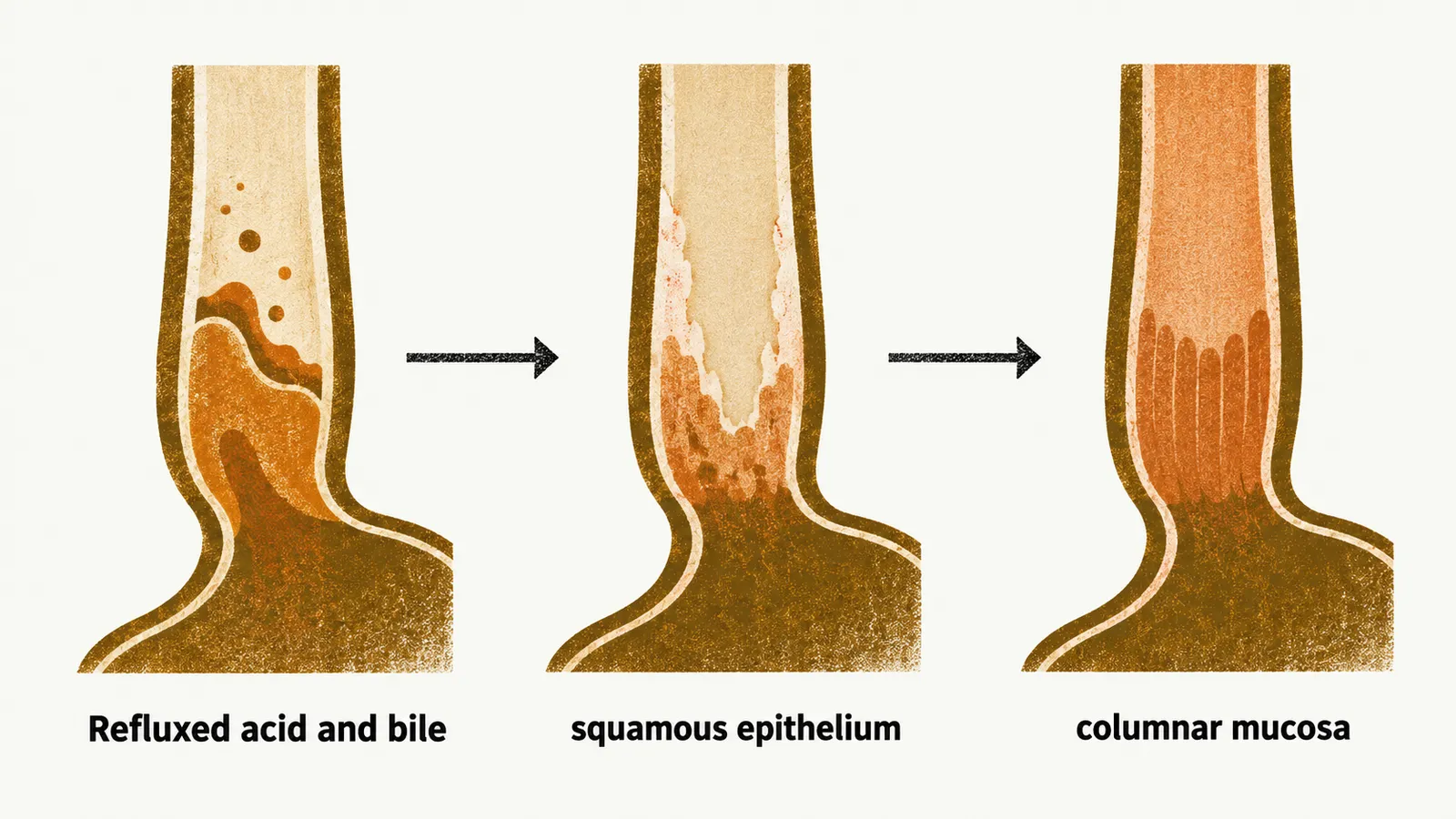
Not everyone with Barrett esophagus has symptomatic reflux, and some patients have no GERD at all. One chemical explanation is independent of symptoms: when dietary nitrate in swallowed saliva meets acid in refluxed gastric juice, it is converted to nitric oxide, a reactive molecule that can damage the squamous epithelium and help drive the metaplastic change even where reflux is not noticed.
Which cell gives rise to the columnar epithelium
This is not settled. Several candidates have been proposed, and they are not mutually exclusive:
- basal cells of the squamous epithelium of the esophagus
- ductal cells of the submucosal glands of the esophagus
- circulating bone marrow stem cells
From metaplasia to adenocarcinoma
Progression from metaplasia to adenocarcinoma does not follow a single route. Two pathways have been proposed:
- Traditional pathway of accumulation of mutations: from the earliest metaplasia, almost all the Barrett cells already carry a mutation of the tumour suppressor gene TP53 (a gene whose normal product restrains abnormal cell growth); the activated oncogenes (genes that drive growth when abnormally switched on) appear later, in the dysplastic or cancerous state.
- Genome-doubled pathway: a tumour suppressor gene such as TP53 is mutated first, and then the whole genome doubles, which multiplies the effect of the mutations already present and makes further malignant change more likely. Most Barrett metaplasia that progresses to adenocarcinoma is thought to follow this route. It is a rapid pathway, which may explain why endoscopic surveillance sometimes fails to catch cancer progression between examinations.
Both processes happen silently in the lining, which raises the practical question of how, and when, the condition ever shows itself.