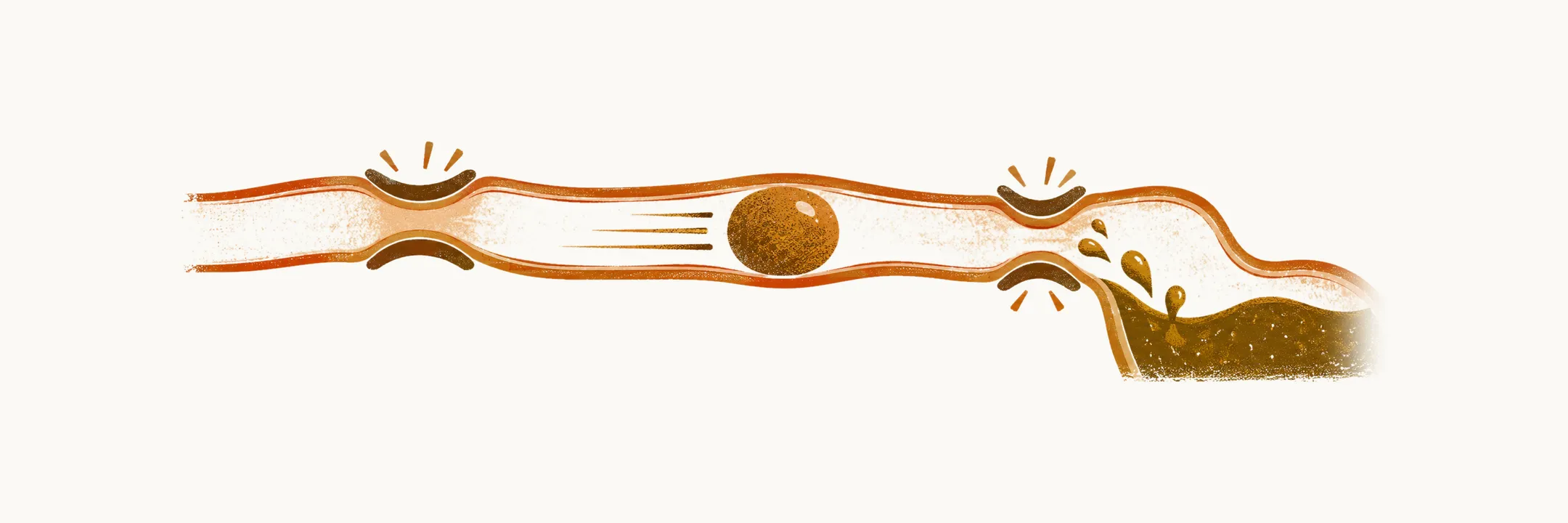
The esophagus is a hollow muscular organ that extends from the hypopharynx to the stomach through the posterior mediastinum. Its function is to transport food and fluid from the mouth to the stomach.
Two broad groups of disorders affect the esophagus. In dysmotility, the contractions that carry food down the tube, or the sphincters that guard its two ends, do not work normally. In gastroesophageal reflux disease (GERD), gastric contents flow back into the esophagus. Reflux disorders manifest mainly with pain, while an impaired ability to swallow, or dysphagia, is the other major problem.
The notes are best read in this order:
- Esophageal Motility explains how the esophagus moves food and what goes wrong when contraction or sphincter pressure fails. It is the place to start.
- Symptoms of Esophageal Disorders explains the symptoms these disorders produce and how each one points toward a cause.
- Diagnostic Tools for Esophageal Disorders explains the investigations used to reach a diagnosis.
- Treatment of Esophageal Disorders explains how reflux disease and motility disorders are managed.