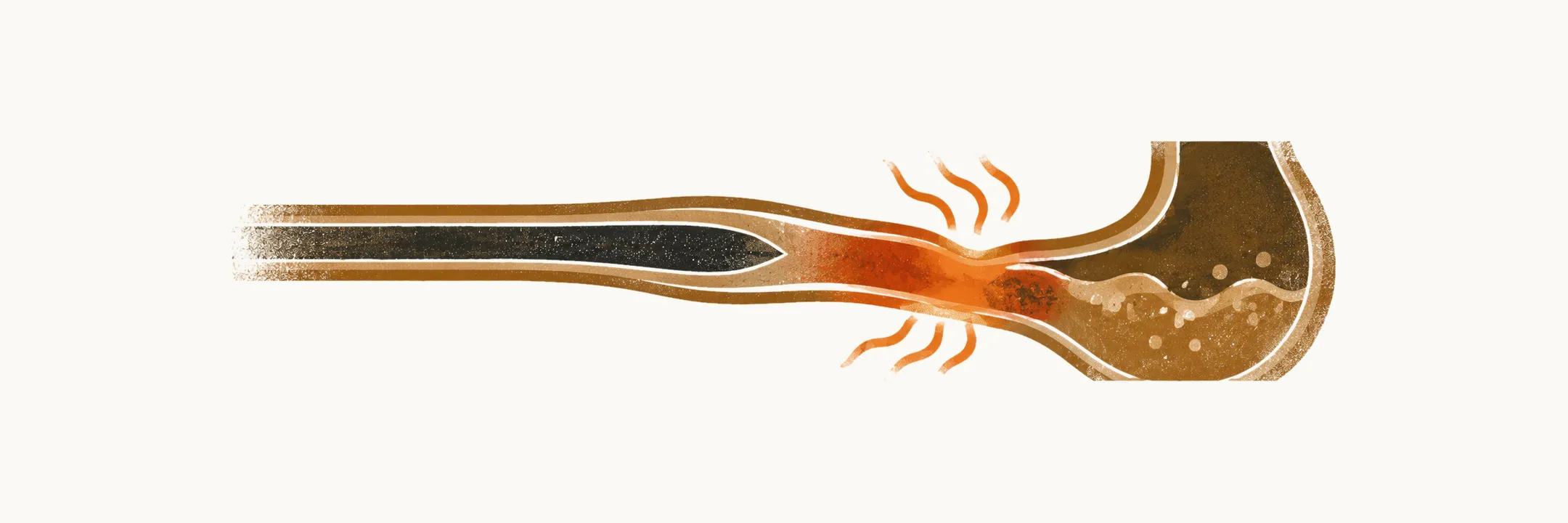
Esophageal symptoms arise when the esophagus fails to move food normally or when gastric contents reflux back into it (gastroesophageal reflux disease, GERD). A small, overlapping set of complaints covers both groups. They fall into those that come from acid and refluxed contents, those that involve swallowing, and two that are less specific, globus and chest pain. The same complaint can occur in more than one disorder.
Reflux-related symptoms
Heartburn (pyrosis) is a burning sensation that radiates from the epigastrium (the upper central abdomen) to the posterior sternal region, or even to the neck. It appears most often after a meal, during exercise, or while lying recumbent, and it eases when the person takes water or antacids, both of which dilute or neutralize the acid that irritates the mucosa.
Regurgitation is the effortless return of food or fluid to the throat. It happens mostly during coughing, bending, belching, or any other maneuver that raises the intra-abdominal pressure. It differs from vomiting, which is preceded by nausea and accompanied by retching, and from rumination, in which recently swallowed food is brought back up and then re-swallowed several times.
Water brash is the sensation of the mouth filling with salty, thin saliva. It is caused by a vagal reflex to the salivary glands when acidic contents are present in the esophagus, mostly in GERD.
Symptoms of swallowing
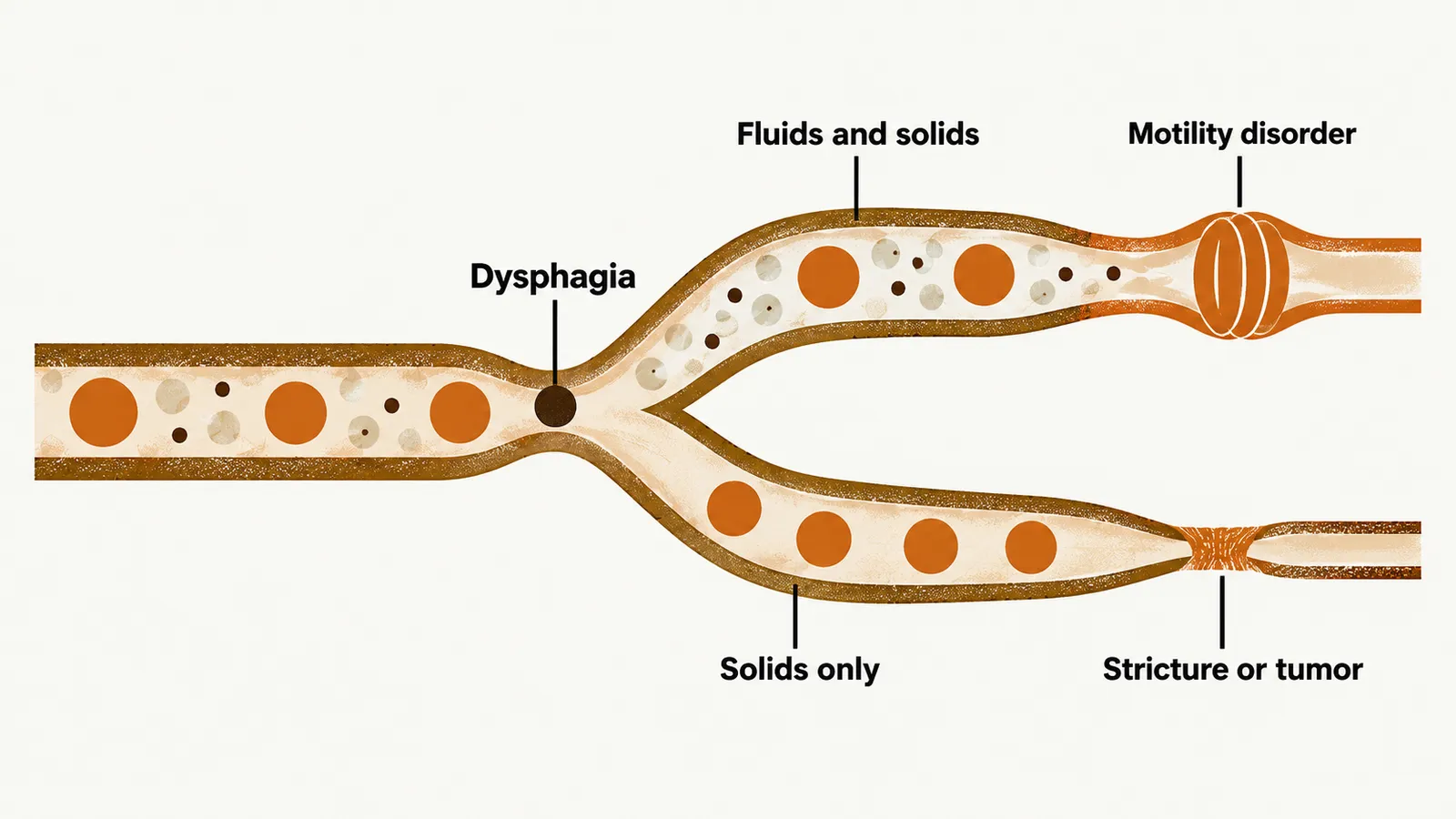
Dysphagia is difficulty swallowing. Its pattern narrows the differential: dysphagia that involves fluids, not only solids, suggests a motility disorder such as achalasia, in which the sphincter at the bottom of the esophagus fails to relax, whereas dysphagia only to solids suggests a stricture, a ring, or a tumor. It also matters whether the dysphagia is static or progressive and whether it is constant or episodic.
Odynophagia is pain on swallowing. It occurs mostly with pill esophagitis (inflammation of the esophagus caused by medication pills) and infectious esophagitis rather than with reflux esophagitis; when it occurs in GERD, it may reflect extensive damage such as an esophageal ulcer.
Globus and chest pain
Globus pharyngeus, also called globus esophagus, is the sensation of a lump in the throat that is independent of swallowing. The term globus hystericus is used when it occurs in patients with an anxiety disorder or obsessive-compulsive disorder.
Chest pain of esophageal origin is usually felt as pressure in the mid-chest, radiating to the mid-back, arms, and jaw. GERD is the most common cause of esophageal pain. Because the same complaint can occur in more than one disorder, the question that follows is which investigations separate them.