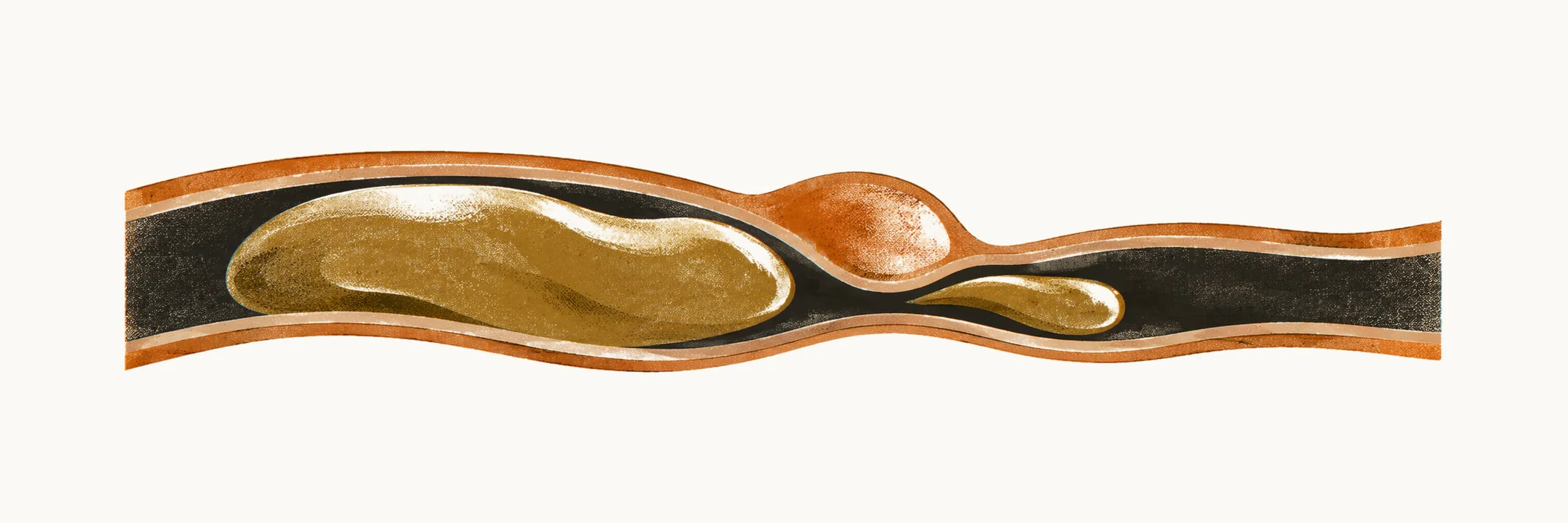
Esophageal squamous cell carcinoma and adenocarcinoma cause the same symptoms once the tumor has grown large. Despite their demographic and pathological differences, the two types present similarly, and at first patients are asymptomatic.
How it presents
The usual first complaint is progressive dysphagia, difficulty swallowing that steadily worsens. It begins with solid food and only later affects liquids, as the growing tumor narrows the lumen; once the luminal diameter falls below about 13 mm, solid-food dysphagia becomes evident. Because most patients ignore the symptom at first by changing their diet, most cases are diagnosed in later stages. Weight loss is the other common feature.
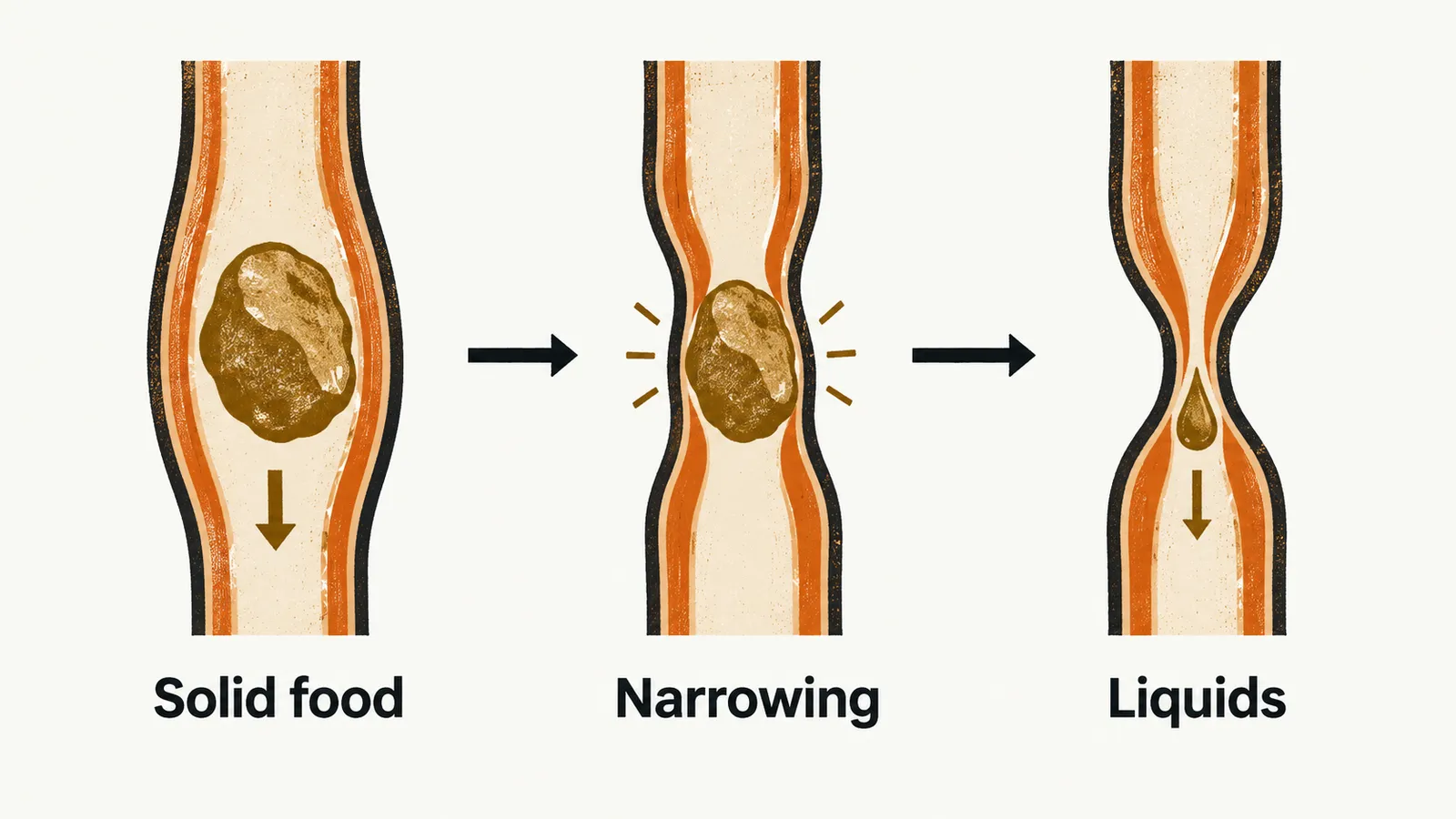
Less common manifestations include iron deficiency anemia, cervical lymphadenopathy, chest pain, and hoarseness caused by invasion of the tumor into the recurrent laryngeal nerve.
Local invasion and metastasis
Beyond the symptoms of luminal narrowing, the tumor can invade neighbouring structures and spread. Tumor erosion in the esophagus can create an esophageal-respiratory fistula, an abnormal connection between the esophagus and the airway. This causes a refractory cough, frequent pneumonia and pleural effusion.
Metastases from the esophageal tumor can appear in the lymph nodes, lung, brain, bone and liver.
Laboratory findings
Serologically there are no specific findings for esophageal cancers, but blood tests may show anemia, either iron-deficiency anemia or anemia of chronic disease, and hypoalbuminemia (a low blood albumin level).
Hypercalcemia (a raised blood calcium level) can arise through three mechanisms: metastatic osteolytic tumors, formation of parathyroid hormone-related protein (PTHrP) by ESCC tumors, and, rarely in esophageal cancer, a paraneoplastic syndrome.