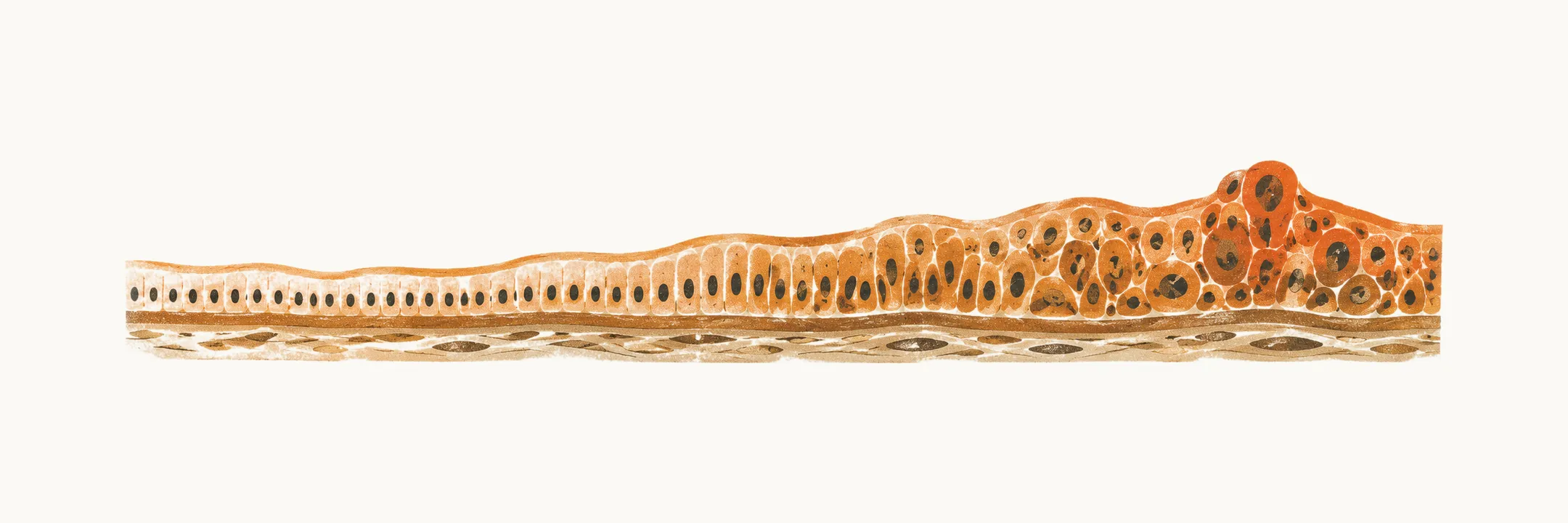
Esophageal squamous cell carcinoma (ESCC) is the esophageal cancer that arises from the squamous epithelium lining the esophagus. It is the most common esophageal cancer worldwide, although its incidence has fallen sharply in Western countries during recent decades while adenocarcinoma has risen.
What causes it
The risk factors for ESCC differ between industrialised and developing countries, so it helps to take each setting in turn. In industrialised countries the two strongest are cigarette smoking and excess alcohol use, and they reinforce each other.
In developing countries, and in the high-prevalence areas, nutritional and micronutrient deficiencies appear to matter more. Deficiencies of vitamin A, C and E, folate, zinc and selenium have all been implicated. Selenium is the best studied of these, and a study found that selenium supplementation reduced the risk of death from ESCC by 17% in people younger than 55 years. Some studies also point to drinking very hot beverages as a risk factor, which can cause thermal injury to the esophageal epithelium.
A different kind of risk comes from long-standing motor disorders of the esophagus, especially achalasia (a disorder in which the esophagus empties poorly), which carry an increased risk of both ESCC and EAC. The risk is about 16-fold during the 1st to 24th year after the diagnosis of achalasia, and it is greater in men. The likely mechanism is stasis of food in the esophagus and the chronic inflammation it produces.
Several factors seem protective. Diets rich in vegetables and fruit appear protective: a study found that more than 50 g/day of vegetables or fruit reduced the risk of esophageal cancer by 31% and 22% respectively. Obesity and frequent use of NSAIDs also seem to be protective against ESCC.
How it develops
ESCC is thought to begin with hyper-proliferative epithelial cells, meaning cells that multiply excessively. These give rise to low-grade and then intermediate dysplasia (abnormal, precancerous-appearing cells), and finally to the high-grade dysplastic cells that can become cancer.
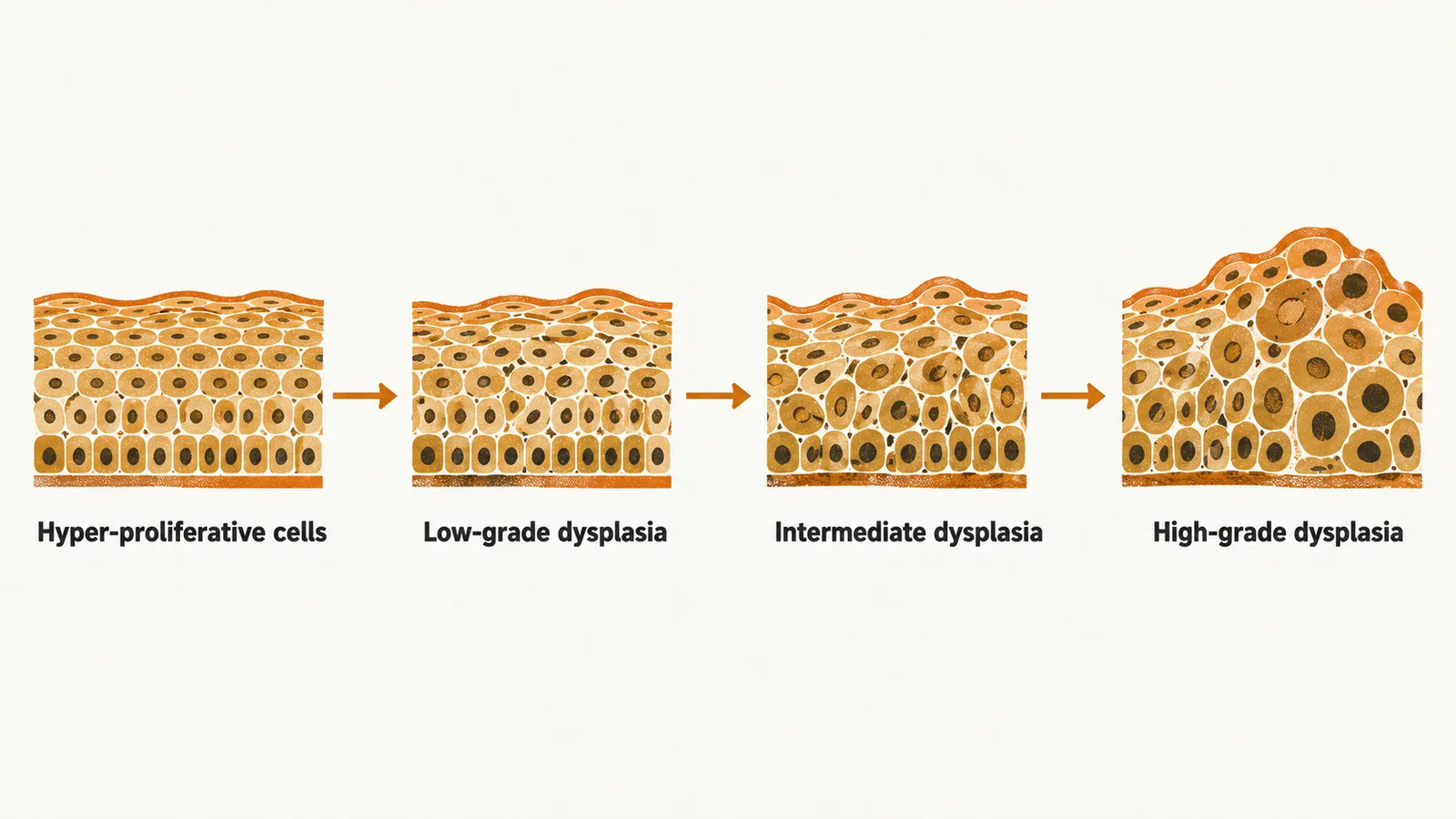
Alongside this stepwise progression, several genetic changes carry clinical relevance, mostly as markers of outcome. Overexpression of cyclin D1, a protein that drives cells through the cell cycle, is associated with a poorer prognosis. Higher expression of VEGF (vascular endothelial growth factor) is also associated with a worse prognosis, and amplification of FGFR1 (fibroblast growth factor receptor 1) appears to be a negative prognostic factor. Lower p53 and higher p21 or p16 levels, which are proteins that regulate the cell cycle, are associated with a better prognosis.
Verrucous carcinoma
Verrucous carcinoma of the esophagus is a rare variant of ESCC, with only 30 reported cases, that mostly occurs in middle-aged men. Endoscopically it appears as a papillary or warty lesion, and histologically it shows well-differentiated epithelial cells with hyperkeratosis and only a small column of neoplastic cells.
Squamous cancer is only one of the two main esophageal cancers. The other, adenocarcinoma, arises from a different precursor, Barrett’s metaplasia, and has its own risk factors.