
Because the symptoms of gastric cancer are vague, the diagnosis rests on looking at the stomach and sampling the lesion.
Endoscopy
Esophagogastroduodenoscopy (EGD), an endoscopic examination of the esophagus, stomach and duodenum, is the main diagnostic tool for gastric cancers. At least 6 to 8 biopsies should be taken from the edges and base of the lesion, because a cancer may be missed if only the surface is sampled.
It is recommended to perform EGD for the evaluation of gastric cancer in:
- patients with new-onset dyspepsia (upper abdominal discomfort) who are older than 55 years
- patients with alarm signs and symptoms who are younger than 55 years
- patients with dyspepsia whose symptoms are not relieved after PPIs (proton-pump inhibitors) and eradication therapy for H. pylori
The alarm signs and symptoms that prompt endoscopy in a younger patient are weight loss, anemia, evident bleeding, dysphagia and recurrent vomiting.
Endoscopic classification of early lesions
Once a lesion is seen, it is described by its endoscopic appearance. A classification system based on endoscopic findings has been developed for assessing early lesion invasion to the submucosal layers and lymph nodes. It classifies the lesions into three types:
- superficial polypoid, type 0-I p and s
- superficial flat or depressed, type 0-II a-c
- superficial excavated, type 0-III
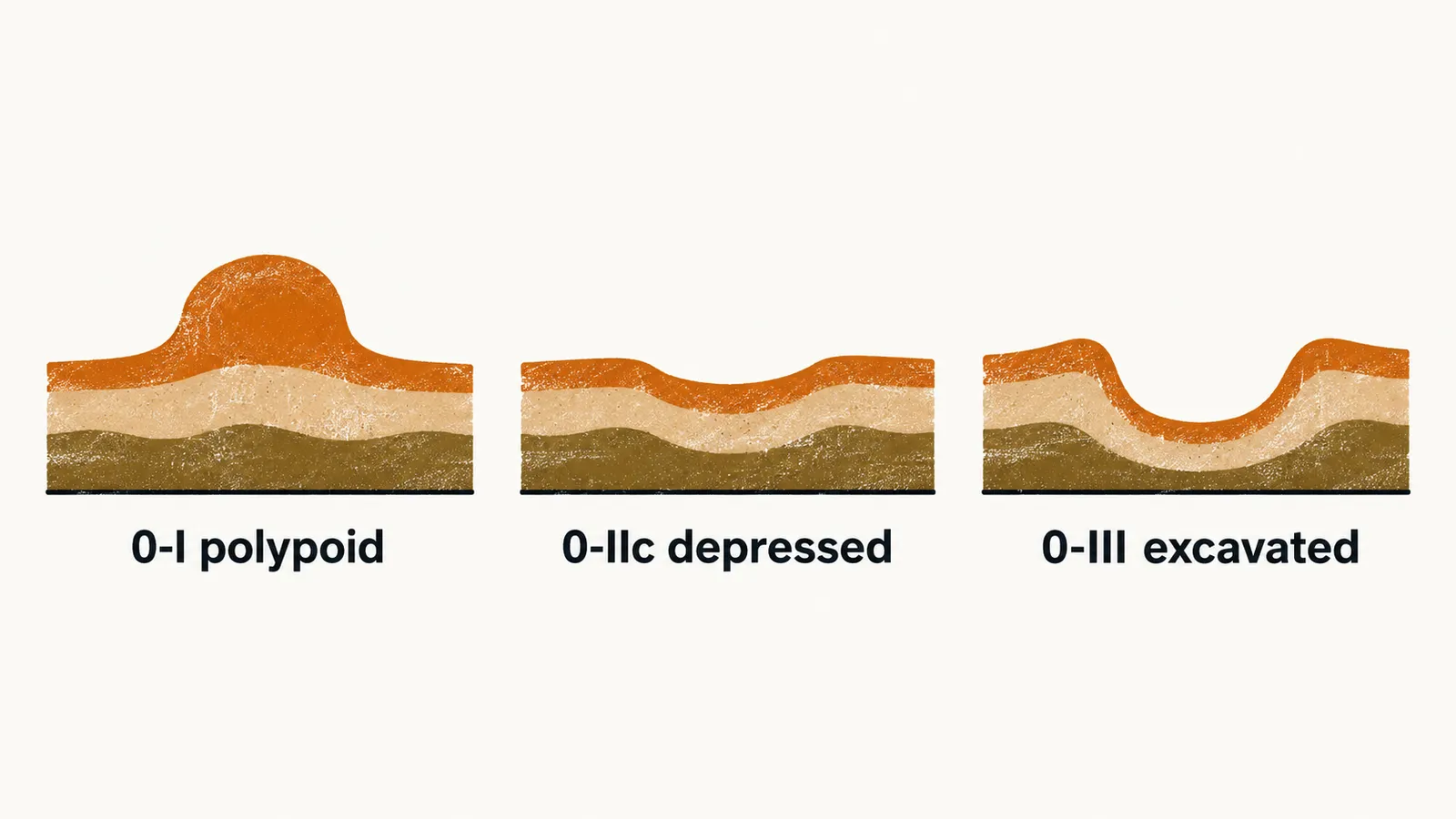
The most common lesion of gastric cancer that has been reported is type 0-IIc, which is superficial depressed.
Serum markers and pepsinogen
No serum test replaces endoscopy. There is no specific serum marker for the detection and screening of gastric cancers, but some serum factors are associated with atrophic gastritis and intestinal metaplasia as risk factors for gastric cancer: low pepsinogen I and a low pepsinogen I/pepsinogen II ratio (pepsinogens are precursors of the stomach’s digestive enzyme pepsin), and hypergastrinemia (raised blood gastrin, the hormone that stimulates acid secretion).
Pepsinogen tests are able to detect less than 1% of cancers, but the useful point about the test is that in more than 90% of the cases it does detect, the cancer is in the early stage. The pepsinogen test is therefore mainly used for the diagnosis of the pre-neoplastic condition of the stomach rather than as a screening test for cancer itself. Once cancer is confirmed, the next task is to establish how far it has spread.