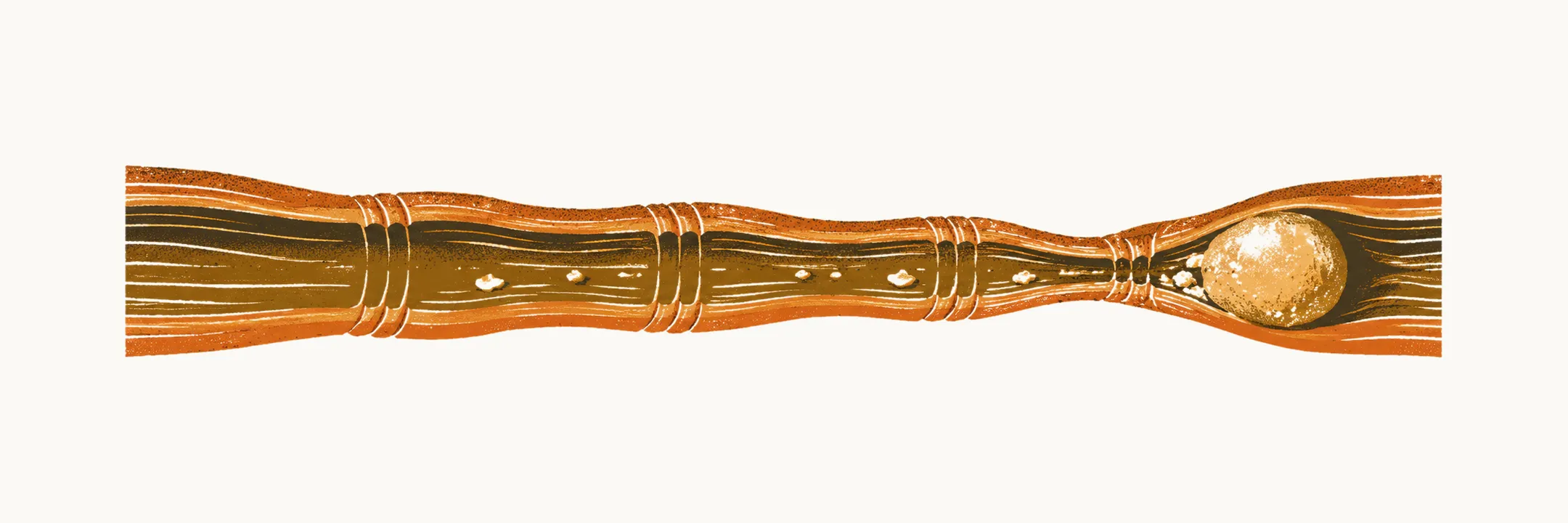
Eosinophilic esophagitis (EoE) is a chronic, antigen-driven, immune-mediated disease of the esophagus. It is defined clinically by symptoms of esophageal dysfunction and, histologically, by eosinophil-dominant inflammation.
Recognition and incidence
EoE came to attention when eosinophilic inflammation was found in patients with gastroesophageal reflux disease (GERD), acid reflux from the stomach into the esophagus, that did not respond to proton pump inhibitors (PPIs, acid-suppressing drugs); about 10% of such patients showed this finding. The annual incidence of EoE in different population studies is reported to be between 0.1 and 1.2 in 10,000 of population.
Classification
Because eosinophils in the esophagus are not specific to one disease, eosinophil-associated esophageal disorders are first sorted into two groups. Primary eosinophilic esophagitis is the disease itself; it can be atopic (occurring with allergic disease) or non-atopic, and it can appear as part of a syndrome such as EoE associated with connective tissue disease, or in a familial form. Secondary esophageal eosinophilia has another underlying cause, such as a systemic hypereosinophilic syndrome, or reflects a disorder that is not primarily eosinophilic.
Pathophysiology
The exact pathophysiology of EoE is not fully worked out, but several strands of evidence point the same way: it rests on an allergic (atopic) base, it tracks with other allergic diseases such as seasonal rhinitis and asthma, and eotaxin-3, a chemokine (a signalling protein that attracts eosinophils), is over-expressed in the esophageal epithelium.
Family clustering
Inheritance also plays a part. EoE clusters in families: around 2% of first-degree relatives of an affected person also have EoE, and the recurrence risk in relatives is raised roughly 10- to 64-fold, highest in brothers. The pattern is consistent with complex, non-Mendelian inheritance rather than a single gene.
Symptoms
The presenting symptom changes with the age of the patient, following a chronological order that shifts from vomiting towards dysphagia during the transition from school age to adolescence. Infants and toddlers have difficulty feeding; school-age children have vomiting and pain; adolescents develop dysphagia (difficulty swallowing), and food may impact and fail to pass to the stomach.
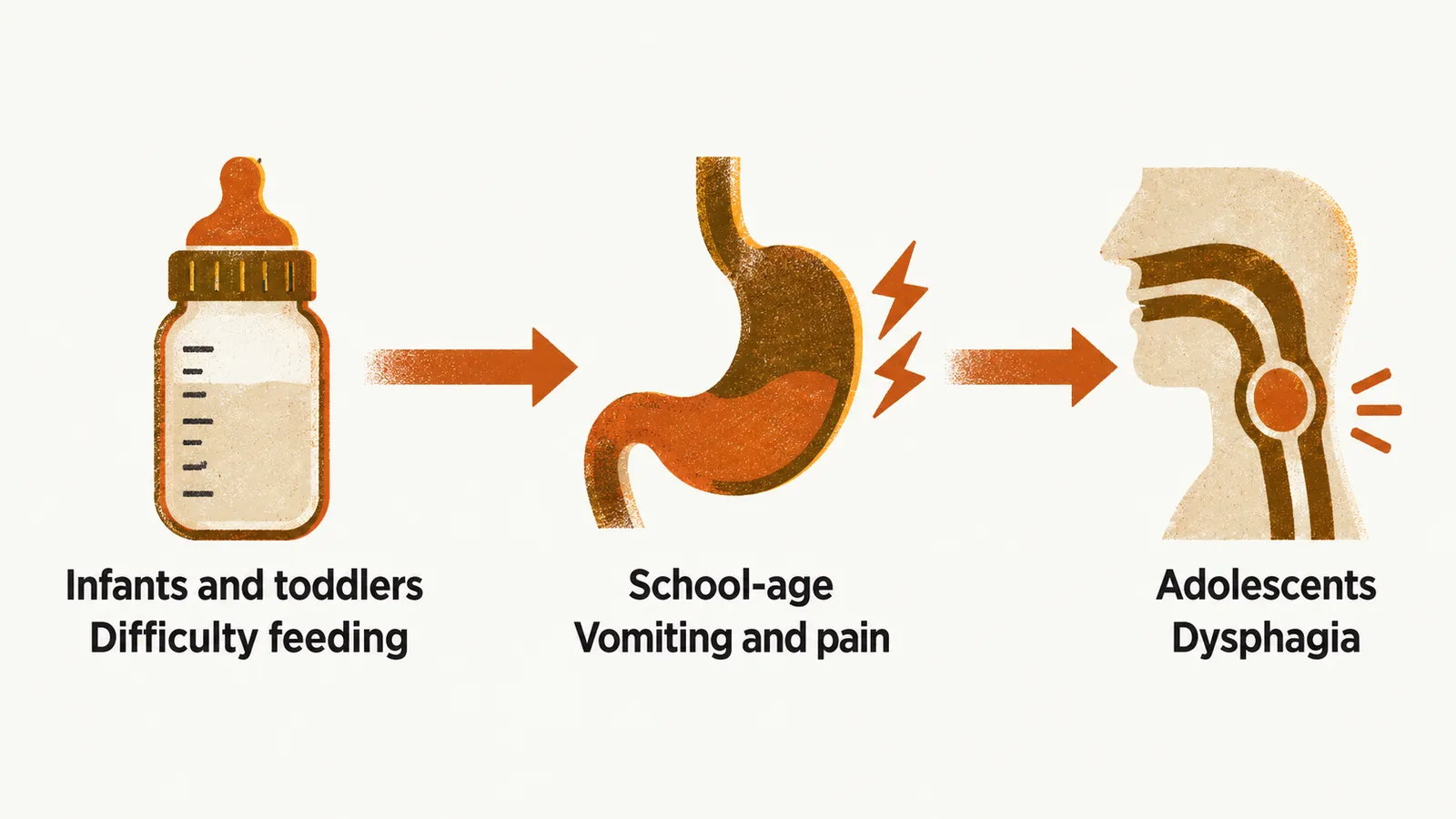
Failure to thrive, and chest or abdominal pain, also occur. EoE in children is mostly accompanied by signs and symptoms of allergic reactions in other organs, such as asthma and rhinitis. When food impacts, endoscopic removal is needed in about 36% to 55% of cases, especially in adults.
Endoscopic findings
Endoscopy, a camera examination of the esophagus, in EoE may show fixed or transient esophageal rings, whitish exudates, longitudinal furrows, edema, diffuse esophageal narrowing, and mucosal fragility. Mucosal fragility is an esophageal laceration produced by the passage of the endoscope because the esophagus has lost its normal distensibility.