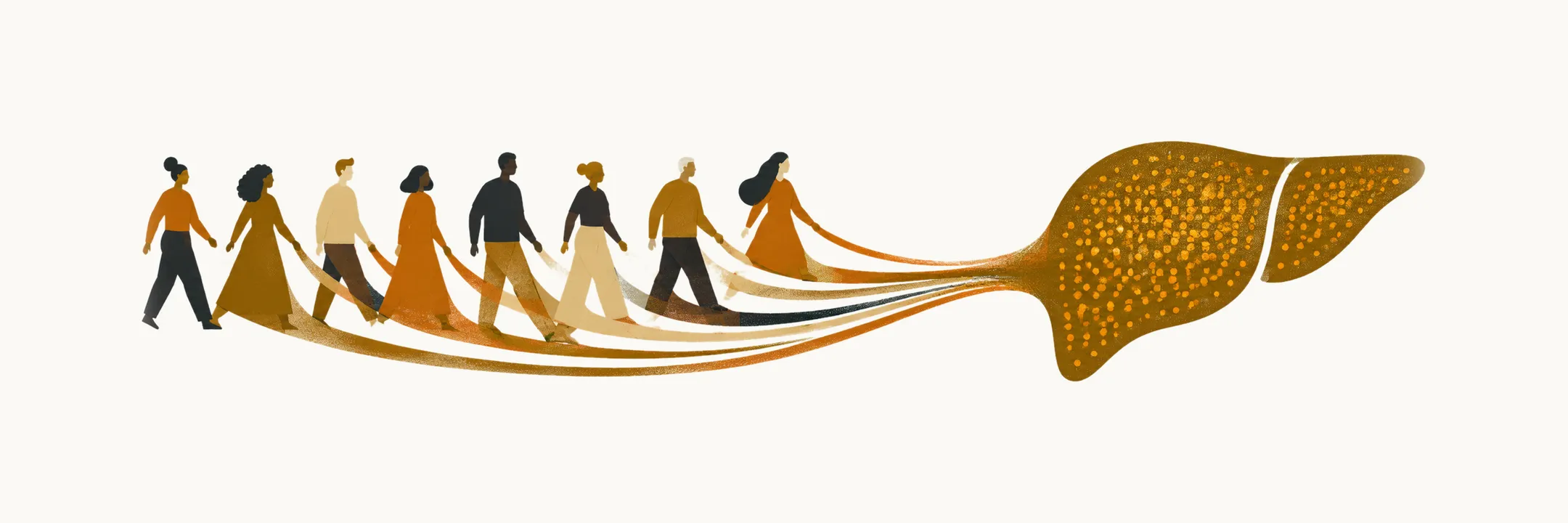
Non-alcoholic fatty liver disease (NAFLD) is the accumulation of fat inside hepatocytes, the liver’s main cells; its more severe form, non-alcoholic steatohepatitis (NASH), adds inflammation and hepatocyte injury. The frequency of NAFLD, and the groups in which it is found, have shifted as obesity and type 2 diabetes have become more common.
Who is affected
Most cases of NAFLD are discovered in middle age, in the fourth to sixth decades of life. In recent years, the rising prevalence of obesity and overweight in the paediatric and adolescent population has led to more diagnoses of NAFLD in these groups as well.
NAFLD is more common in men than in women, and after the menopause its prevalence and severity increase in women, which suggests a protective effect of sex hormones.
How common NAFLD is
Obesity is the background to these figures. In 2016, about 39% of adults worldwide were estimated to be overweight and 13% obese. The prevalence of NAFLD is not exactly defined, but the meta-analysis in 2016 estimated that about 25% of the world’s population has NAFLD.
Diabetes raises the figure. The worldwide prevalence of NAFLD among patients with type 2 diabetes mellitus is more than 55.5%, and in the type 1 diabetes mellitus population the prevalence of NAFLD is estimated at more than 19%.
Another important population group is the lean population, in which studies show that 9.7% of lean people have NAFLD.
How common NASH is
The term NASH was first defined for middle-aged patients with raised hepatic enzymes and histological evidence of alcohol-related damage but no history of alcohol use.
The general prevalence of NASH in the world is about 1.5–6.5%, and the prevalence of NASH among patients with type 2 diabetes mellitus is about 37.3%.
The relation between NAFLD and NASH is progressive: NAFLD progresses to NASH, which is a more severe condition. The high prevalence of NAFLD and NASH in obese patients has been proved in several surgical bariatric studies, which report 91% and 37%, respectively.
Projections
Extrapolation studies project that the prevalence and incidence of NAFLD will be:
- slow growth of total prevalence, with a higher rate of advanced cases
- an increase of NASH cases to 15–56%, depending on the region
- liver mortality caused by NAFLD doubling in the future
Conditions associated with NAFLD
NAFLD shares its metabolic roots with several other conditions, and each of these associations shapes how the disease is recognised and followed. Type 2 diabetes mellitus is the most impactful risk factor for NAFLD, for the progression of fibrosis and for hepatocellular carcinoma. Obstructive sleep apnea (OSA), repeated upper-airway obstruction during sleep, is closely linked: more than 90% of obese patients with OSA have NAFLD, and more than 50% of patients with NAFLD have OSA. Cardiovascular disease is the primary cause of death in the NAFLD population. Vitamin D deficiency is also among the associated conditions.
Lifestyle factors
NAFLD is associated with lifestyle factors: a sedentary lifestyle, higher consumption of fructose-containing corn syrups and higher consumption of sugar-containing sodas.