
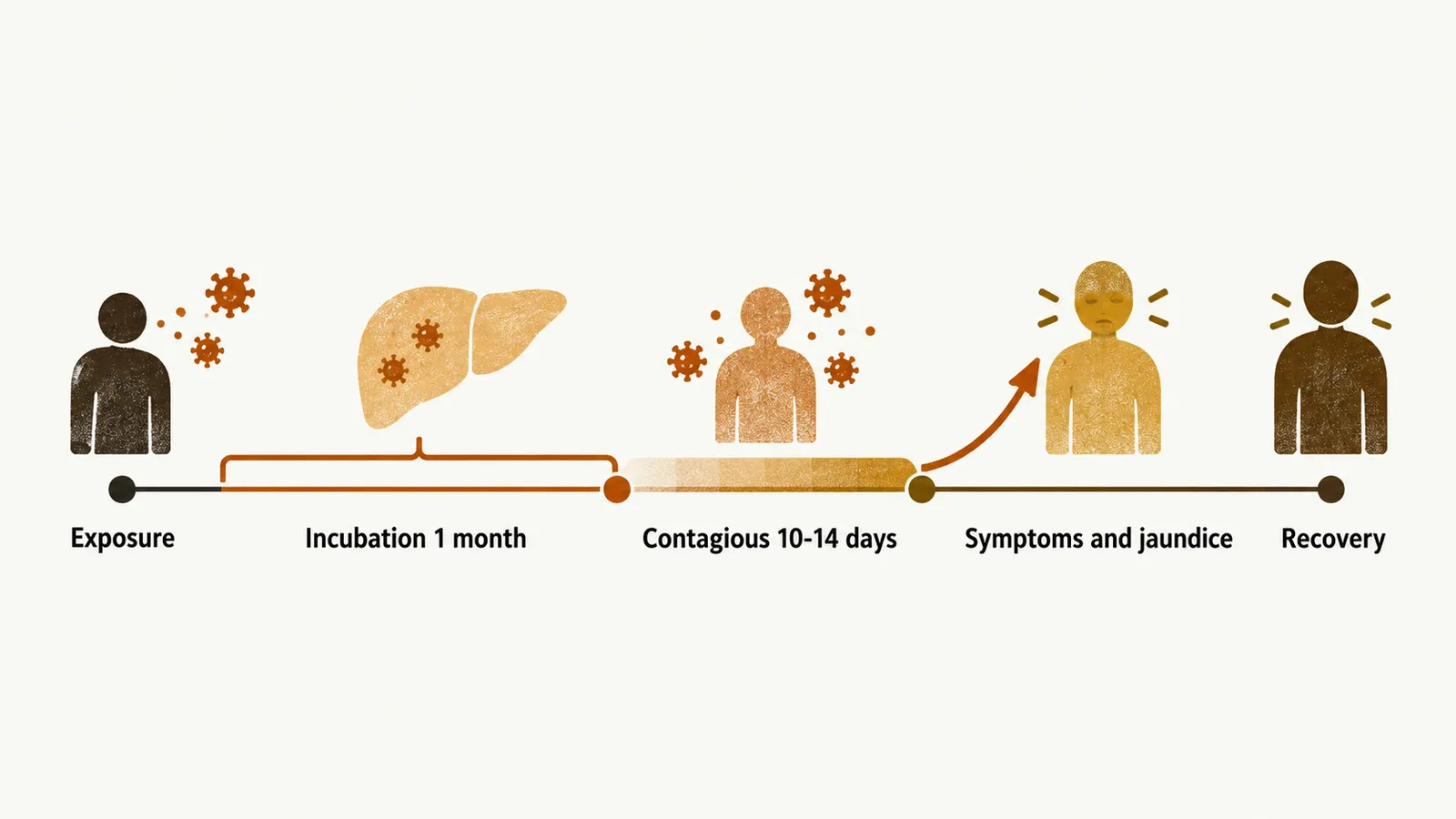
Hepatitis A causes an acute, self-limiting inflammation of the liver. After exposure there is an incubation period of about 1 month before symptoms begin, and during the last part of that period the person becomes contagious while still feeling well.
Clinical presentation
The patient can contaminate the environment during the first 10 to 14 days, when the infection is asymptomatic. A huge number of virus particles are released into the feces during this phase, and the concentration in stool is highest 1 to 2 weeks before symptoms and jaundice (yellowing of the skin and eyes) appear; this silent shedding is what explains spread by the fecal-oral route in the community.
After the asymptomatic period, symptoms appear abruptly: fever, abdominal pain, fatigue, nausea, loss of appetite, vomiting, and jaundice. In young children, acute HAV infection does not cause jaundice, unlike in adults. Approximately 40% of acute hepatitis is caused by HAV. Unlike HBV, immune-complex-related symptoms (symptoms caused by antigen-antibody complexes deposited in tissues) are rarely seen in patients infected with HAV.
Diagnosis
HAV cannot be distinguished from other acute viral hepatitides on clinical or epidemiological grounds alone, so testing is needed to confirm it. The best way to diagnose HAV in the acute phase is ELISA, an immunoassay, for the IgM antibodies (the class of antibody produced first in an infection), together with RT-PCR, which detects viral RNA. The IgM test can stay positive for months, up to about 6 months after infection, so a positive result is interpreted together with the symptoms rather than on its own.
Complications
The main complications seen with HAV are two patterns that prolong the illness:
- relapsing hepatitis — a relapse of symptoms and signs in a small proportion of patients: recurrence of symptoms, aminotransferase elevation (a rise in the liver enzymes released by injured liver cells), fecal HAV and occasional jaundice
- cholestatic hepatitis — protracted jaundice and pruritus (itching), reflecting impaired bile flow
Rarely, HAV causes fulminant hepatitis (acute liver failure), which is more likely in older adults and in people with chronic liver disease. Even when complications occur, HAV remains self-limited and does not lead to chronic hepatitis, unlike HBV and HCV, which can persist.
Management
Because the infection resolves on its own and there is no specific antiviral treatment for hepatitis A, management is supportive. Rest, adequate fluids and a balanced diet are usually enough, and medicines that burden the liver unnecessarily, such as acetaminophen (paracetamol), are avoided. Hospitalisation is needed only for severe disease or acute liver failure. Recovery is the rule: symptoms usually resolve within about a month, and 10% to 15% of symptomatic people have prolonged or relapsing symptoms for up to 6 months before recovering completely. Since recovery is the rule but spread occurs before symptoms appear, avoiding infection in the first place is the remaining question.