
Hepatitis A is a self-limited infection, but it can be severe in older adults and in people with chronic liver disease, and it is contagious before symptoms appear. Prevention therefore works in three ways: vaccination before exposure, post-exposure prophylaxis (treatment to prevent illness after a known exposure) for people already exposed, and the sanitation and hygiene measures that interrupt fecal-oral transmission.
Vaccination
An inactivated vaccine is the mainstay of prevention. It is given as a two-dose series, with the second dose at least 6 months after the first. Who is vaccinated depends on age and risk:
- children are vaccinated at 12 to 23 months of age, and older children and adolescents who were not vaccinated then should be caught up
- adults at risk of infection, or of severe disease from it, are also vaccinated
- infants between 6 and 11 months of age who are travelling to an endemic region (one where HAV is common) may receive one dose, but that dose does not count towards the routine series, which should still begin at 12 months
Post-exposure prophylaxis
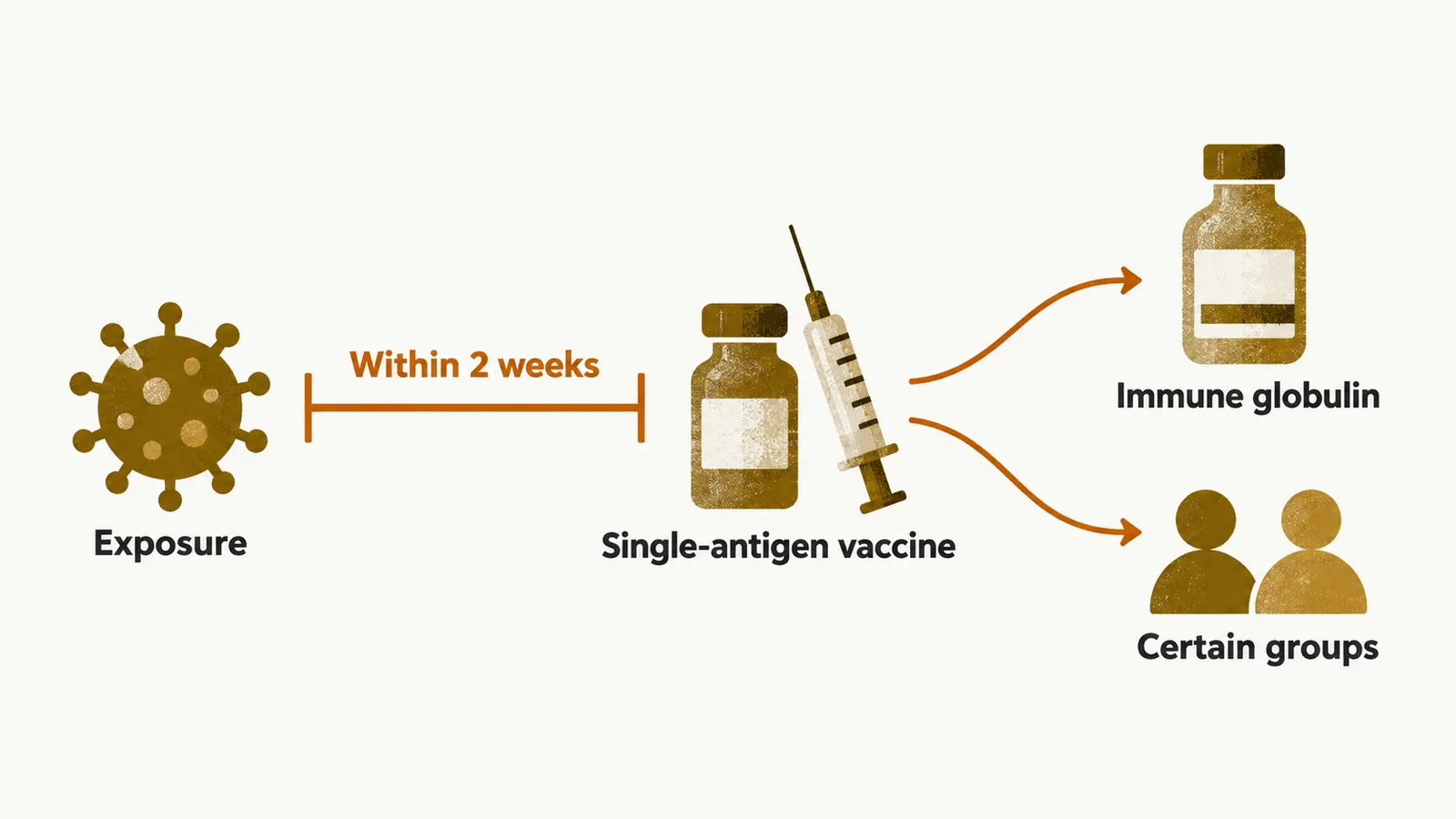
Vaccination and immune globulin can also prevent illness after exposure, so prophylaxis is offered to unvaccinated contacts within 2 weeks after exposure:
- household and sexual contacts of a case
- people who use shared needles
- children and staff in childcare centres
Post-exposure prophylaxis is a dose of single-antigen hepatitis A vaccine (a vaccine containing only hepatitis A antigen, not combined with other vaccines), given as soon as possible within 2 weeks. Immune globulin, which provides immediate but short-lived protection, is added in certain groups, for example infants under 12 months and people who are immunocompromised (with a weakened immune system) or have chronic liver disease.
Interrupting transmission
Vaccination protects individuals, but the route of spread can also be cut directly. Because HAV is transmitted by the fecal-oral route, safe drinking water, proper disposal of sewage, and hand hygiene — handwashing after using the toilet, after changing diapers, and before preparing or eating food — reduce spread. In developed countries, where waterborne outbreaks are uncommon, most transmission is person-to-person.