Cushing’s syndrome is the clinical picture produced by chronic excess of glucocorticoids, whatever the source. Glucocorticoids are steroid hormones of the adrenal cortex, and cortisol is the main one. The term Cushing’s disease is reserved for a pituitary corticotrope adenoma, a tumour of the pituitary cells that make ACTH. That adenoma is the most common endogenous cause, meaning a cause in which the patient’s own cortisol production is excessive.
Where can the excess come from?
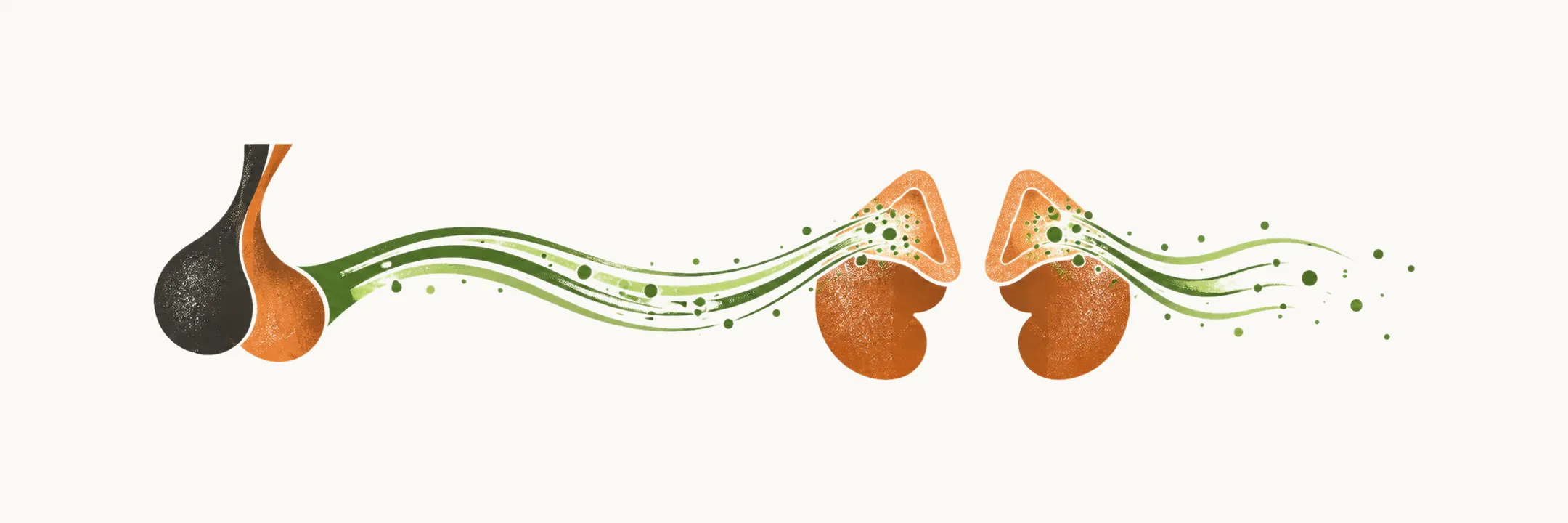
The excess can originate in two ways, and this distinction organises the whole topic. In the first, a tumour secretes adrenocorticotropic hormone (ACTH), the pituitary hormone that stimulates the adrenal cortex to make cortisol. Because ACTH travels in the blood, the tumour drives both adrenal glands. In the second, an adrenal gland produces cortisol on its own.
Which of the two is present decides where the tumour is sought and how it is treated. The same question carries through the whole topic.
Where to go
- Causes and Classification of Cushing’s Syndrome explains where the excess comes from: the pituitary adenoma of Cushing’s disease, ectopic ACTH, adrenal causes and the rare nodular adrenal forms. It also covers how the forms are grouped and how common each is.
- Clinical Manifestations of Cushing’s Syndrome describes what the excess looks like at the bedside, which findings are non-specific and which are specific, and the mineralocorticoid and central effects of a high cortisol level.
- Cardiovascular Complications of Cushing’s Syndrome explains why the cardiovascular system is the most affected, how cortisol raises blood pressure, what it does to the heart, the prothrombotic state behind venous thromboembolism, and why cardiovascular disease dominates mortality.
- Diagnosis and Differential Diagnosis of Cushing’s Syndrome explains how the syndrome is suspected, confirmed by screening tests, and then separated into ACTH-dependent and ACTH-independent causes.
- Treatment of Cushing’s Syndrome explains how the source is removed or controlled, which medical therapies are available when surgery cannot remove or control the source, and the follow-up needed after remission.
A reader unfamiliar with the classification of the causes should start with the first topic, then take the others in the listed order. So where, in the body, does the excess actually come from?