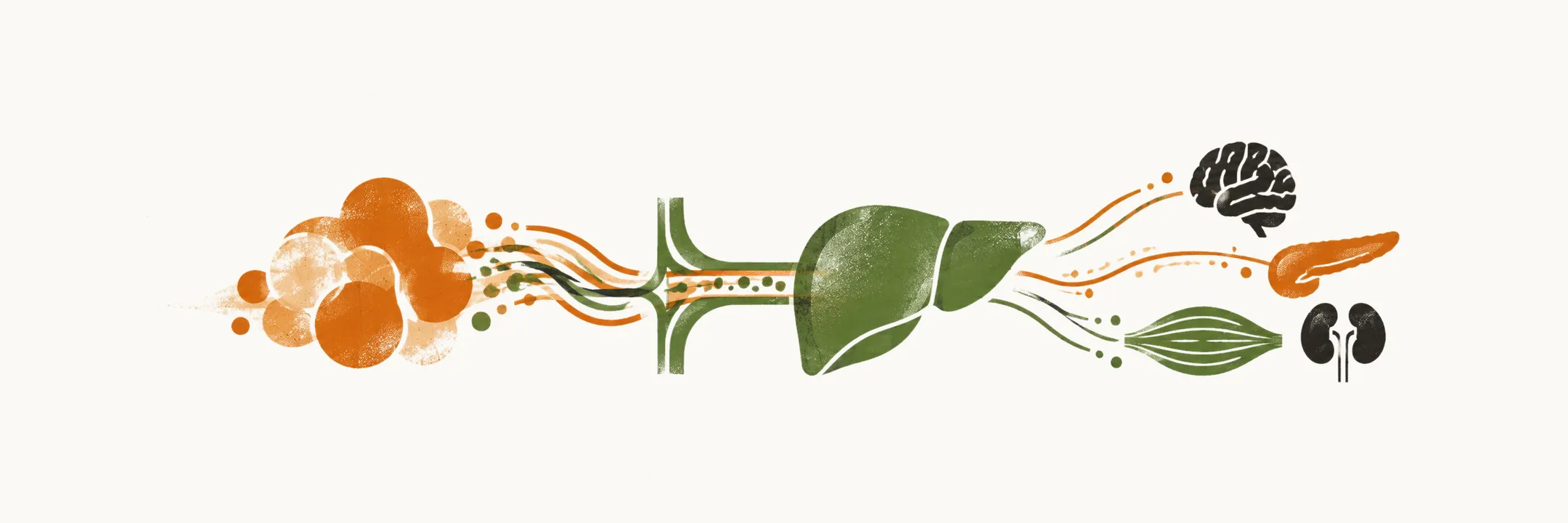
Obesity is related to most of the common disorders of society. It raises the risk of conditions from cancer to chronic liver disease, lung disease, cardiovascular disease and cognitive conditions. Not every person with obesity develops them, though. Fat tissue is not a passive store, and the fat of some people behaves differently from the fat of others (the section on fat in people at higher risk comes back to this). That difference helps explain who becomes ill.
The picture to keep is this. Fat releases fatty acids and chemical signals into the blood, and it holds immune cells. When fat cells grow too large, the tissue becomes inflamed and sends out altered signals. Those signals may act directly on the liver, the brain, the blood vessels and other organs, and that may be why the damage appears in so many systems.
Why does the place where fat sits matter?
The way fat is distributed helps determine who develops these conditions. Independently of total fat percentage, abdominal and trunk fat, rather than pelvic and lower-extremity fat, is associated with a higher risk of metabolic syndrome, hypertension and cardiovascular complications. The association holds in both men and women. In short, risk follows central fat.
Why would location matter? Fat in the abdomen drains through the portal vein straight to the liver, so the liver receives the output of that fat before the rest of the body does. A proposed explanation is that this is what gives abdominal fat its extra risk compared with fat elsewhere. Central fat was set out in Obesity: Epidemiology and Prevalence. Visceral fat was separated from subcutaneous fat in Obesity: Measurement and Classification.
How is that fat seen in a person?
If location matters, BMI alone is not enough, because BMI does not show where the fat sits. So waist circumference is read alongside it. A person with a normal BMI but a raised waist circumference is still considered obese.
What is different about the fat in people at higher risk?
Risk follows central fat, so what is that fat doing? People at higher risk of obesity-related disease are characterised by more central fat, by larger fat cells on average, by a higher number of immune cells within the adipose tissue, and by altered signals released from the fat.
These features connect. Central fat drains its output into the portal vein, so more central fat means more of that output reaching the liver. When fat cells grow large, they become short of oxygen and some die, which is thought to make the tissue more harmful. Dying and stressed fat cells draw in immune cells, which settle in the tissue and add inflammatory signals. Dysfunctional fat cells also secrete inflammatory signals in place of normal ones, so the tissue sends out altered signals.
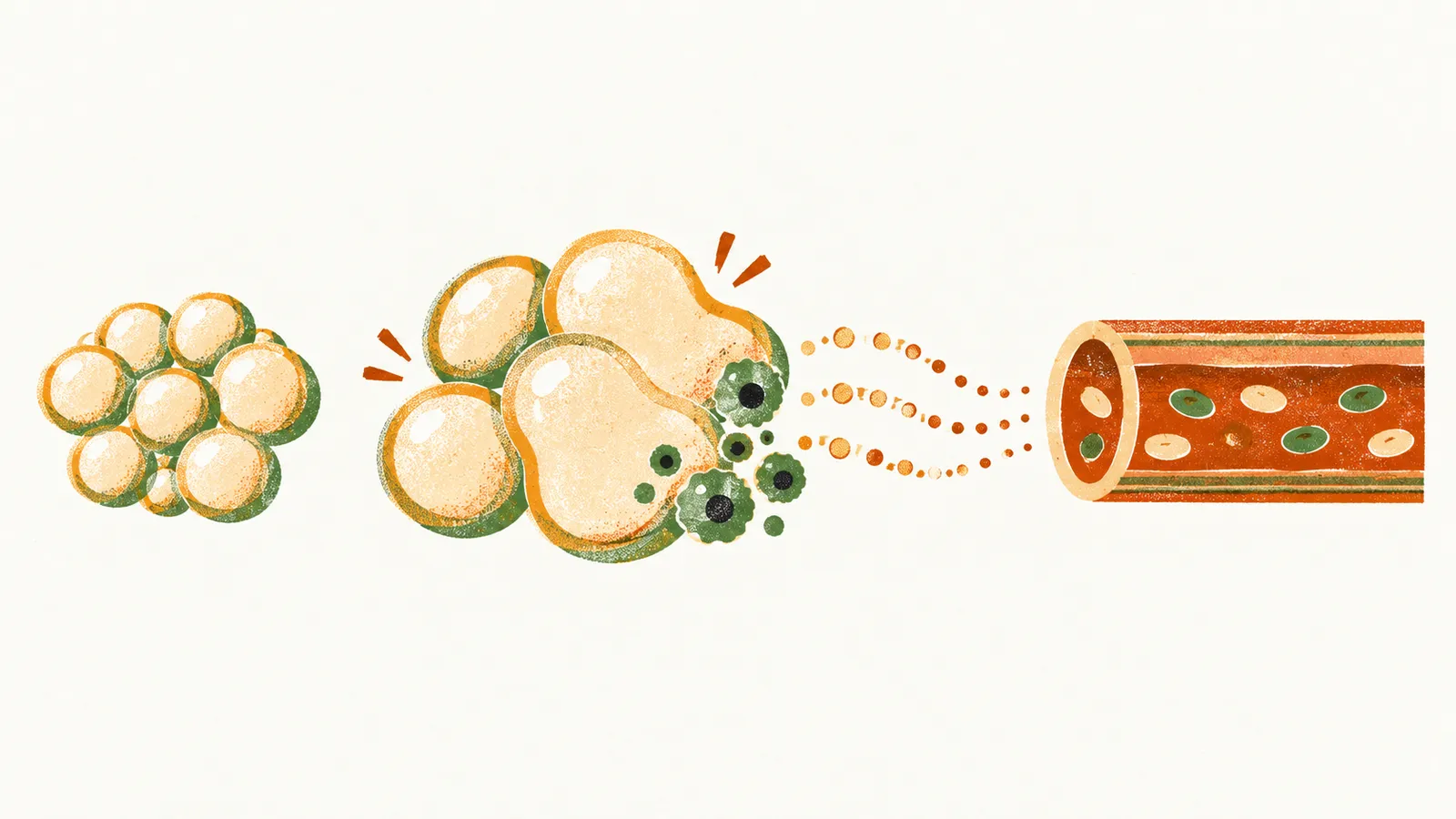
This may also help explain why not everyone with obesity is affected. The same amount of fat does not harm everyone equally, because the fat of people at higher risk behaves in this way.
How do signals from fat reach other organs?
Once the fat is inflamed and sending out altered signals, those signals must get somewhere. They are released into the blood and travel to distant organs. The altered signals may act directly on the brain, the liver, the vasculature and other organs. This may be a route to disease in the liver and blood vessels.
Which complications cluster together?
Because the signals reach many organs, the complications sort by organ system, from metabolic to psychological and social, and they often arrive together. Metabolic syndrome is itself such a cluster: a clustering of metabolic risk factors.
What happens to blood sugar and blood fats?
The first cluster is metabolic. Obesity is an independent risk factor for type 2 diabetes. Obesity brings insulin resistance, so cells respond less to insulin and the pancreas has to make more. When the pancreas cannot keep up, glucose rises.
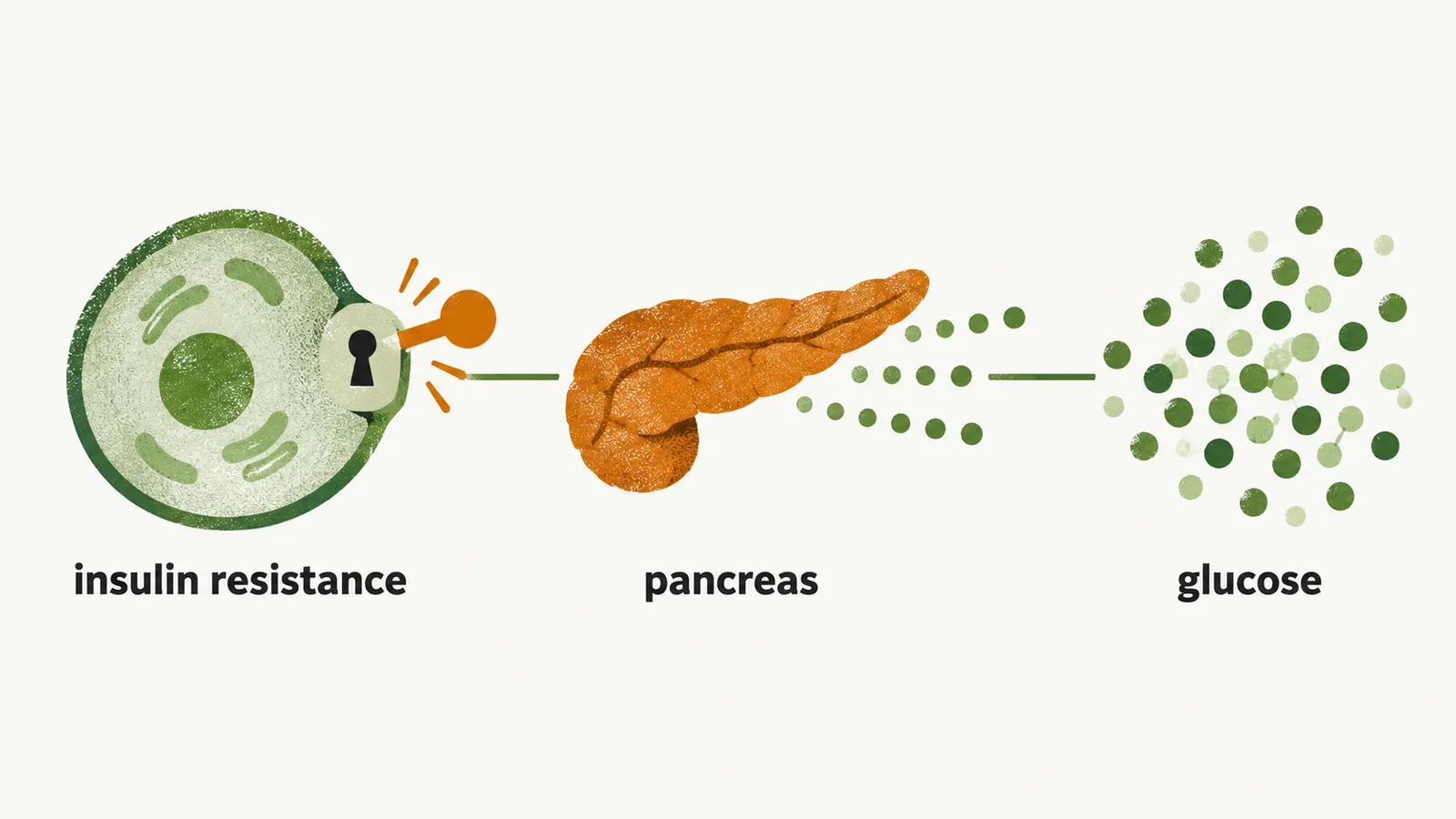
Central obesity is a particularly strong risk factor for type 2 diabetes. A proposed route is the portal theory: the liver is directly exposed to the fat that drains from the abdomen, which may explain why central fat carries such a strong risk.
Dyslipidaemia, abnormal levels of blood lipids, belongs here too. Fatty acids reaching the liver in excess are a proposed route to abnormal blood lipids.
Why does obesity strain the heart and blood vessels?
Several of the same metabolic risk factors reach the heart and blood vessels together. The cardiovascular complications are hypertension, coronary heart disease and myocardial infarction, heart failure, atrial fibrillation and stroke.
Obesity contributes directly to several cardiovascular risk factors at once. Besides the metabolic changes just described, proposed pathways for raised blood pressure are increased sympathetic nerve activity and sodium retention, both driven by obesity.
Why does sleep apnoea belong on this list?
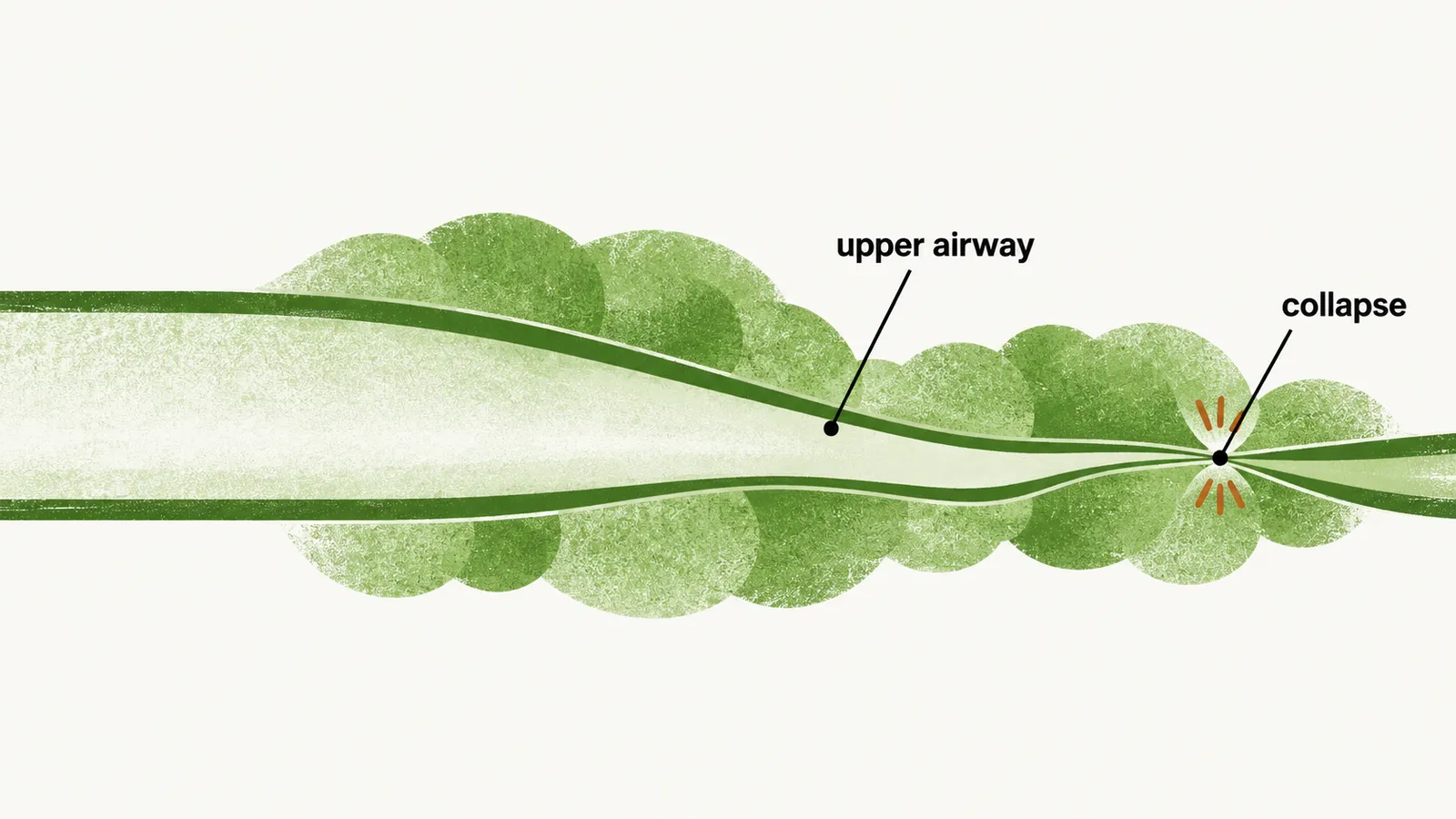
Obstructive sleep apnoea is the respiratory complication, and obesity is one of its leading risk factors. Fat around the neck and upper airway adds bulk, so the upper airway collapses more easily during sleep.
What does untreated sleep apnoea do?
Each collapse breaks sleep and lowers oxygen, and the body responds with sympathetic activity. Untreated sleep apnoea raises the risk of heart disease and diabetes, and these repeated surges are one proposed route.
Untreated sleep apnoea may itself worsen obesity. Sleep loss changes the appetite hormones, which is a proposed route by which untreated apnoea could increase appetite. This is possible, not established. Leptin and ghrelin, covered in Obesity: Neurological Basis of Appetite Control, are among the hormones involved.
What happens to the liver?
The liver receives the fat’s output first, so it is first in line for the abdominal-fat route. The liver complication is fatty liver disease, now termed metabolic dysfunction-associated steatotic liver disease. Fat builds up inside liver cells when more fatty acids arrive from the fat tissue and when the liver makes fat itself. This build-up is the liver change in fatty liver disease.
What happens to the joints?
The joints are affected by a different route, mechanical rather than chemical. The musculoskeletal complication is osteoarthritis. Obesity adds excessive mechanical loading that contributes to starting the osteoarthritic process.
Which cancers are linked to obesity?
Fat tissue also makes hormones, which bears on some cancers. Obesity is associated with endometrial, breast, ovarian, prostate, liver, gallbladder, kidney and colon cancer, among others. Fat tissue converts androgens into estrogen through aromatase, and inflamed fat increases this. Estrogen-driven growth is one proposed route for breast and endometrial cancer, while the links to other cancers are less clear.
How do the mind and social life come into it?
Complications are not only physical. Depression and low self-esteem are linked to obesity, and they are linked to the stigma attached to overweight. These psychological and social conditions have consequences in personal and working life.
What does it all add up to?
Taken together, these conditions cause premature death and substantial disability, and obesity is associated with reduced life expectancy. So can the fat be reduced, and do these complications improve when it is?