Graves disease is hyperthyroidism caused by autoantibodies that act on the TSH receptor. The pathogenesis behind this is covered in Graves disease epidemiology, pathogenesis and ophthalmopathy. The question here is what happens to the disease over time.
The course is not a straight line
The thyroid level does not just rise and stay up. The course of Graves disease over time is not a straight line but a series of changes.
Some patients with mild Graves disease move between relapse and remission over the course of the illness. The disease settles, then returns. Rarely, the balance shifts far enough that hyperthyroidism and hypothyroidism alternate. These swings happen because the underlying process is autoimmune.
When the course ends in an underactive thyroid
The same autoimmunity can outlast the swings and end in hypothyroidism. A proposed explanation is that in some patients the destructive effect of the TSH-receptor antibodies eventually outweighs their stimulating effect.
This hypothyroidism may appear after years of treatment. It appears in about 15% of patients who enter remission, after 10-15 years of therapy. Some patients who enter remission can still become underactive.
The eye and skin follow their own clock
The eye and skin do not wait for the thyroid. Their timelines do not track thyroid hormone level.
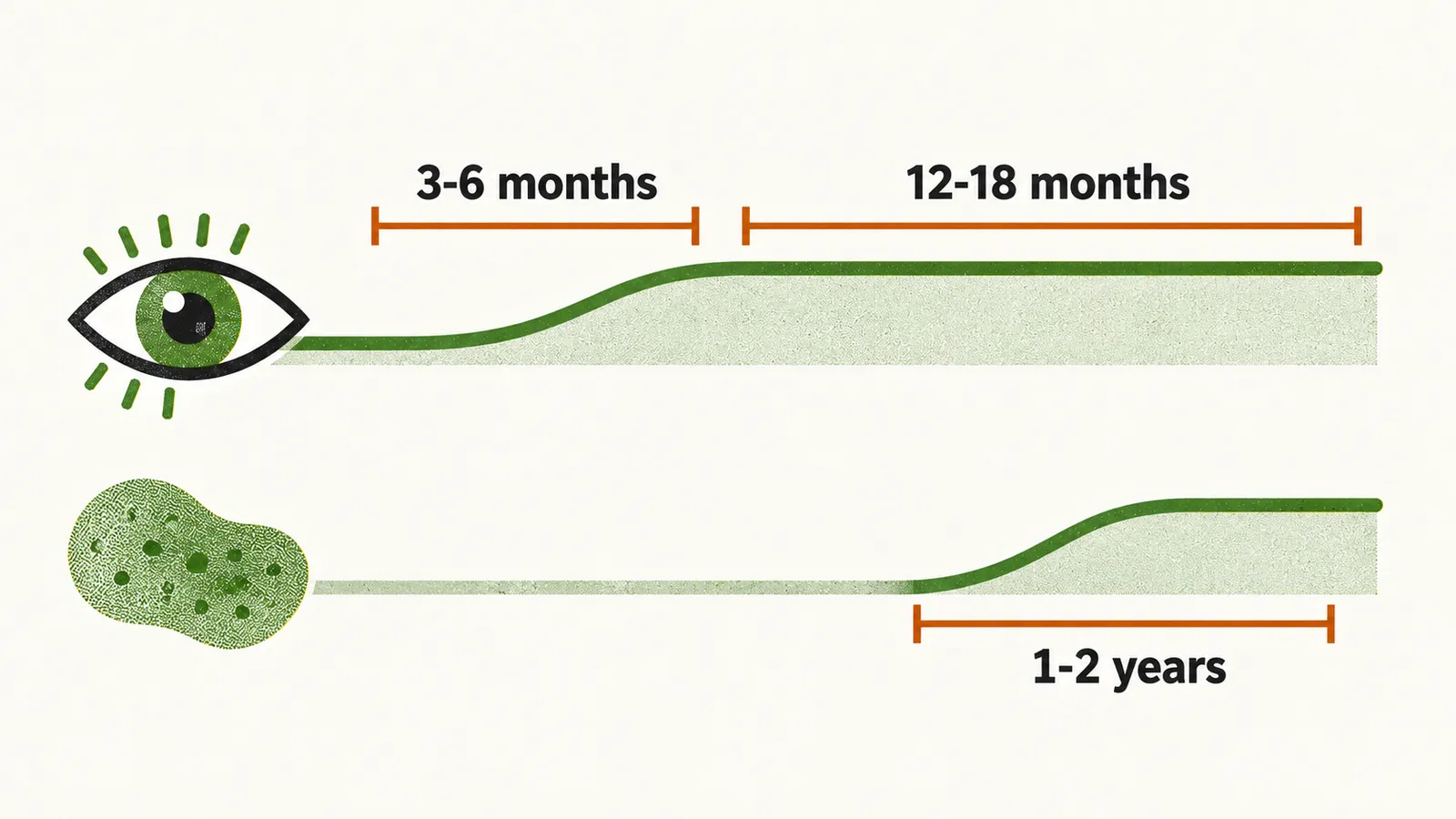
Ophthalmopathy mainly worsens during the first 3-6 months of the disease. It then reaches a plateau over the next 12-18 months. Thyroid dermopathy usually appears 1-2 years after the diagnosis of Graves disease.
If the disease can swing, settle, turn underactive and affect the eye and skin on separate schedules, how is this course recognized and treated?