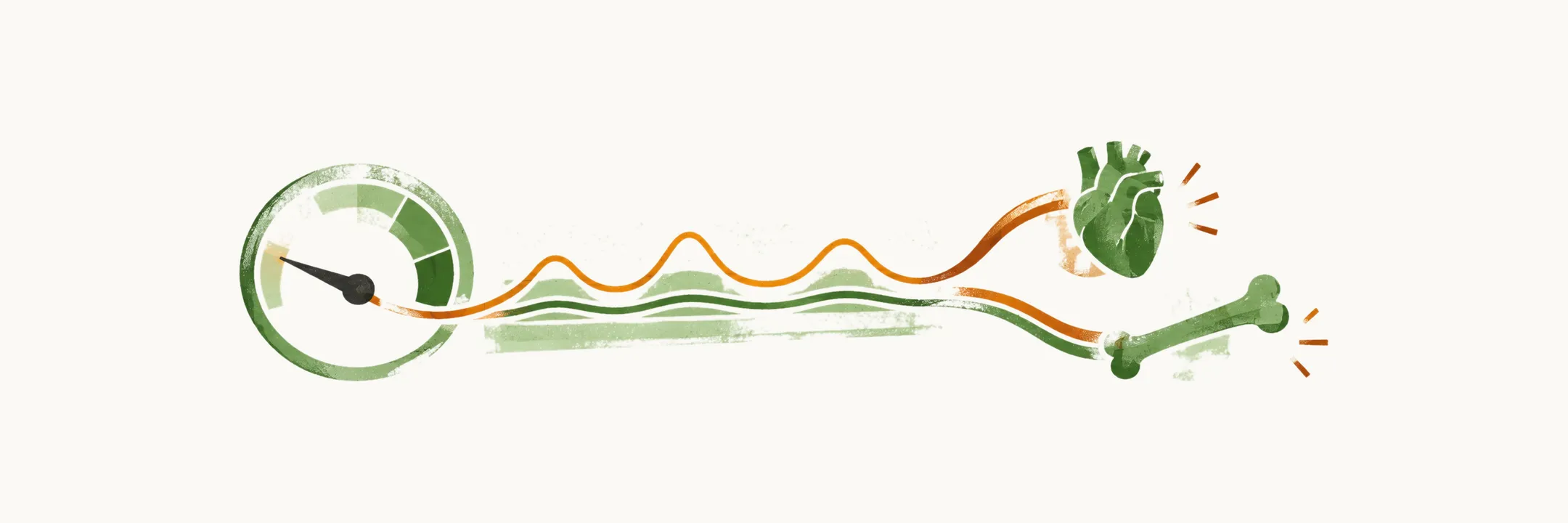
In subclinical hyperthyroidism the circulating thyroid hormone levels, free T4 and T3, are normal, but the TSH is suppressed. The pituitary reads the hormone level in the blood and sets TSH to match, so TSH is the most sensitive gauge of the hormone. Here that gauge reads low while the hormone itself is still in the normal range. This raises two questions: what does the hormone do to the tissues at that level, and how far can a low TSH be trusted?
Why does TSH change before the hormone?
The pituitary’s signal is very sensitive. A small change in free T4 moves TSH a lot, and it does so before free T4 and T3 leave the normal range. That is why routine biochemistry is only partly abnormal: the TSH is the first value to change, and the hormone levels may still look normal.
Why does a normal hormone level still matter?
The cell adjusts how much hormone it activates, as the severity note showed, so the blood level is not the whole story. Thyroid hormone acts directly on heart and bone tissue, so its effect lives in those tissues and not only in the blood level. The tissue effect of the hormone is therefore not neutral, even when the blood level is normal.
Thyroid hormone speeds the heart, as the clinical manifestations note showed. Because the effect is in the tissue, a normal blood level does not remove it. Even with a normal circulating level, the excess hormone action on the heart and bone raises the risk of heart failure, hypertension and other cardiovascular events. Direct effects on the heart are proposed as the route to this raised risk, not a proven one. This is why treatment is considered.
Does the extra effect change survival?
Subclinical hyperthyroidism increases the overall risk of mortality. This is an association found in studies, and the heart and bone effects above are proposed as its route. The risk is most prominent in older men, more than in women and younger patients.
Is one low reading enough?
Survival matters if the low TSH is real. Patients with subclinical hyperthyroidism have been shown to progress to overt hyperthyroidism in the near future. But TSH suppression can also be transient: a suppressed TSH can return to normal on its own, so one low reading does not show lasting disease. That is why TSH, T3 and T4 are repeated after 3-6 months before the diagnosis is confirmed. Repeat tests over months separate a passing change from a persistent one.
How low is the TSH?
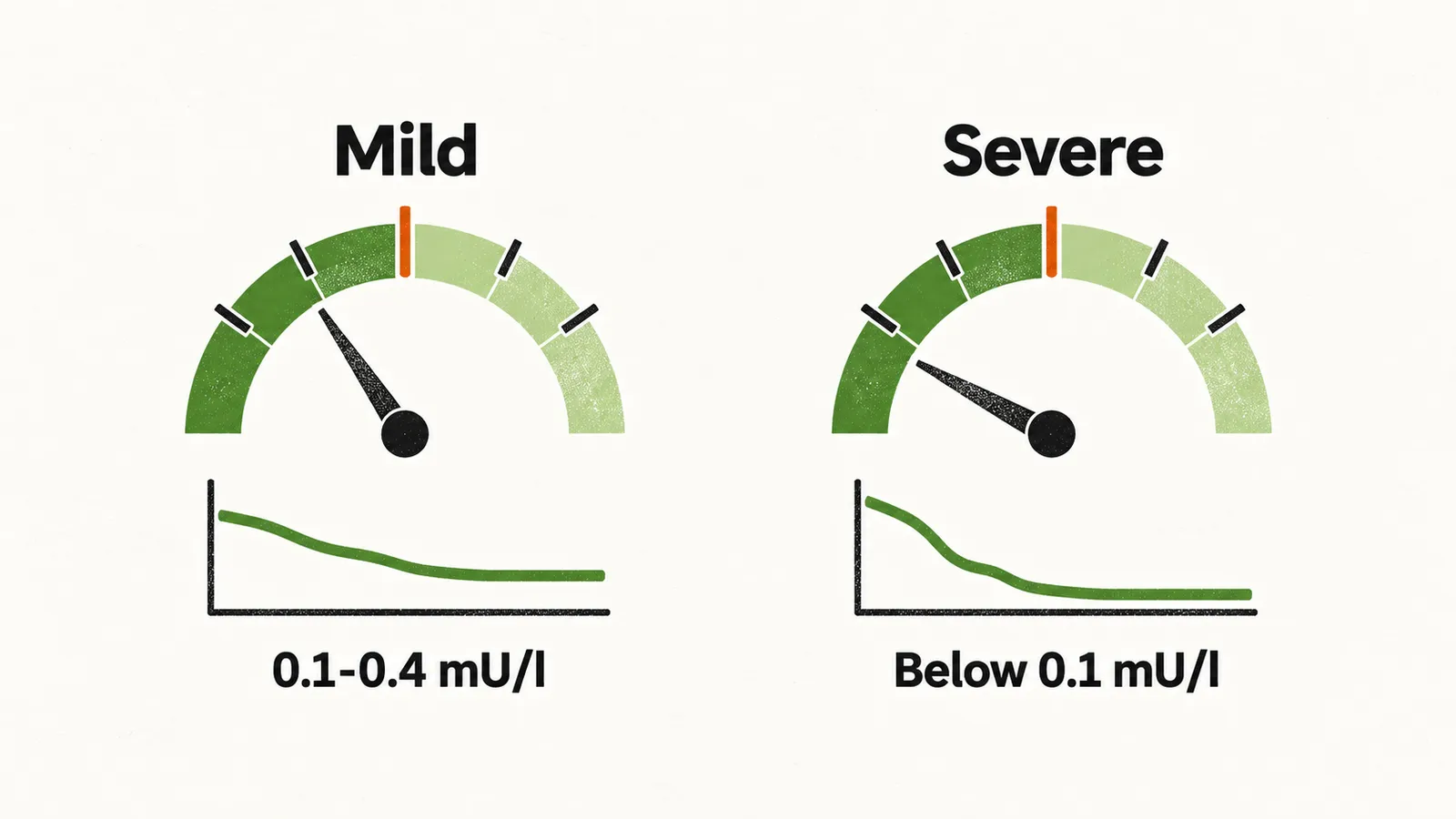
Once the suppression is confirmed as lasting, it is graded by its degree. Mild subclinical hyperthyroidism is a TSH of 0.1-0.4 mU/l. Severe subclinical hyperthyroidism is a TSH below 0.1 mU/l.
Who needs treatment?
The degree of suppression points to a decision. Treatment is advised when the TSH remains below 0.1 mU/l. It is particularly advised in people aged 65 or older, or with heart disease or osteoporosis, and the cardiovascular risk is also highest in these people. So what if the gland is not making extra hormone at all, and stored hormone is leaking out of an inflamed gland?