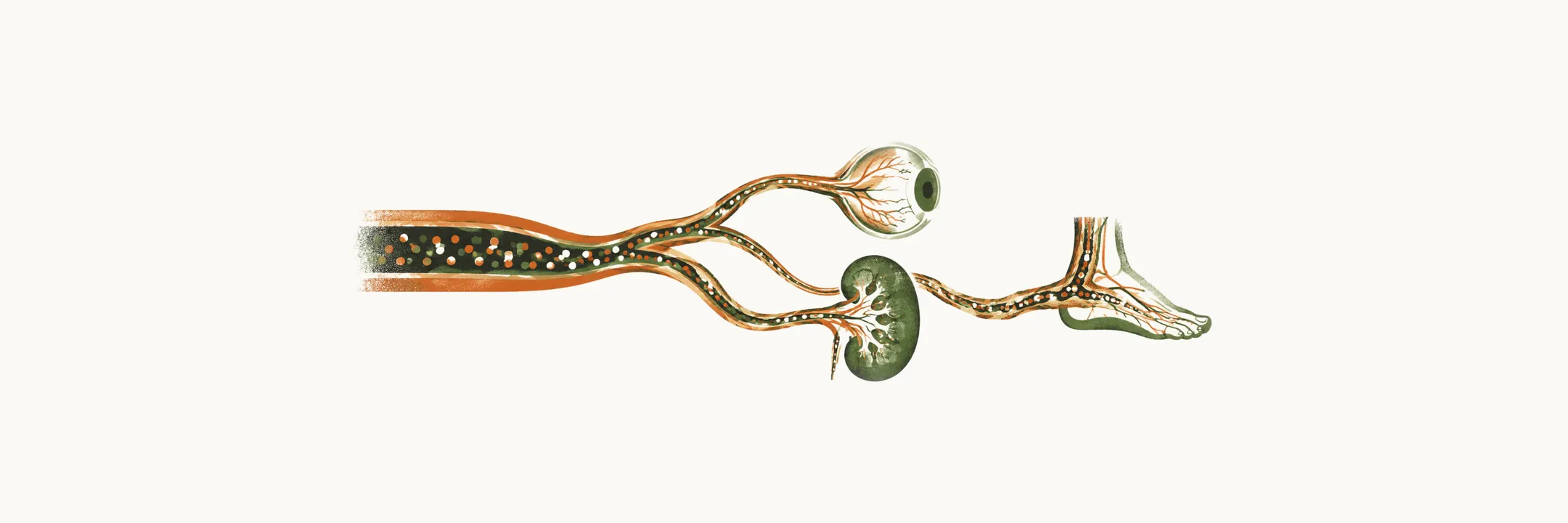
Insulin is what moves glucose out of the blood and into cells, so the amount of insulin in the body decides which way glucose goes wrong. Too much insulin keeps pulling glucose down, and the result is hypoglycemia. Too little insulin leaves glucose in the blood, and the result is ketoacidosis. Glucose that stays high for years does a slower kind of harm, to blood vessels and nerves. And the immune attack that destroyed the beta cells is not confined to the pancreas, and other autoimmune diseases travel with type 1 diabetes.
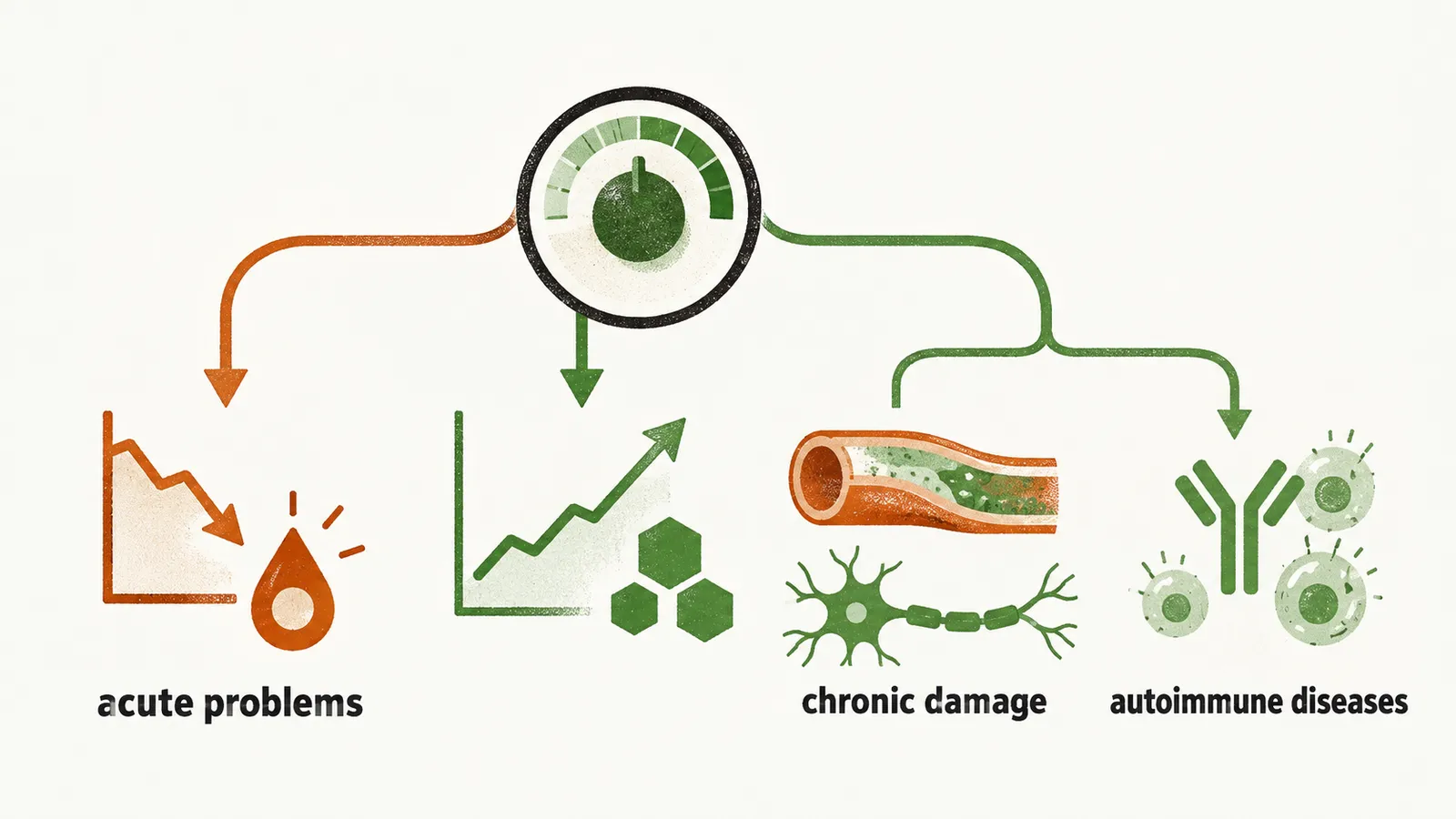
The complications of type 1 diabetes therefore fall into three groups:
- acute problems, from insulin treatment and from its absence;
- chronic damage to blood vessels and nerves, from years of high glucose;
- other autoimmune diseases that cluster with type 1 diabetes.
Which of the first two groups a patient faces depends largely on how well glucose is controlled. The first two groups both come from the insulin dial, so the first question is what happens when there is too much of it.
What happens when there is too much insulin?
Hypoglycemia is dangerously low blood glucose, and it is the most common acute complication of insulin therapy. Normally a falling glucose is pushed back up by glucagon and epinephrine, which raise it quickly. Extra insulin keeps pulling glucose out of the blood, so the fall can outrun that rescue.
The usual causes are:
- too much insulin;
- a missed or delayed meal;
- exercise without a dose adjustment.
Mild hypoglycemia gives sweating, tremor, palpitations and hunger. These are the body’s alarm. Falling glucose activates the sympathetic system, which causes the sweating, palpitations and hunger, so the warning comes before the brain is short of fuel. Mild hypoglycemia is treated with fast-acting carbohydrate.
Severe hypoglycemia brings confusion, seizures or coma. As the Treatment of type 1 diabetes note showed, the brain depends on glucose, and the body’s own defence against low glucose is weakened in type 1 diabetes. Severe hypoglycemia needs glucagon or intravenous glucose. Glucagon is the drug form of the body’s own rescue. Intravenous glucose supplies glucose directly, which matters when the patient cannot swallow.
What limits how tight control can be?
Low glucose is the acute danger of too much insulin, and it is the immediate danger of tight control. Hypoglycemia is the main factor limiting how low average glucose can be taken. As the treatment note showed, treatment is a balance between protection from tight control over years and low-glucose risk day to day.
What happens when there is too little insulin?
Diabetic ketoacidosis (DKA) is the opposite failure to hypoglycemia. It occurs when insulin is missing: at new diagnosis, or because doses were omitted. As the Presentation of type 1 diabetes note showed, without insulin glucose cannot enter cells, so the body breaks down fat and the liver makes ketone bodies. As the Screening for type 1 diabetes note set out, ketoacidosis involves insulin deficiency together with a rise in counter-regulatory hormones. In DKA these stress hormones rise. Infection is a common trigger.
Ketoacidosis is a high-anion-gap metabolic acidosis, meaning unmeasured acids accumulate in the blood.
Treatment is fluids, insulin and careful electrolyte replacement. Insulin is needed, and not only fluid, because it stops the fat-burning that makes ketone bodies: without insulin, glucose cannot be used. As the presentation note showed, the surplus glucose holds water in the urine, which is why dehydration follows, and the fluids replace that water.
Why is brain swelling the feared complication in children?
In children, DKA’s most feared complication is cerebral edema. It is the leading diabetes-related cause of death in children. Why the brain swells is not settled. The most widely accepted hypothesis is an ischemia-reperfusion injury with inflammation, and it remains a hypothesis, not a proven cause.
What does years of high glucose do to small vessels?
Persistent hyperglycemia damages small blood vessels and nerves over years. A unifying mechanism has been proposed: high glucose overloads the mitochondria of the cells lining the vessels, which then make reactive oxygen species that injure them. This is a proposed explanation, not a settled one.
The three classic microvascular complications are retinopathy, nephropathy and neuropathy.
In retinopathy, the retinal vessels are damaged. Damaged vessels become leaky, so fluid seeps into the retina. In the later form the retina grows new vessels that are fragile and can bleed. Retinopathy is a leading cause of vision loss in working-age adults.
Nephropathy, or diabetic kidney disease, is damage to the glomerular capillaries. The most important event before kidney injury is leakage of plasma proteins such as albumin through the damaged filter. Podocyte density is the best predictor of albuminuria and progression. Nephropathy can progress to chronic kidney disease and end-stage renal disease.
Why do the nerves of the feet matter?
The same long-term damage reaches the nerves. Peripheral neuropathy causes loss of sensation and pain in the feet. It predisposes to foot ulcers. Feeling is the warning system. Without it, pressure on the sole goes unnoticed and repeats. Autonomic damage to sweat glands also dries and cracks the skin, so small injuries become ulcers.
Autonomic neuropathy affects the stomach (gastroparesis), the bladder and the heart.
Can tight control prevent this damage?
The small-vessel and nerve damage is what the trial tested, so the question is whether lower glucose changes it. The Diabetes Control and Complications Trial (DCCT) compared intensive with conventional insulin treatment. Intensive control reduced microvascular complications by 35% to 90%. In long-term follow-up the benefit persisted after the trial ended. As the treatment note showed, lower average glucose lowers the risk of long-term complications of diabetes.
What does high glucose do to large arteries?
The large arteries are hit by the same glucose, with the usual risk factors on top. Type 1 diabetes accelerates disease of the large arteries. Hyperglycemia affects atherogenesis independently, not only through the usual risk factors.
The endothelium plays a central role in plaque formation, controlling permeability, inflammation and thrombosis, so injury to it is thought to contribute to events in the arteries of the heart, brain and legs. Type 1 diabetes raises the risk of myocardial infarction, stroke and peripheral arterial disease. Cardiovascular disease is the leading cause of death in people with type 1 diabetes, and the main risk of death comes from the cardiovascular complications of accelerated atherosclerosis. It remains the main cause of death.
The cardiovascular risk reflects chronic hyperglycemia together with the usual factors: blood pressure, lipids and smoking.
Why do other autoimmune diseases appear?
The immune attack is not confined to the pancreas. Other autoimmune diseases cluster with type 1 diabetes.
Autoimmune thyroid disease (Hashimoto’s thyroiditis and Graves’ disease) is the most common of these. Celiac disease is also increased in type 1 diabetes.
Thyroid function is checked soon after diagnosis. Celiac disease is looked for especially in children and in anyone with suggestive symptoms. Untreated thyroid or celiac disease can worsen glucose control.
What decides long-term outcome?
Survival has improved, but the disease still shortens life, and glucose remains the lever. Modern care has greatly improved survival, yet type 1 diabetes still shortens life expectancy compared with the general population. Glycemic control is the strongest modifiable factor: the lower the average glucose, the lower the risk of both microvascular and macrovascular complications.
What single process, if any, links the emergencies, the slow damage and the immune spread?