
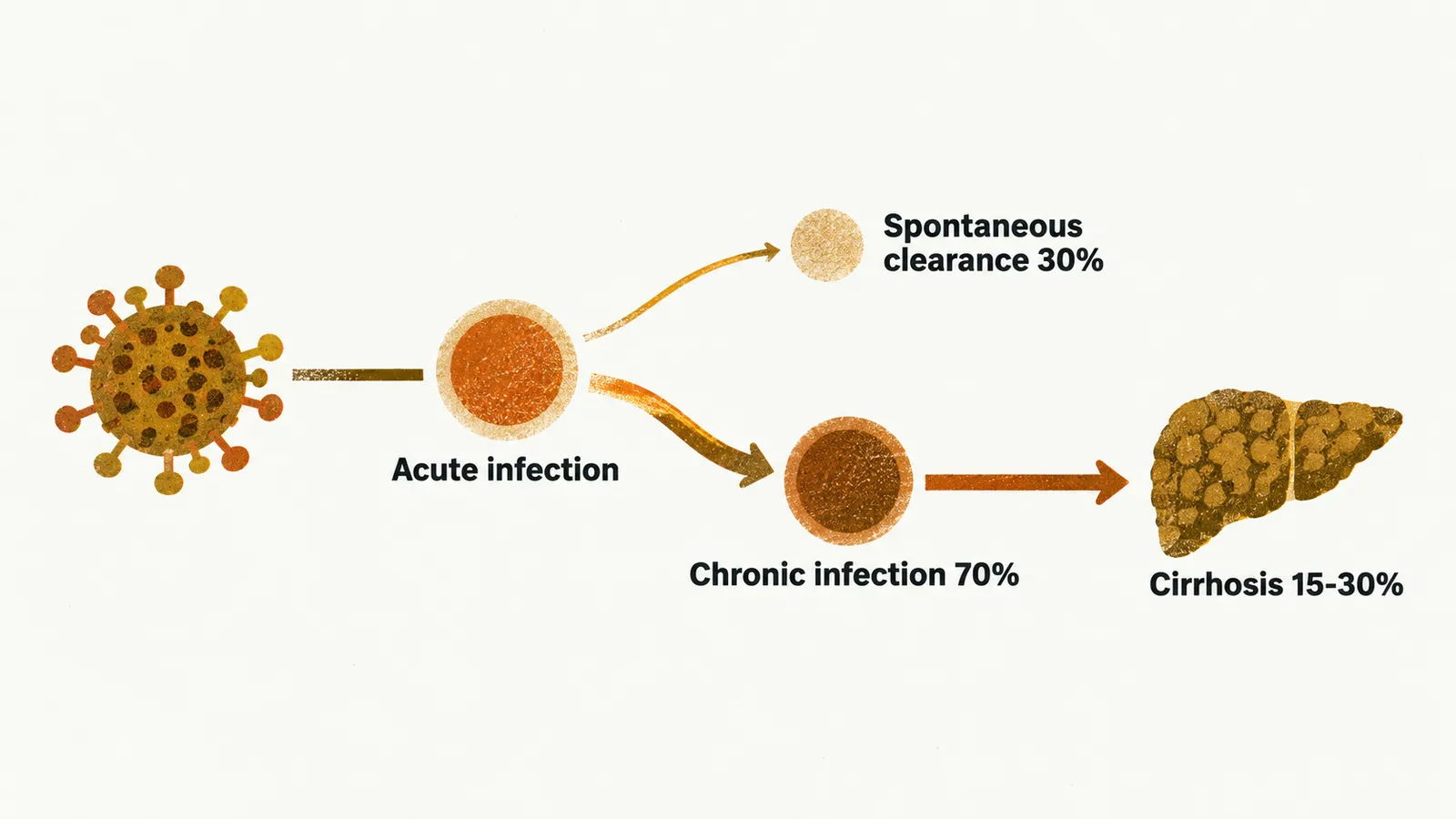
Hepatitis C begins as an acute infection, but the acute illness is usually mild or silent, so the illness that brings a patient to medical attention is almost always the chronic one. After exposure, the course divides into two main outcomes.
The acute infection and its two outcomes
Most people have no symptoms when first infected; when symptoms do appear they are non-specific, such as fatigue, loss of appetite, abdominal pain or jaundice. The acute phase therefore often passes unrecognised.
From there, roughly 30% of people (a range of about 15-45%) clear the virus spontaneously within 6 months through a strong immune response, without treatment. The remaining 70% (about 55-85%) do not clear it and develop chronic infection. In adults, the proportion who become chronic is higher than with hepatitis B, which is why hepatitis C is thought of primarily as a chronic disease.
Chronic infection and its natural history
Chronic infection is typically asymptomatic for years or decades, so it is often found incidentally on a blood test rather than through symptoms. Without treatment, about 15-30% of people with chronic infection develop cirrhosis, the scarring of the liver that disrupts its structure and function, within 20 years. Once cirrhosis is established, the annual risk of hepatocellular carcinoma (HCC), primary liver cancer, is about 1-4%, alongside a substantial risk of decompensated liver failure, in which the cirrhotic liver can no longer maintain its functions. In a small proportion of people the disease is rapidly progressive, reaching cirrhosis within a few years rather than decades.
Factors that favour progression
How quickly infection becomes chronic and then advances is not fixed. Older age at infection, immunosuppression (including HIV infection), heavy alcohol use, a long duration of infection and concurrent liver steatosis, meaning fat accumulation in the liver, all shift the odds toward progression.
Because the acute illness is usually silent and chronic infection is typically asymptomatic for years, infection often goes unrecognised, which raises the question of who should be tested and how.