
There is no effective vaccine against hepatitis C. Prevention therefore depends entirely on interrupting the bloodborne routes of transmission, and on finding and curing infections before they are passed on.
Blocking bloodborne transmission
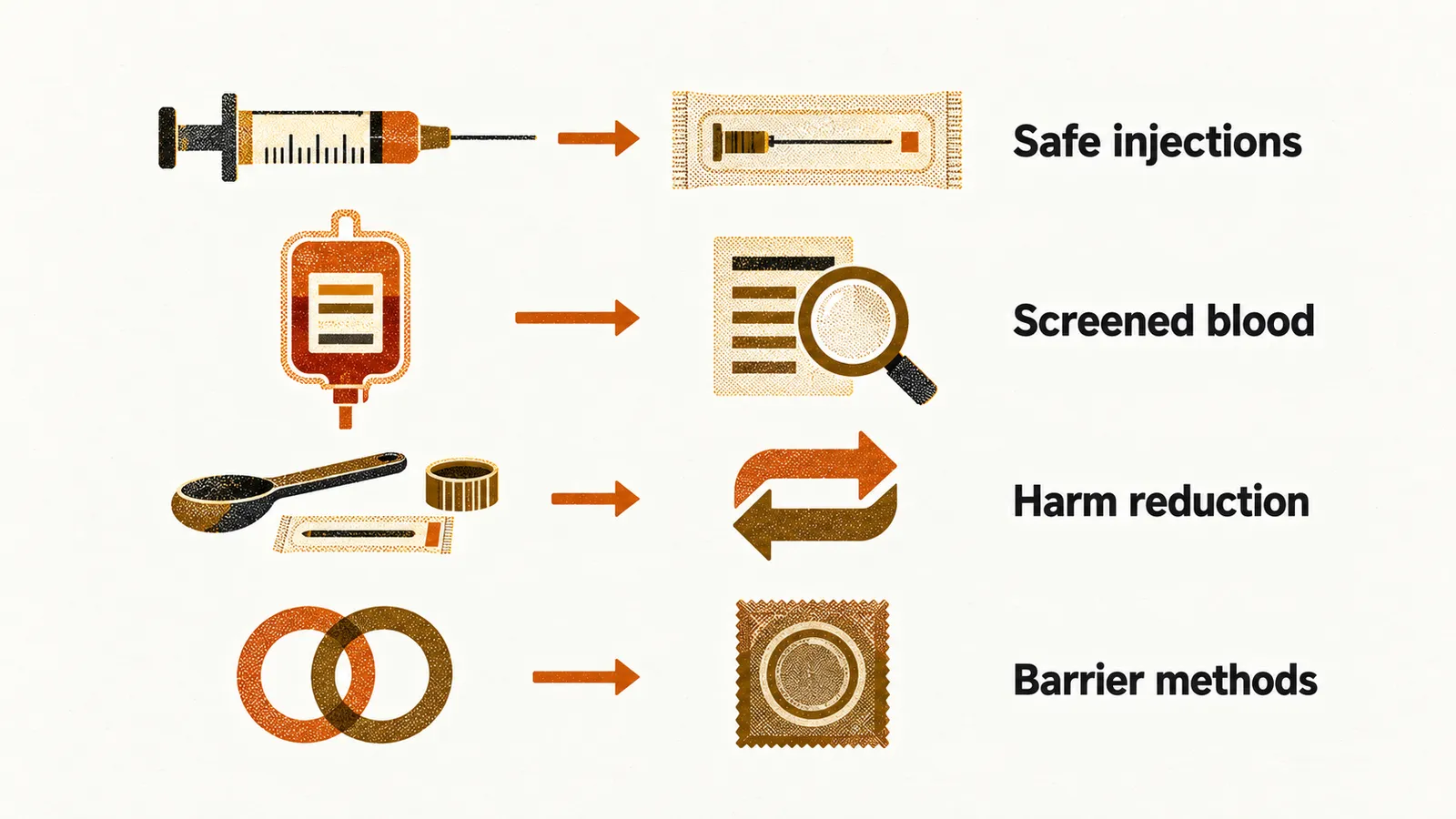
Prevention follows the routes of transmission, so each setting where blood exposure occurs has its own measure.
In health care, prevention rests on safe injection practices and the sterilisation or single use of instruments, together with safe handling and disposal of needles and medical waste, because reused equipment is one of the commonest routes of transmission.
For the blood supply, blood and blood products are screened for HCV before transfusion, which has made transfusion-related transmission rare wherever screening is universal.
For people who inject drugs, harm-reduction services, which reduce the harms of drug use, reduce transmission directly. These include needle and syringe exchange programmes, substance-use counselling, and opioid agonist therapy. WHO recommends all of them as part of a public-health response.
Sexual transmission is inefficient, but barrier methods reduce it for people at risk, particularly those with multiple partners or men who have sex with men.
What does not spread hepatitis C
HCV is not spread through breast milk, food, water or casual contact such as hugging, kissing or sharing food and drinks. This matters practically, because it means people with hepatitis C do not need to be isolated from family life.
Testing and treatment as prevention
Blocking routes of exposure is only part of prevention, because people who are already infected remain a source. Because cure removes the source of infection, testing and treatment are themselves preventive. Treating diagnosed infection prevents onward transmission as well as preventing the cirrhosis and liver cancer that chronic infection would eventually cause.