The hepatitis C virus (HCV) is a small, enveloped RNA virus of the Flaviviridae family, the group that also contains the yellow fever and dengue viruses. It spreads by the same bloodborne routes as the hepatitis B virus (HBV) — needlestick injuries, contaminated blood, and sexual activity — but it is more likely than HBV to establish a chronic infection that persists for life.
Genome and structure
Like the hepatitis A virus (HAV), HCV carries a positive-sense RNA genome, meaning the viral RNA can be read directly as messenger RNA once it is inside a cell. Unlike HAV, it is enveloped, wrapped in a lipid membrane that carries the viral surface proteins.
The genome is about 9,600 bases long and encodes 10 proteins, among them the two envelope glycoproteins, E1 and E2, that stud the viral surface. A single long polyprotein is made and then cut into its individual proteins, a strategy the virus depends on for assembling new particles.
Why the virus keeps changing
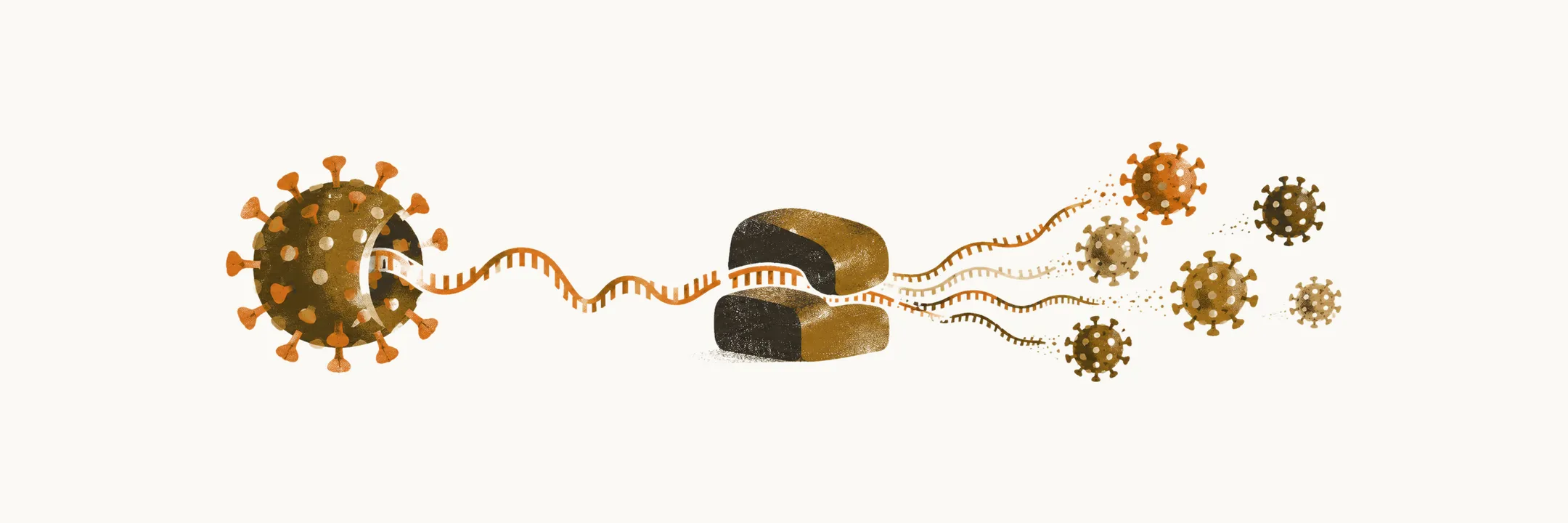
The genome is copied by an RNA-dependent RNA polymerase, an enzyme that makes new RNA from an RNA template. In HCV this enzyme is NS5B, and it has no proofreading activity, so it cannot correct its copying errors and each round of replication introduces random errors.
A single infected person therefore carries not one virus but a quasispecies: a large swarm of closely related variants, the same situation seen with HIV. This constant antigenic variation, a continual change in the parts of the virus that the immune system recognises, has two consequences. Antibodies raised during one infection do not protect against reinfection, and no effective vaccine has been developed, because any vaccine would have to keep up with a moving target.
Related viruses and the non-A, non-B group
Before specific tests existed, hepatitis that was not caused by HAV or HBV was grouped together as non-A, non-B hepatitis (NANBH). HCV turned out to be the most common cause of that group.
The hepatitis G virus (HGV), now usually called GB virus C, is a relative of HCV in the same virus family. It shares the bloodborne route of spread and resembles HCV in several ways. How HCV itself reaches new hosts, and in which populations it is common, is the next question.