
Hepatitis C virus (HCV) infection can now be cured with drugs that act directly on the virus. Treatment was once difficult and only partly effective, and it now consists of a short course of oral tablets that works in nearly everyone.
Direct-acting antivirals
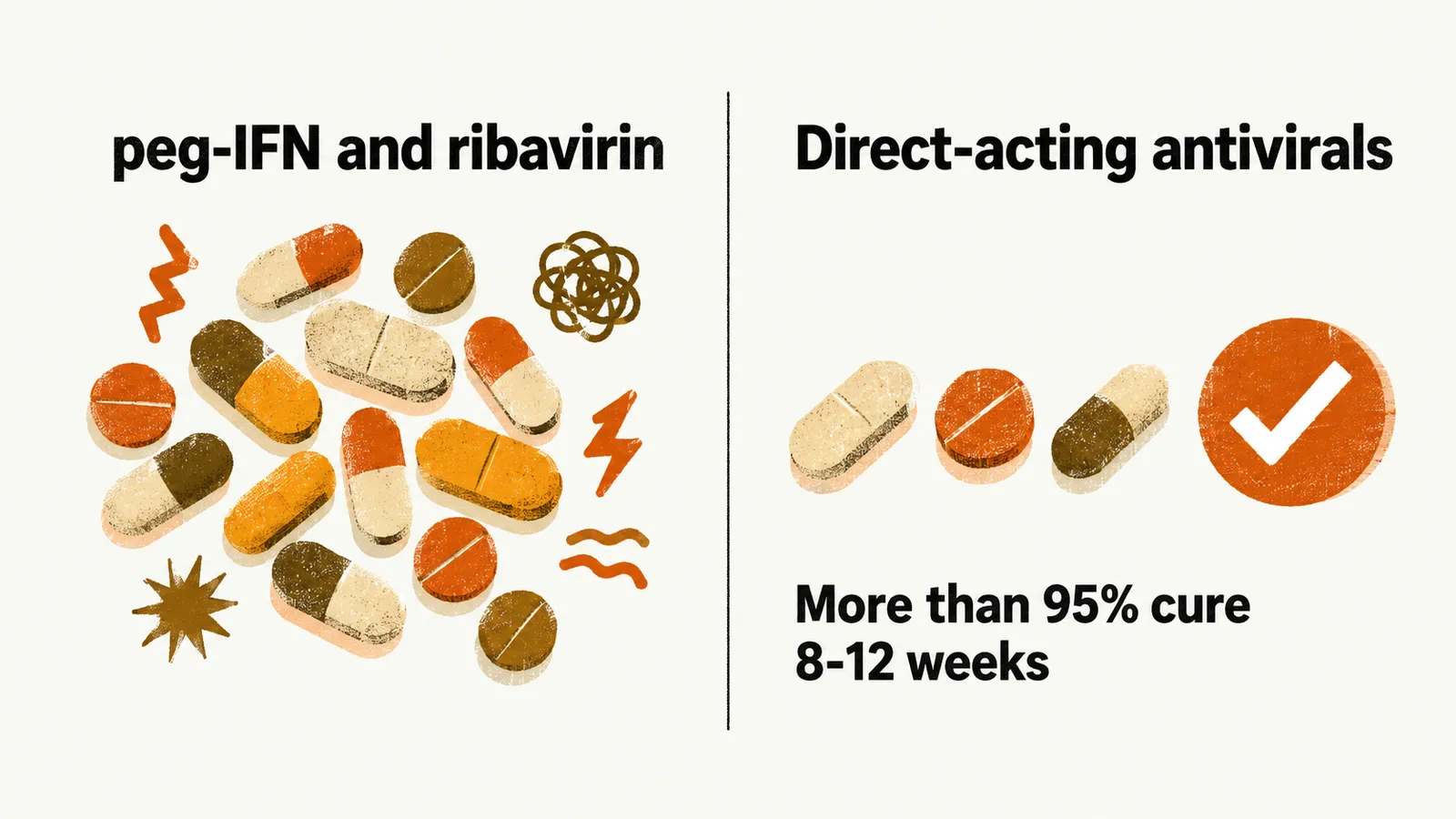
Before DAAs, the main regimen was pegylated interferon (peg-IFN) combined with ribavirin. Reaching a sustained virological response, the marker of cure described below, on that combination depended heavily on the HCV genotype, and the side effects were considerable. It is no longer the standard of care.
Treatment is now based on the direct-acting antiviral drugs (DAAs), which cure more than 95% of infections. They act on three viral targets, and combining drugs that hit different targets is what makes cure reliable:
- protease inhibitors, which block the NS3/4A protease the virus needs to cut its polyprotein
- polymerase inhibitors, which block the NS5B RNA-dependent RNA polymerase; these include nucleotide and non-nucleotide analogues such as sofosbuvir
- NS5A inhibitors, such as daclatasvir and velpatasvir
Modern regimens are pan-genotypic, meaning they are active against all HCV genotypes, the genetically distinct strains of the virus, so treatment can begin without knowing the genotype. A course is short, usually 8-12 weeks, and is well tolerated.
The goal of treatment
The goal is no longer to suppress viral replication and viraemia, the presence of virus in the blood, but to eradicate the virus from the body. Cure is confirmed by a sustained virological response (SVR): no detectable HCV RNA a set number of weeks after treatment ends, which in practice means the virus will not return.
Eradication matters because persistent infection is what leads to the cirrhosis, hepatocellular carcinoma and extra-hepatic disease that chronic hepatitis C can cause.