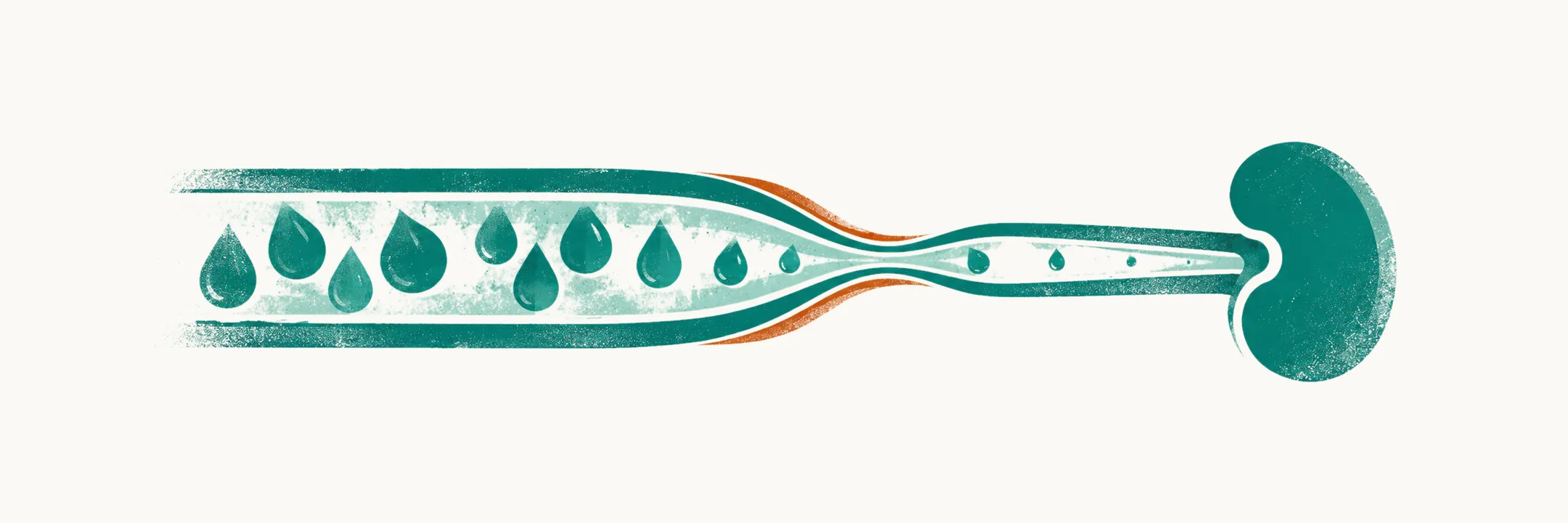
Most children with acute gastroenteritis recover within a few days without treatment beyond oral fluids. Complications are uncommon, yet they matter out of proportion to their frequency. What does an ordinary episode look like, so that a child who leaves that course can be recognised?
What does an episode usually look like?
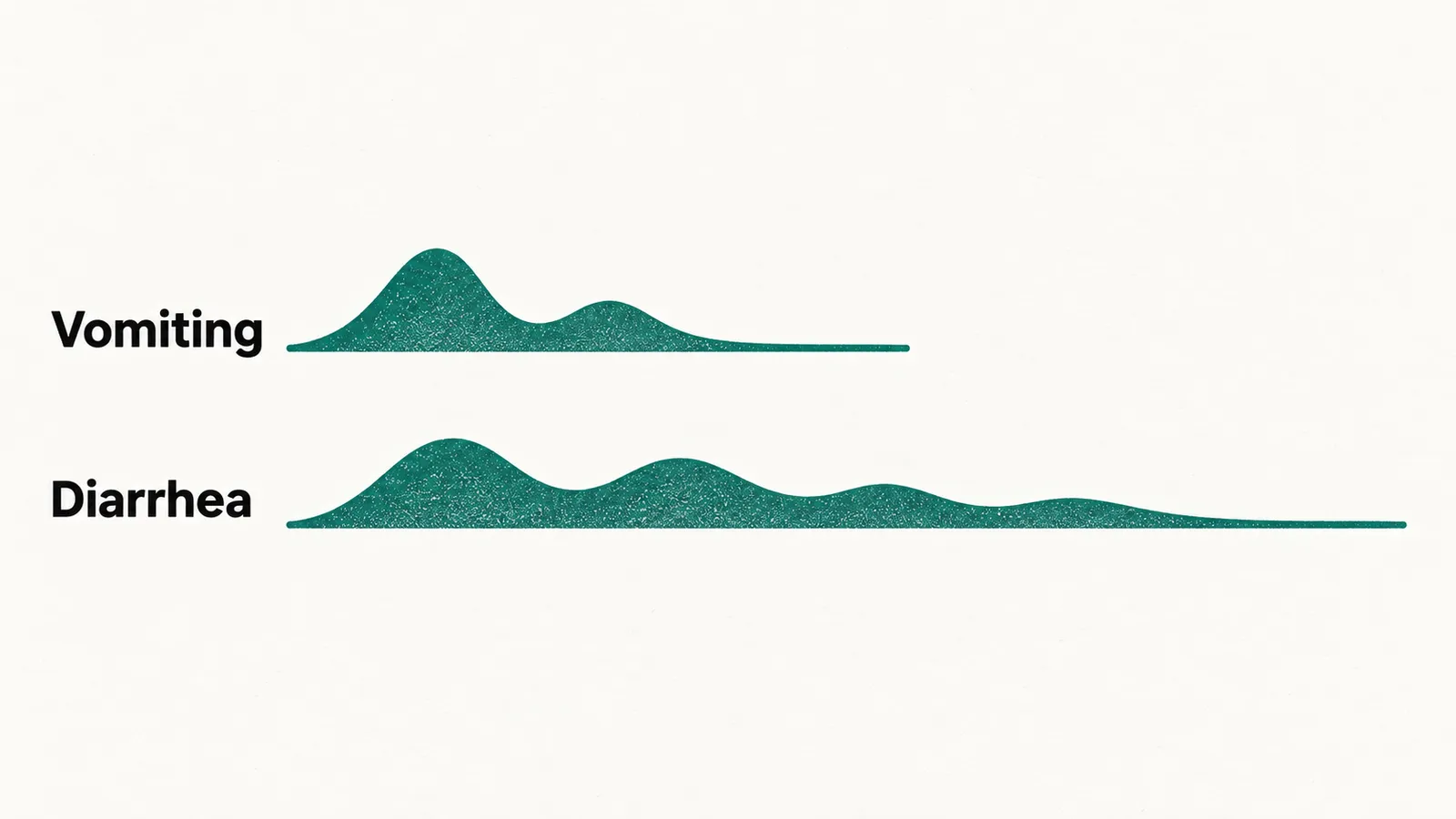
Knowing the usual course is what lets a student see when a child has left it. The organism is cleared on its own within days or weeks. In an uncomplicated episode the diarrhea lasts 5 to 7 days, and in most children it stops within 2 weeks. Vomiting lasts 1 to 2 days, and in most children it stops within 3 days. The usual outcome is full recovery in a few days.
Why does the child look well before the stools do?
Recovery does not coincide with discharge from hospital or from the acute illness. Sufficient rehydration, meaning the child drinks, passes urine and gains weight, ends hospital treatment even if the stools are still loose. So discharge comes before the stools are back to normal. Stools take some days to become formed again, and appetite and stool consistency take a few days to return to normal after the acute illness has settled. The child may need a few days at home before returning to normal social life.
Which problems settle without treatment?
Recovery and discharge do not match, and the clearest case is lactase, which is lost and then returns. Virus damage to the absorbing lining switches the lactase enzyme off, as the Pathophysiology note showed. The enzyme is made again as the lining heals. Secondary lactase deficiency is therefore the clearest example of a problem that settles by itself: the osmotic diarrhea it causes settles as the mucosa regenerates and brush-border enzyme activity returns. It is a temporary consequence of the illness, not a new diagnosis to pursue.
Where do complications come from?
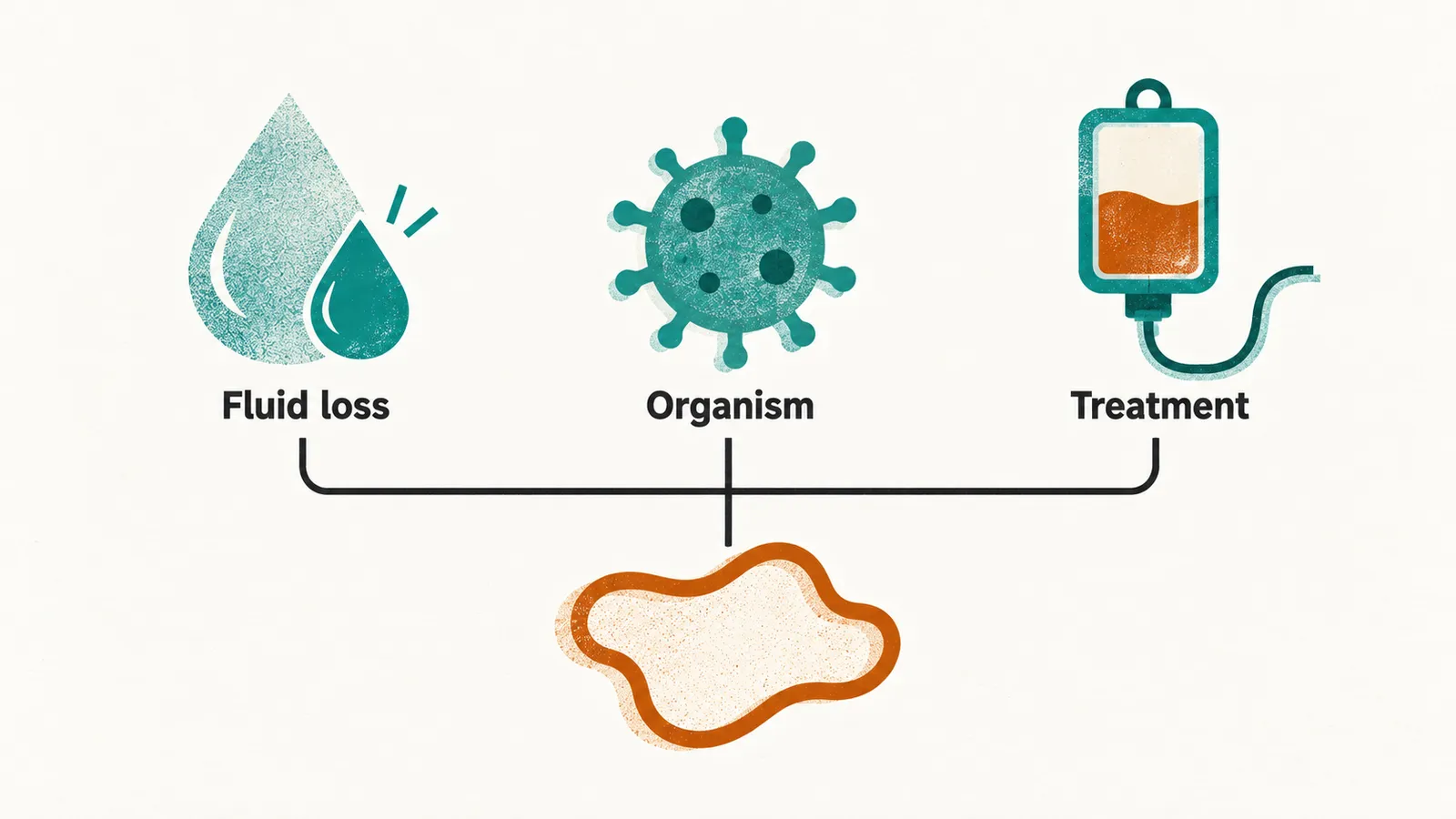
If the course usually goes well, complications are the exceptions, and they have three sources. They can be sorted by cause: the fluid loss and the fall in intake, the organism itself, and the treatment. Preventing complications is what most management of gastroenteritis is for. Two things set most of this harm in motion: the infection itself, and a fluid loss that outruns replacement.
Who is most at risk of a severe episode?
Risk is not spread evenly, and malnutrition is one host factor. Malnutrition raises the risk of a severe episode, and it worsens with each episode. The account of a usually mild illness holds in Europe, where death from gastroenteritis is rare. Worldwide the picture is different: diarrheal disease is the third leading cause of death in children aged 1 to 59 months, with around 443,832 deaths in children under 5 each year.
What does fluid loss do to the kidney?
The first route is the fluid lost, and the kidney is one of its targets. Dehydration that is not replaced ends in hypovolemic shock, and shock that is not corrected ends in death.
The kidney is among the first organs to suffer when circulating volume falls. Its filtering depends on the flow and pressure that reach it. When dehydration is the cause, the injury therefore reflects reduced perfusion rather than damage by the organism. This explains why replacing volume is also the treatment for this injury. Injury that has progressed further before volume is restored recovers less reliably. Urine output falls as perfusion worsens, as the Admission note set out, so urine output and kidney function belong in the monitoring of any child who stays dehydrated or hypotensive. Acute kidney injury is uncommon but consequential.
How common is kidney injury, and what does it cost?
Kidney injury is uncommon, but its cost is high. In a United States inpatient database analysis of children hospitalized with diarrheal illness, acute kidney injury was recorded in 0.8% of admissions. Children with acute kidney injury had about eight times the odds of dying, and roughly 3 more days in hospital than children without it.
Why does blood glucose fall in a child who is vomiting?
The same vomiting that drives fluid loss also stops the sugar intake. Young children have limited glycogen reserves, and they usually stop eating when they vomit. Low blood sugar with raised ketones is described after a period without eating or when the child is ill, and a child who vomits and takes in no food is in that setting. So blood glucose can fall during an episode. Ketotic hypoglycemia is more common in younger children.
Rotavirus gastroenteritis is associated with a higher risk of metabolic disturbance, and hypoglycemia is the disturbance most often seen with it. The picture is easily missed, because drowsiness and lethargy are also signs of dehydration. Hypoglycemia is easily mistaken for dehydration. Glucose supports brain metabolism.
How is low glucose recognised and measured?
Because the picture is easily missed, the glucose measurement is the test. Blood chemistry is kept for the situations that change fluid therapy, as the Investigations note explained; a low glucose is one of them. Blood glucose belongs in the assessment of a child who is drowsy, unable to keep fluids down, or starting intravenous fluids, and in that situation it is measured with the electrolytes. Hypoglycemia is common enough to justify this. Glucose is added to the fluid once volume is restored, the boundary the Rehydration note describes. The maintenance solution contains dextrose partly for this reason, and glucose also reduces protein catabolism and sodium loss.
What is hemolytic uremic syndrome?
The second route is the organism itself, and one of its complications has its own name. Hemolytic uremic syndrome (HUS) is the most common cause of acute kidney injury in children, though it is rare. HUS destroys red cells as they pass through damaged small vessels and lowers the platelet count, as the Investigations note showed. It is caused by Shiga toxin-producing E. coli (STEC) in about 8 in 10 children who develop it, and the Shiga toxin of STEC is what damages those small vessels, as the Investigations note explained.
HUS follows about 8% of diagnosed STEC O157 infections, O157 being the most common serotype. Infection with these organisms is highest in children under 5 years, and so is the risk of HUS.
Why does it change the handling of bloody diarrhea?
Because this organism carries the HUS risk, bloody diarrhea is handled differently. HUS is the complication that changes how bloody diarrhea is handled. Bloody diarrhea with low or no fever is the typical presentation of these organisms, and it fits the toxin that injures the colon, as the Etiology note explained. Antibiotics are withheld in that situation because evidence on whether they change the risk of HUS is conflicting, as the Refeeding and Drug Therapy note set out. The Etiology note set out the proposed explanation for how an antibiotic might add harm in this infection. A child with confirmed STEC infection is monitored for features of HUS rather than treated empirically.
Why can a child have a seizure during gastroenteritis?
A convulsion during acute gastroenteritis has several possible explanations, drawn from more than one group, and not all of them are benign.
Which seizures are benign?
The benign pattern is the one defined by its labs. It is the afebrile seizure of viral gastroenteritis: brief and generalised, in a child with a mild illness and no severe dehydration or electrolyte disturbance. It is associated mainly with rotavirus and norovirus. A seizure with a sodium or glucose disturbance therefore lies outside this pattern. Seizures are usually benign afebrile convulsions of viral gastroenteritis.
When is a seizure a warning sign?
A seizure is read differently in a child who looks toxic, and in a child who convulses at presentation rather than during recovery. In a retrospective controlled study of nontyphoid Salmonella gastroenteritis, children who appeared toxic or had a seizure at admission were more likely to have bacteremia than children with isolated gastrointestinal symptoms. A toxic-looking child or a seizure at presentation raises the possibility of bacteremia.
What does the sodium measurement show?
The sodium result is what separates the two directions of a sodium disturbance, as the Clinical Assessment note explained. Severe hypernatremia and hyponatremia are the third explanation for a seizure. Because the benign pattern is defined as having no laboratory derangement, the electrolytes are the other explanation to exclude, and an electrolyte check is how the benign group is confirmed or excluded.
Which complications come from treatment?
The third route is the treatment. Two complications come from treatment rather than from the illness, so they are iatrogenic. Both are avoidable when the rules for fluid composition and for the rate of sodium correction are followed.
What does dilute fluid do?
A fluid more dilute than plasma is the first treatment harm. Such a fluid lowers the plasma sodium, as the Clinical Assessment note showed, and it can cause acute hyponatremia. Acute hyponatremia can occur in children who were normonatremic when treatment started. It comes from unnecessarily dilute fluid.
What happens when sodium is corrected too fast?
The second treatment harm is the reverse problem. High serum sodium pulls water out of brain cells, so a too-fast correction can harm the brain, as the Clinical Assessment note showed. A brain exposed to sustained hypernatremia has adjusted its own osmolality and needs time to readjust. Correcting hypernatremic dehydration faster than the brain can adapt shifts water into brain cells, and this can produce cerebral edema. Cerebral edema thus comes from correcting hypernatremia too quickly.
Can these be avoided before a clinician sees the child?
The deficit that outruns replacement is the common thread. In Europe, the deficit, not the organism, causes most of the harm: hypovolemic shock and acute kidney injury follow losses that outrun replacement. Both the infection and the fluid loss can be reduced before a clinician is involved, so what stops the infection and the fluid loss from happening in the first place?