A pituitary adenoma does harm in two ways: through the hormone it makes and through the structures it presses on. Treatment therefore has one job, to stop that harm. Most adenomas are managed by switching off a hormone the tumour secretes, by decompressing the structures it presses on, or by both. Which matters most depends on what the tumour makes, because an adenoma keeps the hormone of the cell it grew from. That is why the choice of first-line treatment follows the tumour type. For most adenomas the first step is surgery.
Why is surgery usually the first step?
An adenoma is benign in its cells but can grow into neighbouring tissue. A drug can hold the tumour or its hormone down, but removal takes the tumour out. For most adenomas surgery comes first because removing the tumour is the only chance of cure. Complete removal offers that chance, and how completely the tumour is removed also predicts whether it comes back.
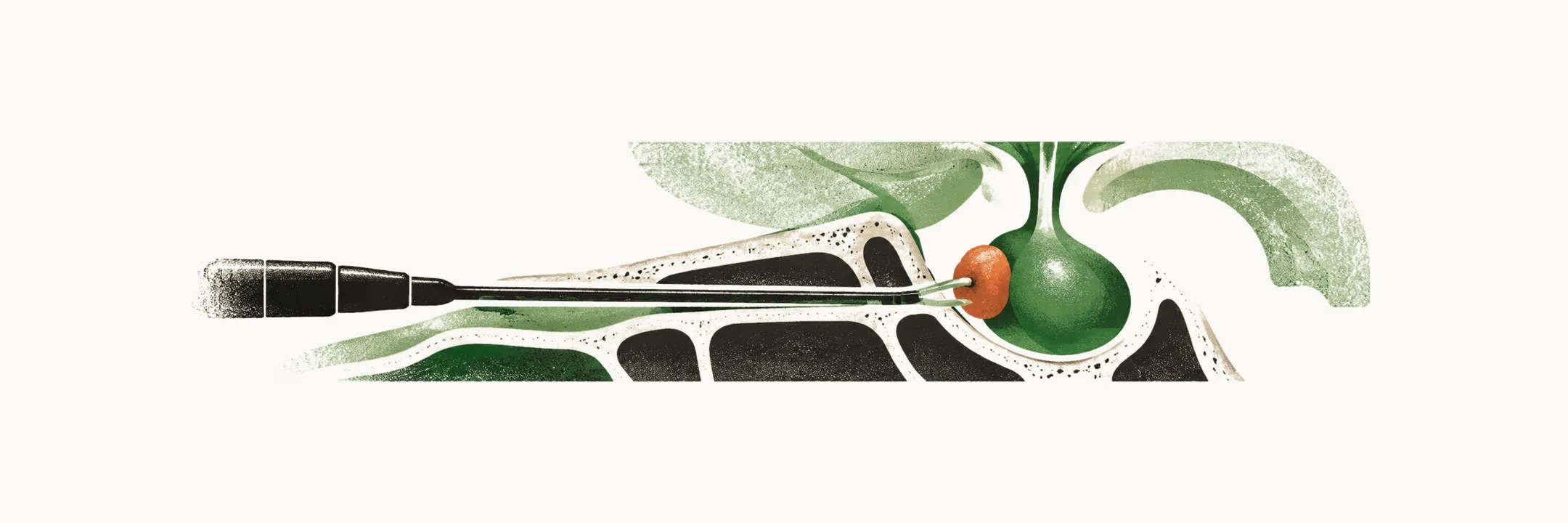
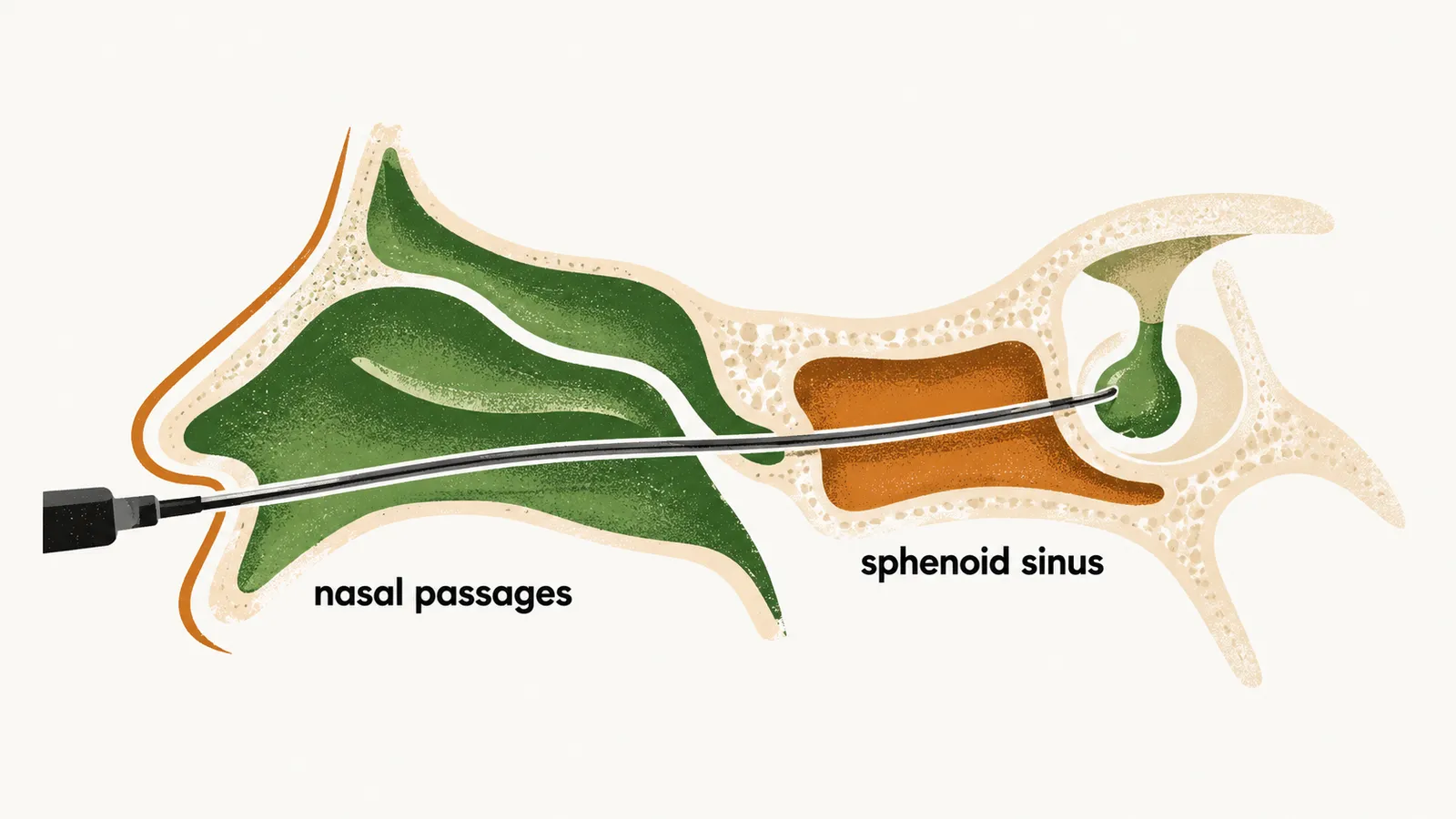
The operation is transsphenoidal. The gland sits in the sella, and the surgeon reaches it through the sphenoid sinus, working through the nasal passages and not opening the skull.
Sometimes the tumour cannot be removed completely. Roughly 20% of microadenomas and 40% of macroadenomas are not cured. A tumour that remains can keep making hormone, so these patients need long-term medical treatment. In Cushing’s disease, transsphenoidal surgery achieves remission in most patients in experienced centres, and it is also first-line for growth hormone and TSH adenomas.
For most adenomas the picture points to removal, because the tumour has to come out to end the harm.
What about prolactinomas?
A prolactinoma is the exception to surgery first, and the reason is that the restraint it has lost can be supplied as a drug. Prolactinoma is treated with drugs rather than surgery. The first-line treatment is a dopamine agonist, cabergoline. If that is not enough, the next step is transsphenoidal surgery.
Why does a dopamine agonist work?
Dopamine from the hypothalamus is the main restraint on prolactin, and it reaches the gland down the stalk. A drug can take over that signal. Dopamine agonists bind the dopamine D2 receptor on the lactotroph, so the drug supplies the restraining signal the cell has lost. Cabergoline is preferred to bromocriptine, because of its long half-life, high efficacy and good tolerability.
When the agonist binds the D2 receptor, signalling inside the cell inhibits adenylyl cyclase and reduces calcium currents. The signals that drive prolactin release fall, and that is why prolactin secretion is suppressed. Tumour growth is suppressed as well.
When does treatment stop, and when is surgery used?
The drug is the first step, so the question is when it is not enough and when it can be withdrawn. Dopamine agonists normalise prolactin and shrink the tumour in about 80-90% of patients. Transsphenoidal surgery is therefore reserved for the minority who cannot tolerate the drug, do not respond to it, or need urgent decompression.
When prolactin is normal and the tumour is no longer visible on MRI after at least 2 years of treatment, the drug can be slowly withdrawn under continued follow-up. A microprolactinoma that causes no symptoms needs no treatment at all.
What about growth hormone adenomas?
Growth hormone excess follows the same pattern: surgery first, then drugs that act on the GH system. Acromegaly and gigantism, the syndromes of growth hormone excess, are treated by transsphenoidal surgery first. If surgery is not enough, the options are a somatostatin receptor ligand, pegvisomant, cabergoline and radiotherapy.
Why do somatostatin drugs lower growth hormone?
A somatostatin analogue acts on receptors on the GH-making cell, and the receptors it can reach decide how well it works. SSTR2 and SSTR5 regulate GH release from the somatotroph, so a ligand for them suppresses growth hormone release. When the tumour persists, the first drug is a somatostatin receptor ligand such as octreotide or lanreotide. The more SSTR2 a tumour expresses, the more likely it is to respond, so the response depends on how much SSTR2 the tumour expresses.
What is used when control is not reached?
If the somatostatin analogue is not enough, the next drugs act at the receptor for GH and on the dopamine receptor. Pegvisomant does not reduce GH release. It binds the GH receptor on cell surfaces and blocks GH from binding, so it blocks the growth hormone receptor instead of secretion.
Cabergoline can also be used. D2 receptors are found on lactotrophs but have been localised to all anterior pituitary cell types, and a proposed explanation is that this is why a dopamine agonist is tried in other adenomas.
What about ACTH adenomas?
Cushing’s disease follows the same order, but the hormone to block is cortisol. The ACTH-secreting adenoma produces Cushing’s disease, the form of cortisol excess that comes from the pituitary. First-line treatment is selective removal of the tumour by transsphenoidal surgery. When surgery is not curative or not possible, the options include repeat surgery, radiotherapy, drugs lowering cortisol, and bilateral adrenalectomy.
Why can drugs lower cortisol without removing the tumour?
Drugs lowering cortisol are options when surgery fails. They include the steroidogenesis inhibitor ketoconazole and the somatostatin receptor ligand pasireotide.
What does removing both adrenal glands cost?
Adrenalectomy removes the cortisol source but takes away the gland that makes it. The adrenal cortex makes cortisol, so removing both glands removes the source almost completely. It is typically used for recurrent or persistent Cushing’s disease, or as a bridge until radiotherapy takes effect.
The cost is permanent adrenal insufficiency. The adrenal cortex also makes aldosterone, so once both glands are gone the body needs glucocorticoid and mineralocorticoid replaced, and adrenalectomy commits the patient to lifelong replacement.
Why is radiotherapy kept for last?
Radiotherapy is slow, so it cannot be the first answer when the hormone is high now. Hormone levels fall slowly after radiotherapy, and the effect takes months to years to appear. That is why a bridge such as adrenalectomy can be needed in the meantime. Radiotherapy is reserved for residual tumour that drugs cannot control. It is also a further option for a TSH adenoma that surgery has not cured.
What about TSH adenomas?
The TSH adenoma follows the same rule: surgery first, then the somatostatin analogues. It causes hyperthyroidism with an inappropriately normal or high TSH. Transsphenoidal surgery is first-line. When surgery does not achieve remission, somatostatin analogues (octreotide or lanreotide) control hormone secretion and reduce tumour size, and radiotherapy is a further option.
What about non-functioning adenomas?
A silent tumour has no hormone to block, so the choice is between surgery and watching it. A non-functioning adenoma that causes no mass effect may need no treatment at all. An incidental non-functioning macroadenoma without mass effect does not need immediate surgery. It is followed with regular hormonal, imaging and visual-field checks.
When the tumour compresses the optic chiasm or causes another mass effect, transsphenoidal surgery is first-line. Compression of the chiasm threatens sight. Removing the tumour relieves that pressure, and visual impairment improved after surgery in a single-institution series. If surgery is not enough, radiotherapy is the option.
Why do drugs not help a silent tumour?
Drugs that lower a secreted hormone have nothing to lower in a tumour that secretes none. Adenomas producing no clinically active hormone do not respond to the drugs used for secreting tumours. Dopamine agonists lower prolactin and somatostatin analogues lower GH, and nothing shrinks these tumours medically.
How is a silent tumour told from a prolactinoma?
Stalk pressure can look like a prolactinoma, and the two need different treatment. Pressure on the stalk raises prolactin early, so a non-functioning tumour can raise a diagnostic problem: it has to be distinguished from a prolactinoma, because the treatment differs.
What changes when the tumour is inherited?
Several of the genes involved are germline and cause inherited syndromes. A germline change is present in every cell, so tumours can appear in more than one place. All the options above assume a sporadic tumour of a single type, yet some adenomas arise within inherited syndromes, so what happens when the tumour belongs to one?