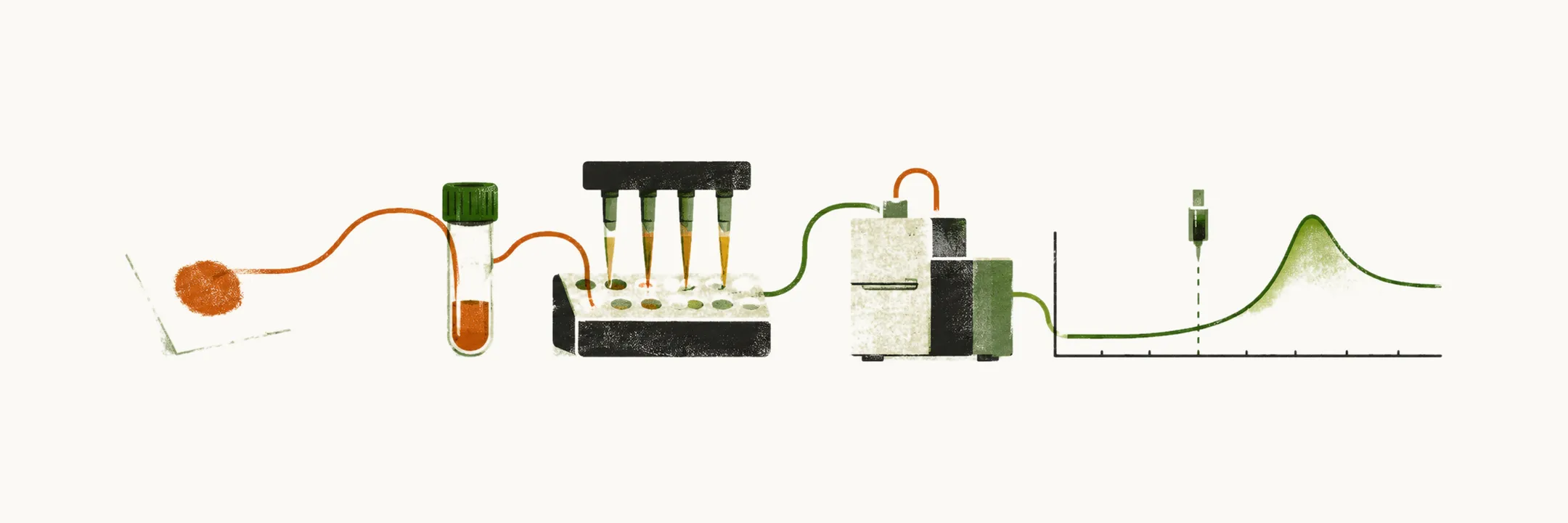
In 21-hydroxylase deficiency the block holds up cortisol synthesis, so 17-hydroxyprogesterone (17-OHP), the substance in front of the block, builds up. That gives the diagnosis two handles. The visible one is the genitalia of an affected girl. The chemical one is 17-OHP itself, which can be measured in blood, even in a dried drop of it. The work-up therefore asks first whether the newborn needs testing, then measures the steroids, and finally confirms with a stimulation test. One complication runs through all of it: 17-OHP is normally high on the first day of life, so when the sample is taken matters as much as what is measured.
When should CAH be suspected in a newborn?
CAH should be suspected in a newborn with ambiguous or abnormal external genitalia. In an affected female newborn, androgen excess virilizes the external genitalia, and that is what makes them the clinical clue.
In any such newborn, diagnostic tests for CAH are mandatory. The reason is that ambiguous genitalia may be the sign of a condition that endangers the infant: severe 21-hydroxylase deficiency may bring salt wasting and shock.
How are the steroids measured?
Once CAH is suspected, the steroids that pile up have to be measured. Traditionally the laboratory test in these neonates was a 24-hour urine collection, measuring the urinary excretion of adrenal steroids and their metabolites. A 24-hour collection is impractical, so serum assays for adrenal steroids are now used instead.
Serum sampling is invasive in a newborn. For that reason a simple random urine test in the first days after birth is suggested as well.
How does screening find the babies who look normal?
Where the genitalia give no clue, a drop of blood can. Some countries have a CAH screening test. It is based on microfilter paper and uses a random blood sample taken from the heel. Screening matters most for a newborn who would not be recognised on clinical grounds, such as a boy with normal genitalia or a fully virilized girl, because it shortens the time to diagnosis.
The screening test detects 17-hydroxyprogesterone. This is the precursor that accumulates behind the enzyme block in 21-hydroxylase deficiency, so it is the substance that reveals the block.
What confirms the diagnosis?
A clinical suspicion or a raised screening value is not yet a diagnosis, so the adrenal gland is stimulated. The gold standard for the hormonal diagnosis of CAH is the corticotropin (ACTH) stimulating test. The idea is the one used to test cortisol reserve in adrenal insufficiency: the gland is pushed with ACTH, and the block shows as a rise of what piles up.
The test measures serum 17-hydroxyprogesterone and Δ4-androstenedione at baseline and again 60 minutes after the corticotropin injection, so that the rise from baseline can be seen. Measuring more than one adrenal hormone also helps to tell 21-hydroxylase deficiency from other enzyme defects, because 17-hydroxyprogesterone can also be raised in other defects, especially 11-beta-hydroxylase deficiency.
Why does timing matter?
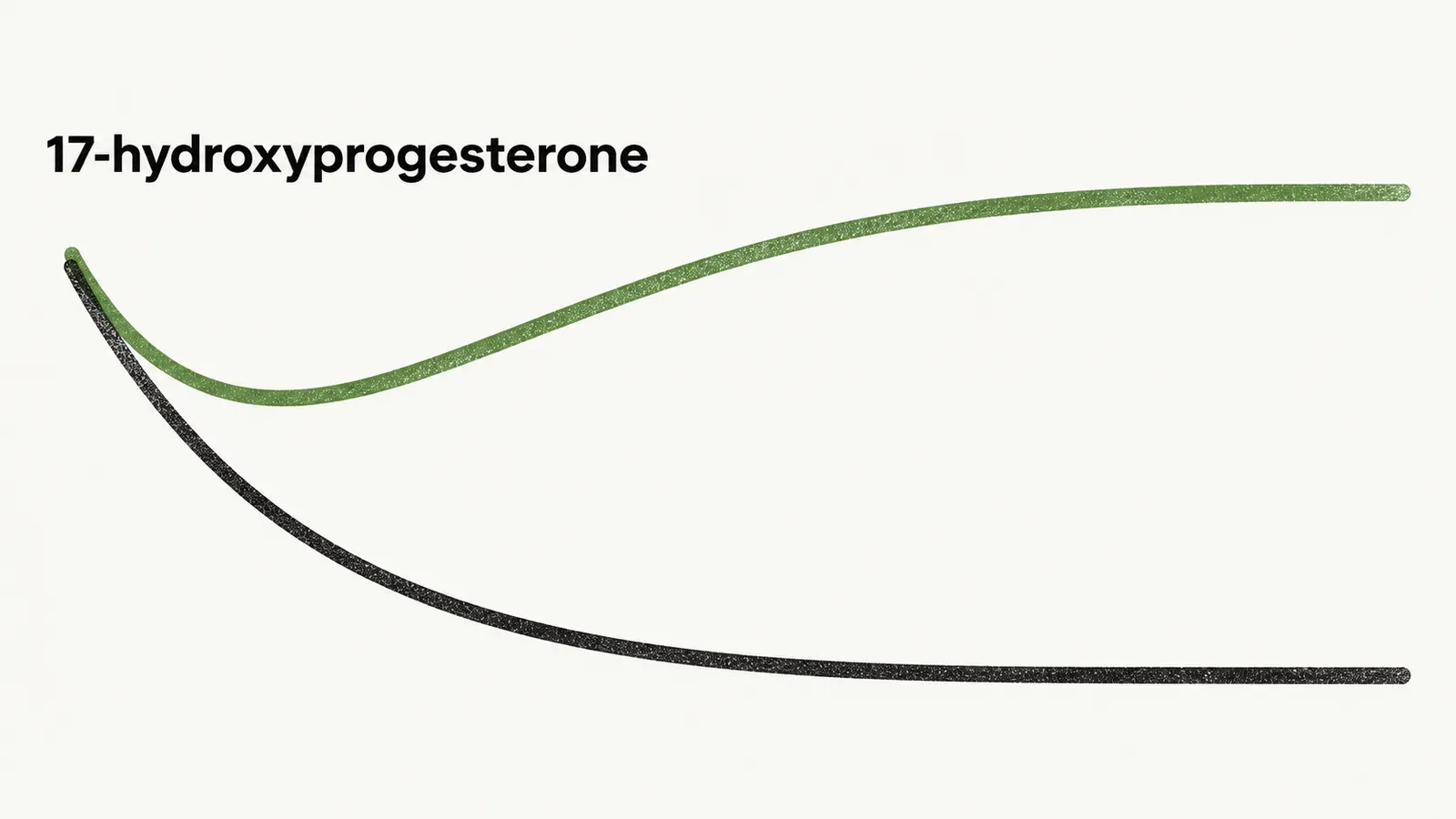
In a patient strongly suspected of CAH, the hormonal diagnostic test should be done 48-72 hours after birth. The reason is that 17-hydroxyprogesterone is normally high in the first day of life. In a healthy infant it then falls over the first days, whereas in an affected infant it rises, so a later sample separates the two.
The same physiology explains false positives: most infants in the first 24 hours test positive even without the disease, because of the normally high 17-hydroxyprogesterone.
Should treatment wait for the result?
No. While the result is awaited, glucocorticoid replacement therapy should be initiated, because the infant may be in or near an adrenal crisis and testing should not delay treatment when the diagnosis is strongly suspected. Once treatment has started, what exactly is being replaced, and how can a child be given cortisol without giving too much of it?