What does treatment replace?
The diagnosis of adrenal insufficiency ends on the level and the cause, and these decide which hormones must be given back. Treatment is the mirror image of the loss: it replaces the hormones the gland can no longer make. The aim is to restore normal function without over- or under-treating.
This replacement also prevents adrenal crisis, the acute state of shock that untreated deficiency can bring. Cortisol is the hormone the body cannot do without, so glucocorticoid replacement is the core of treatment. Mineralocorticoid replacement is added for some patients, as the section on fludrocortisone explains.
How is cortisol replaced?
Glucocorticoid deficiency is corrected with a physiological dose of hydrocortisone, usually 15-25 mg per day. Cortisol is normally secreted with a daily rhythm, and hydrocortisone does not stay long in the blood. So the daily amount is divided into two or three doses through the day, which makes the daily exposure roughly follow the natural cortisol rhythm.
Prednisolone, 3-5 mg per day, is an alternative.
Why is dexamethasone avoided?
Hydrocortisone is short-acting and easy to adjust. Dexamethasone is the opposite: a potent, long-acting glucocorticoid. It is generally avoided for two reasons. Its long half-life makes the dose hard to titrate (adjust stepwise), and it readily produces Cushingoid side effects, the features of glucocorticoid excess.
How is aldosterone replaced, and how is the dose checked?
In primary adrenal insufficiency the outer layer of the cortex is also lost, and with it aldosterone. Aldosterone keeps sodium and water in the body and so keeps blood pressure up. Fludrocortisone replaces it, and it is added for patients with primary adrenal insufficiency who have confirmed aldosterone deficiency.
It is not needed in the secondary and tertiary forms, because aldosterone secretion is preserved there: it is driven by the renin-angiotensin system, not by ACTH.
Because the aim is to restore salt and water balance, the dose is monitored through serum electrolytes and through the symptoms it should relieve or cause. If the dose is too low, salt and water are still being lost, and the patient has salt craving and light-headedness. If the dose is too high, salt and water are retained, and blood pressure rises and the legs swell. These are the two sides of one dial.
How does the dose stay right over the years?
Both fludrocortisone and hydrocortisone are given as fixed doses, and both too much and too little glucocorticoid are associated with worse long-term outcomes. Current replacement does not restore the body’s own feedback regulation, so no signal from the body corrects the dose. The clinician has to be that signal: the dose is reviewed against symptoms, growth in children, and the clinical picture rather than set once.
What protects the patient on the day the daily dose is not enough?
A fixed dose cannot rise on its own. The tablets match everyday need, but illness and other stress raise the need for cortisol, and with the reserve of the cortex gone the body cannot raise its own output. Infection and other major stressors are the usual triggers of crisis. So every patient needs to know how to raise the glucocorticoid dose during illness and stress, and how to recognize an impending crisis.
Two rules put this into practice:
- During a febrile illness, the patient is taught to increase the oral dose, because extra demand needs extra cortisol.
- When oral treatment cannot be kept down, the tablet is not absorbed and the cortisol supply stops just when stress is highest. The patient is therefore taught to use injectable hydrocortisone.
A crisis can find the patient away from home or unable to speak, and a clinician who does not know the diagnosis may not give a steroid at once. A steroid emergency card and medical alert identification tell any treating clinician that parenteral glucocorticoid is needed in an emergency.
Prevention is patient education, sick-day rules (raising the glucocorticoid dose during illness) and prompt emergency treatment. It matters as much as the prescription itself, because a crisis comes from the day the tablet is not enough, not from the daily dose.
What is done when crisis arrives?
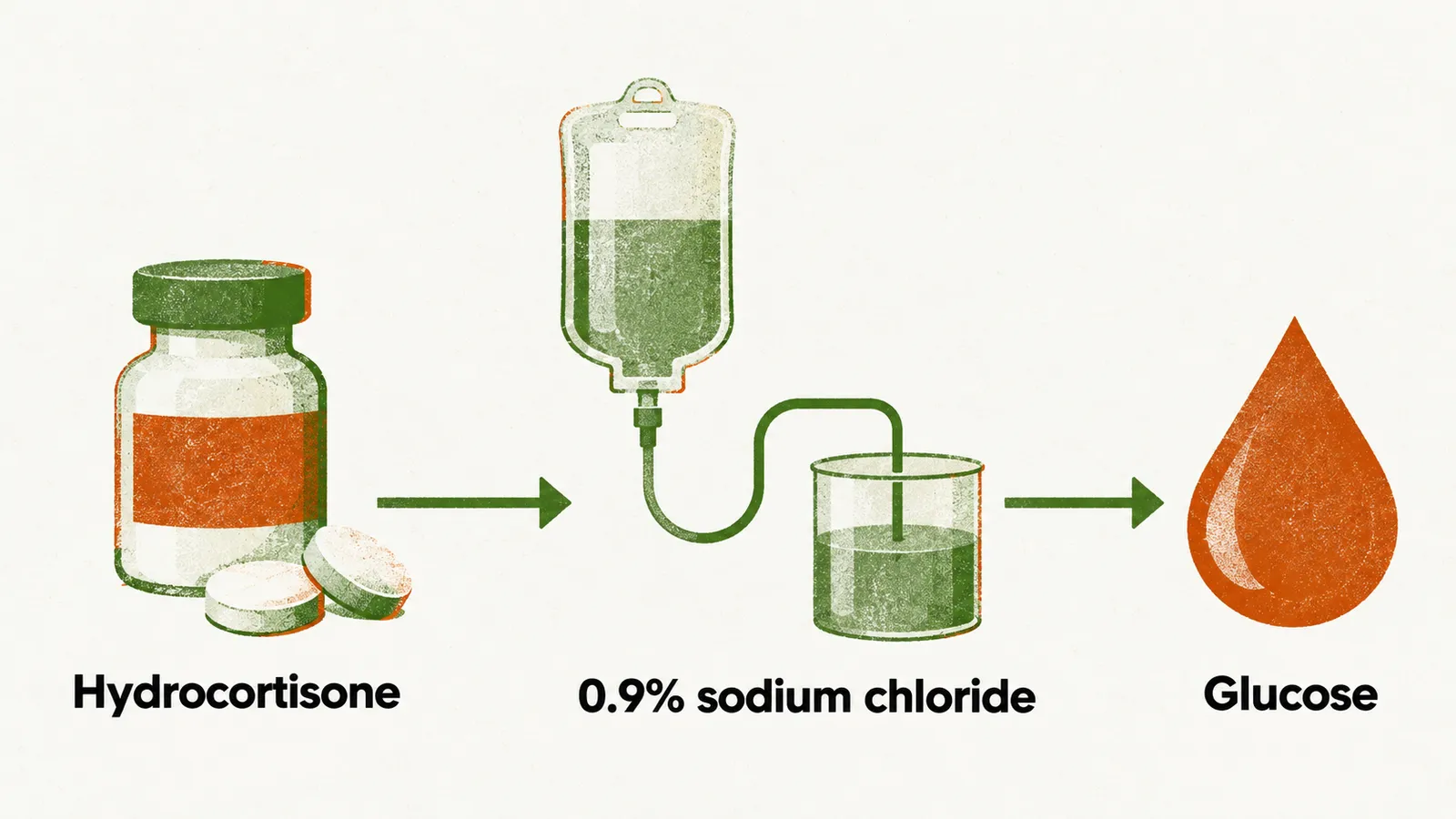
When prevention fails, adrenal crisis is treated at once, without waiting for confirmatory tests. Crisis is a state of severe cortisol deficiency, so the first step is 100 mg hydrocortisone by intravenous or intramuscular injection, a route that does not depend on the gut. This is followed by either 200 mg over 24 hours as a continuous infusion, or 50 mg every 6 hours.
The treatment has three parts, each answering a part of the shock state:
- Hydrocortisone replaces the missing cortisol.
- Intravenous 0.9% sodium chloride restores the lost volume.
- Glucose is given if hypoglycemia is present, because cortisol deficiency lowers blood glucose.
The precipitating cause is treated in parallel, because it is what raised the demand for cortisol.
What is the outlook?
With reliable replacement, most patients return to normal daily life. The outlook for uncomplicated autoimmune Addison’s disease approaches that of the general population. Even so, mortality and morbidity remain higher than in the general population. Adrenal crisis is still one of the leading causes of death in patients with adrenal insufficiency, which is why prevention carries so much weight: stress can outrun the dose, and the patient or the clinician may not respond in time.
Adrenal insufficiency can also be inherited. In congenital adrenal hyperplasia, an inherited enzyme defect in the steroid pathway blocks cortisol synthesis, and the treatment has a further task of controlling excess androgen. If a block in cortisol synthesis sits in the same pathway, what does the gland make instead, and why does treatment then also have to control excess androgen? The Congenital Adrenal Hyperplasia: Overview begins to answer this.