What does the adrenal cortex make, and what controls it?
The adrenal cortex is built in layers, and each layer makes a different class of hormone. The outer layer, the zona glomerulosa, makes mineralocorticoids. The zona fasciculata and zona reticularis make glucocorticoids and androgens.
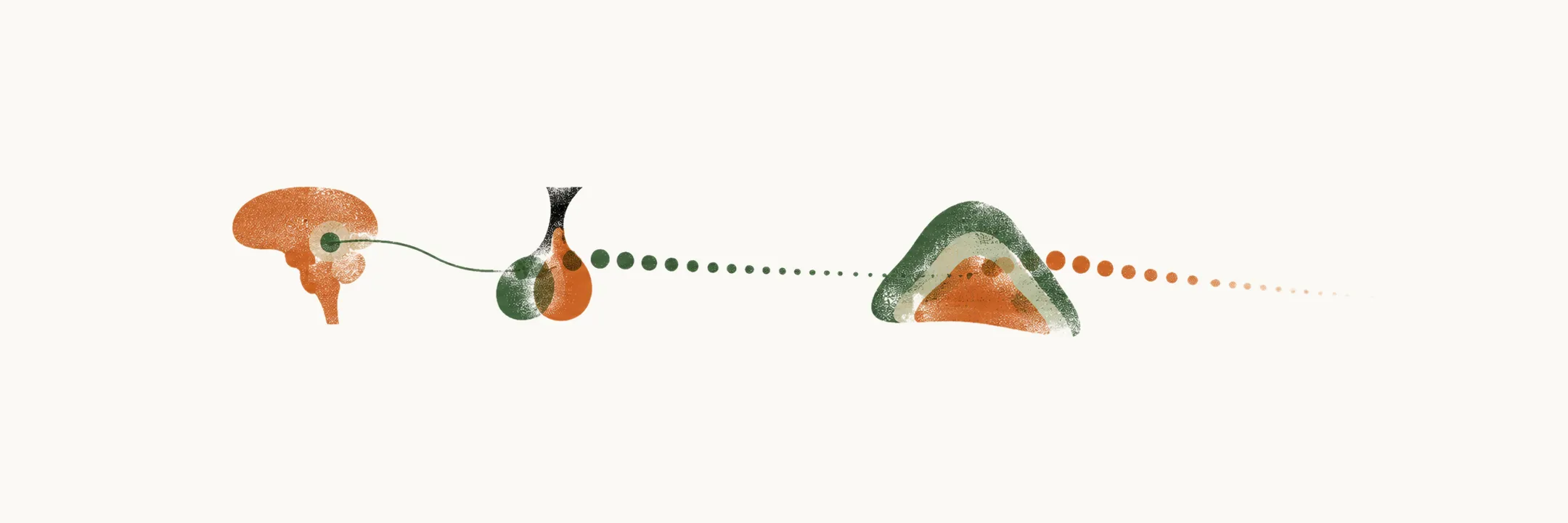
These two inner layers depend on a command chain. The hypothalamus releases CRH, CRH drives ACTH from the anterior pituitary, and ACTH drives glucocorticoid output from the cortex. The inner layers therefore need a steady ACTH signal, and ACTH in turn needs CRH, so a lesion upstream starves the cortex.
What does adrenal insufficiency mean in this chain?
If each hormone has a controller, a failed link anywhere gives the same disease. Adrenal insufficiency of any level is a failure somewhere along this chain: at the gland itself (primary), at the pituitary (secondary) or at the hypothalamus (tertiary). Wherever the failed link sits, the effect downstream on cortisol output is the same, so the course is the same sequence in all three forms.
How does the primary form progress?
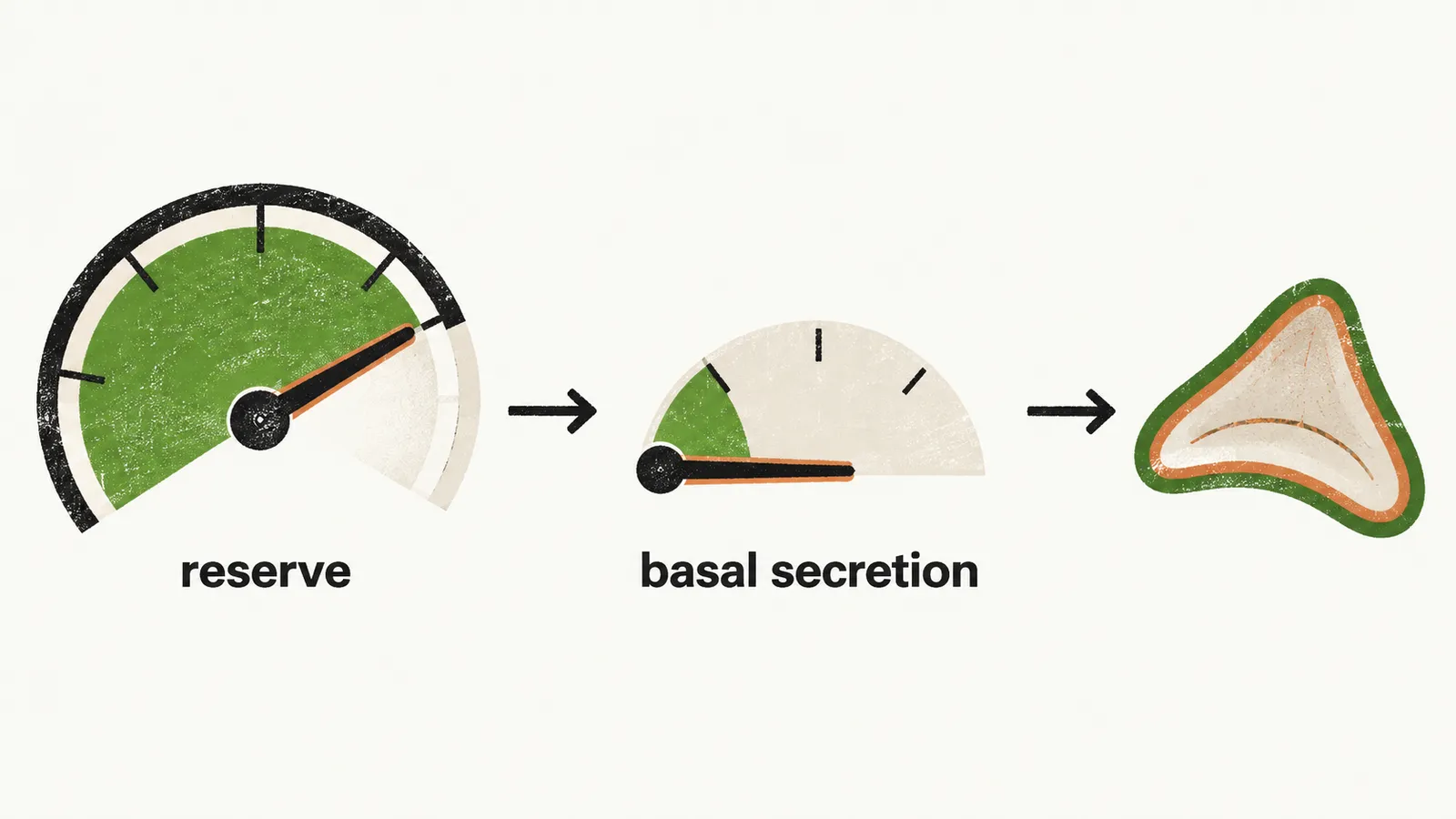
The course follows what rest and stress demand of the cortex. The gland, or its regulators, first lose reserve, the ability to raise hormone output above the basal level. At rest the body needs only basal output, so losing the margin shows only when stress asks for more: a patient without reserve is well, until a major stressor causes a crisis. Later they lose basal secretion. Once even resting output is too low, no quiet state is left, and the patient is constantly symptomatic.
In primary adrenal insufficiency, whatever the cause, clinical manifestations begin only once more than 90% of the adrenal cortex is destroyed. While enough cells remain, the patient is in a normal condition at rest, because only the reserve of the cortex is diminished. In this phase only a major stressor can cause an adrenal crisis. As destruction continues, the gland eventually loses even basal glucocorticoid secretion, and from that point the patient is constantly symptomatic.
Do the pituitary and hypothalamic forms follow the same course?
The same sequence applies one level higher. In secondary and tertiary adrenal insufficiency the failing tissue is the pituitary or the hypothalamus, so what is first lost is the reserve of ACTH or CRH, the ability to raise them when needed, while basal secretion is still sufficient. Only later does basal secretion fail, and only then does the patient become symptomatic.
What actually differs between the forms?
The difference between the forms lies in which hormones are lost. In secondary and tertiary adrenal insufficiency, a lack of enough ACTH or CRH causes loss of cells in the zona fasciculata and zona reticularis. Because these layers produce glucocorticoids and androgens, these patients show glucocorticoid and androgen deficiency.
Mineralocorticoid secretion, however, stays normal. The outer layer answers to the renin–angiotensin system rather than to ACTH: aldosterone is driven mainly by the renin–angiotensin system. So cutting the ACTH chain leaves it working, and aldosterone is not affected by a pituitary or hypothalamic lesion.
All of this starts once something destroys the adrenal cortex or interrupts ACTH or CRH. Which diseases do that?