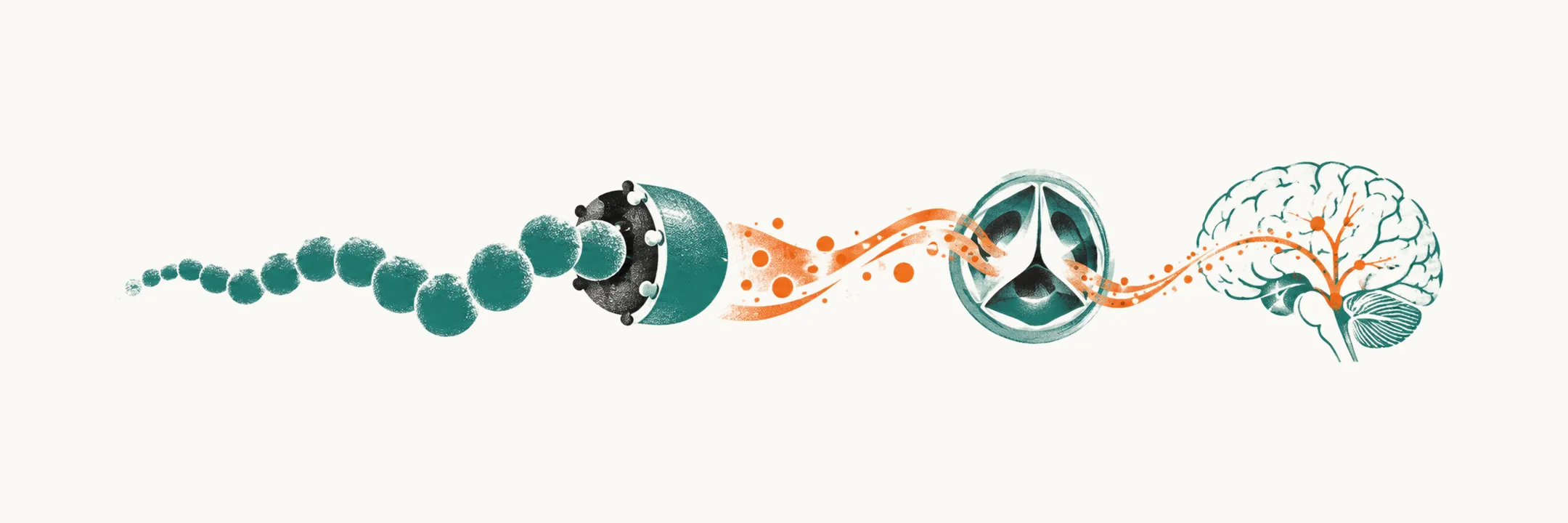
Three targets, not one
Rheumatic fever appears 2-4 weeks after the sore throat has resolved, and by then the immune reaction it set off is what is running. The bacterium started that reaction, but the reaction is what inflames the joints, skin, brain and heart. So an acute attack has three targets, and each gets its own step.
- The streptococcus that started it, which is still treated with an antibiotic.
- The inflammation, which is calmed with an anti-inflammatory drug chosen by how much the heart is involved.
- Sydenham’s chorea, which is treated apart from the inflammation.
The heart sets the choice of drug because the lasting damage is kept there, in the valves. The first target is the bacterium.
Why treat the bacterium when the reaction is already running?
The streptococcus is what set the reaction off, so an antibiotic is given to eliminate any residual group A Streptococcus. It is given regardless of the throat swab result at diagnosis. The reason is that the bacterium may still be present even though the immune consequences are already established.
The usual choice is penicillin or amoxicillin for 10 days. The regimens are the same as those used to treat streptococcal pharyngitis.
The bacterium set the reaction off, but it is not what does the damage. So the second target is the inflammation.
Which anti-inflammatory drug, and why does it depend on the heart?
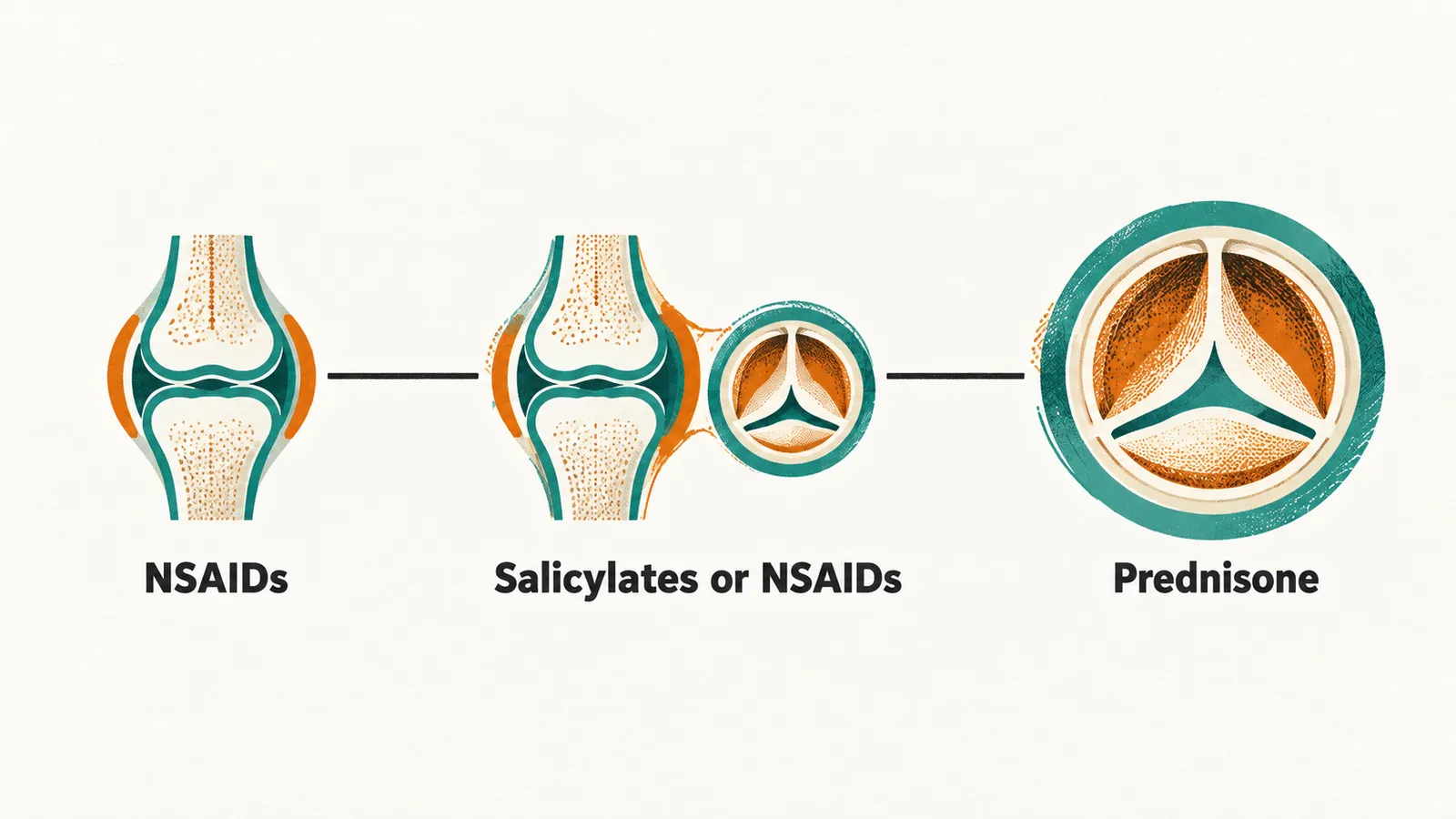
Carditis is the manifestation that decides long-term prognosis, so anti-inflammatory treatment is stratified by the severity of cardiac involvement. Treatment escalates as the carditis becomes more severe: salicylates (aspirin and related drugs) or NSAIDs for longer, and then a corticosteroid.
- Arthritis without carditis: NSAIDs, for example ibuprofen 30 mg/kg/day in 3 divided doses, or naproxen 10-20 mg/kg/day in 2 doses.
- Arthritis with mild carditis: salicylates or NSAIDs for about 6-8 weeks.
- Arthritis with moderate or severe carditis: prednisone 1-2 mg/kg/day in 2 divided doses for 2-4 weeks, then tapered.
Aspirin was the historical first-line anti-inflammatory drug for rheumatic fever, and it remains in use for carditis. Elsewhere in childhood it is avoided wherever an equally effective alternative exists, because of its association with Reye syndrome, an acute illness of the brain and liver. For the arthritis, ibuprofen and naproxen are equally effective, and they are safer. For carditis, the choice should follow local protocol and cardiology advice.
Choosing the drug is one part of it. The next question is how it is stopped.
Why is the course tapered, not stopped?
Each course is withdrawn in steps. The NSAIDs for arthritis without carditis are continued for 2-3 weeks, then tapered over 1-2 weeks. Prednisone for moderate or severe carditis is given for 2-4 weeks, then tapered. In some protocols aspirin is added during the final week of the prednisone taper, to cover steroid withdrawal.
These drugs calm the inflammation. Do they also protect the valves?
What does calming the inflammation do, and what does it not do?
Anti-inflammatory treatment relieves symptoms and fever. That is not the same as protecting the valves. It is not established that anti-inflammatory treatment changes eventual valve damage.
The chorea is a different problem and has its own drugs.
Why is chorea treated apart from the inflammation?
The third target is the chorea. It is a neurological immune phenomenon rather than an inflammatory joint process. It is described as an antineuronal antibody-mediated disorder, so the antibodies act on neurons, not on joints, and the basal ganglia are its target. That is why anti-inflammatory drugs are not used for chorea.
Mild chorea is managed with rest and reduction of physical and emotional stress. The movements usually resolve over months.
For severe or disabling chorea, carbamazepine or valproate is usually tried first. Haloperidol or phenobarbital is used when carbamazepine or valproate is ineffective or not tolerated. Response to any of these drugs is variable, and no drug is uniformly effective.
Chorea resolves over months, and it leaves no structural damage of its own.
Which damage is left, and what stops the next attack?
Chorea clears and leaves no structural damage of its own, but the damage that lasts in rheumatic fever is valvular. Preventing the next attack does change eventual valve damage, because each recurrence risks further scarring of valves that have already been injured. So if each attack adds more valve damage, what stops the next attack?